

Executive Summary
Fish oil after surgery works differently than fish oil for everyday joint support. The same fatty acids that calm a stiff joint can slow healing in a fresh wound. This article explains why the timing matters and what to check before giving it.
Fish oil after surgery raises a genuine question for any dog owner managing a joint supplement routine. Omega-3 fatty acids are a core part of long-term care for a tripod dog’s joints, covered later in this series. Right after an amputation, though, the same nutrient carries a different set of considerations.
Why It Needs the Right Timing
Omega-3 fatty acids feed into the body’s own chemical signals for calming inflammation. Those same signals ease a sore joint. A fresh wound needs some of that same inflammation in its first few days. Veterinary nutrition research links high supplemental doses of fish oil to reduced platelet function and slower wound healing. That is the opposite of what a healing incision needs in week one.
Giving Dogs Fish Oil for Joint Support
Outside the surgical window, giving dogs fish oil is one of the better-supported tools for joint comfort. EPA and DHA are the two main marine omega-3s. They actually resolve inflammation rather than just calming it temporarily. AAFCO has not set a minimum EPA and DHA level for adult maintenance diets. That gap does not mean adults have no need for it. Vets simply lacked enough data to set a number.
A Practical Option
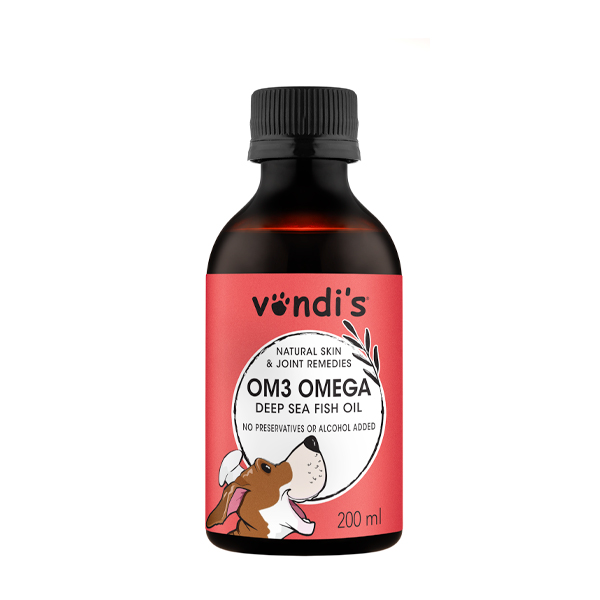
VONDIS OM3 Omega Oil
VONDIS OM3 Omega Oil
A preservative-free fish oil supplement supplying EPA and DHA, the two marine fatty acids that ease joint inflammation most directly. Stirred into food as part of an ongoing routine, it supports comfort in the weeks after healing is well underway. Check timing with the vet around the surgery date itself.
What the Research Shows About Omega-3
The clearest documented risk with fish oil after surgery involves fish liver oil, not fish body oil. The difference matters. Fish liver oil carries concentrated vitamin A and vitamin D alongside its omega-3 content. Reaching a useful omega-3 dose this way risks tipping a dog into fat-soluble vitamin toxicity first. Fish body oil and algae oil avoid that risk while giving the same EPA and DHA. Human surgical literature has recently softened its old blanket advice to stop fish oil before an operation. No equivalent dog-specific study on bleeding risk around surgery currently exists.
Fish Body Oil Versus Fish Liver Oil
The practical takeaway on fish oil after surgery for a dog owner is simple. Read the label before buying. Fish liver oil and fish body oil are not the same product despite the similar name. A body oil or an algae oil suits ongoing joint support. Anything liver-derived belongs nowhere near a dose aimed at omega-3 adequacy.
When to Call the Vet
Talk to the vet before starting or stepping up fish oil in the run-up to a scheduled amputation. This matters even though newer human research has eased some of the old caution. No dog-specific bleeding study around surgery exists yet.