

Festive treats toxic to dogs are everywhere during the holiday season, transforming celebrations into potential emergencies. Whilst families gather to enjoy traditional delights, dogs often find themselves exposed to foods that can cause severe illness or even death. Many owners unknowingly share festive foods with their companions. They do not realise that ingredients considered harmless to humans can trigger life-threatening reactions in canines.
The biological mechanisms behind these toxicities vary considerably. Some ingredients, such as raisins, cause acute kidney failure through processes that remain poorly understood by veterinary science. Others, like chocolate, contain compounds that dogs metabolise far more slowly than humans. This allows toxic levels to build in their systems. Sugar and fat combinations overwhelm a dog’s digestive capacity, whilst alcohol depresses the central nervous system at doses that seem negligible to people.
The prognosis for dogs who consume festive treats toxic to dogs depends heavily on prompt intervention. Immediate veterinary care can prevent toxins from being absorbed. It can also support organ function whilst the body processes harmful substances. However, delayed treatment often results in prolonged illness, permanent organ damage, or death. Consequently, understanding which festive foods pose risks allows owners to create safer environments during celebrations.
Tip: If your dog consumes any festive treat, contact your veterinarian immediately, even if he appears well. Many toxicities take hours to manifest. Early intervention dramatically improves outcomes. Have the packaging or ingredient list ready when you call.
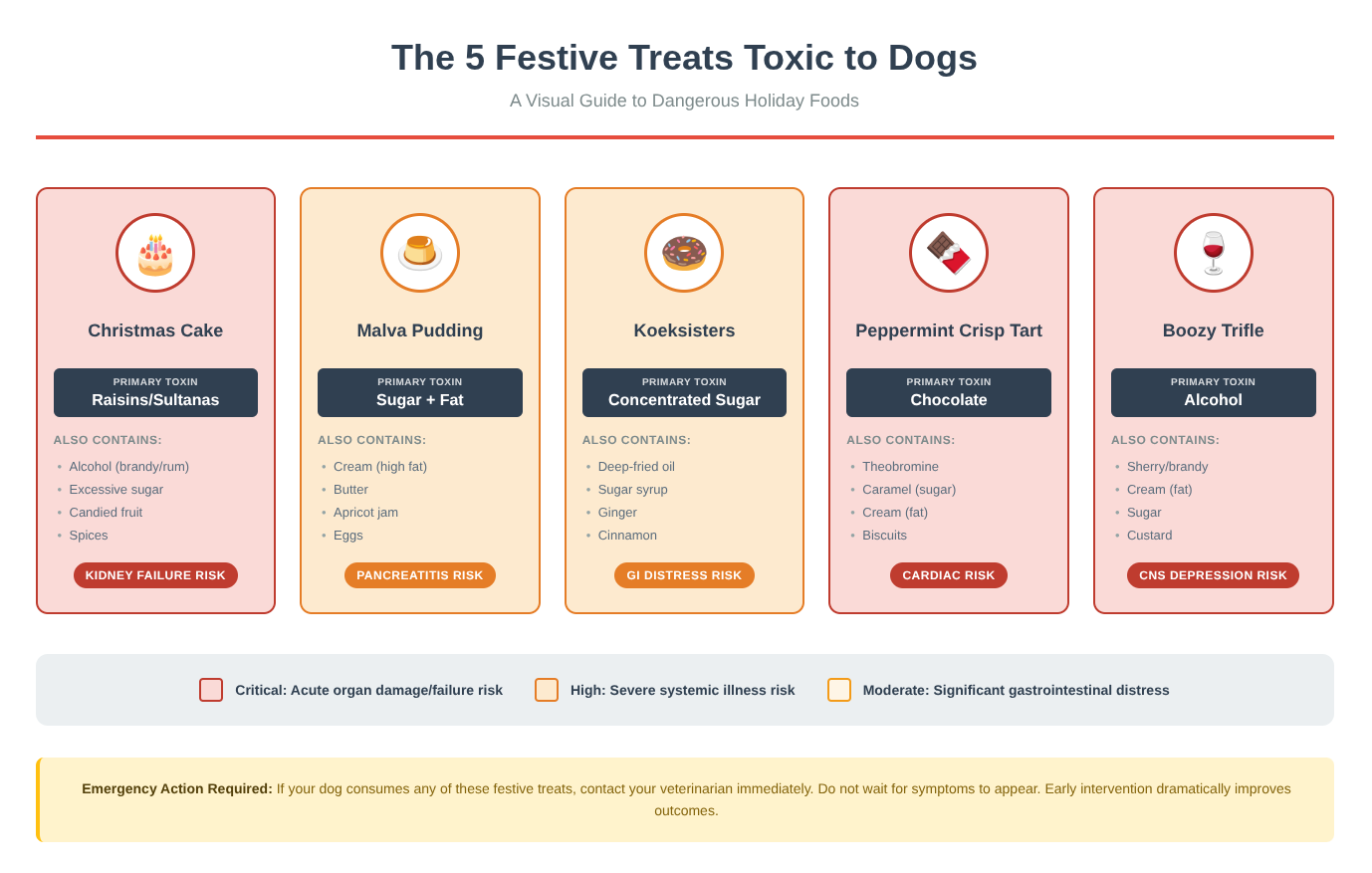
1. Christmas Cake: When Dried Fruit Becomes Deadly
Christmas cake stands as one of the most dangerous festive treats toxic to dogs due to its high concentration of raisins, sultanas and currants. These dried fruits form the foundation of traditional fruit cakes, often comprising more than half the cake’s weight. Additionally, Christmas cakes contain brandy or rum. This alcohol soaks into the fruit during preparation and adds another toxic element. The combination of grape-derived ingredients and alcohol creates a particularly hazardous treat for any dog who manages to steal a slice.
Why Raisins in Festive Foods Destroy Canine Kidneys
Raisins, sultanas, currants and grapes all belong to the Vitis vinifera family. They cause acute renal failure in dogs through an idiosyncratic mechanism. Scientists have not yet identified the exact toxic compound, making it impossible to predict which dogs will be affected or at what dose. Some dogs consume relatively large amounts without incident, whilst others develop severe kidney damage after eating just a few raisins. This unpredictability makes any ingestion a medical emergency requiring immediate veterinary assessment.
The toxic principle in these fruits attacks the kidney tubules. It causes cellular death and prevents the kidneys from filtering waste products from the blood. Consequently, toxins accumulate in the bloodstream whilst urine production decreases or stops entirely. The damage can be irreversible, leading to chronic kidney disease or complete renal failure. Furthermore, the dried versions of these fruits are more frequently associated with severe symptoms. This is possibly because their concentrated nature allows dogs to consume more of the toxic compound in a smaller volume.
Research conducted by veterinary poison control centres has documented over a thousand cases of grape and dried fruit ingestion. However, only a small percentage resulted in death or euthanasia, suggesting that individual susceptibility varies enormously. Despite this, the potential for fatal outcomes means that every case must be treated as potentially life-threatening. This remains true until proven otherwise through monitoring and blood tests.
Symptoms of Raisin Toxicity in Dogs
The first signs of raisin toxicity typically appear within two to twelve hours of ingestion. Vomiting is usually the earliest symptom, often containing partially digested fruit pieces. Increased thirst and excessive urination may follow as the kidneys attempt to flush toxins from the system. These initial symptoms can seem mild. Consequently, some owners adopt a wait-and-see approach that proves dangerous.
As kidney damage progresses over the following twenty-four to seventy-two hours, more severe symptoms emerge. Dogs may become lethargic and lose their appetite entirely. Abdominal pain becomes evident through a hunched posture or reluctance to move. Consequently, urine output decreases dramatically or ceases altogether, indicating acute kidney injury. Advanced cases may present with vomiting that becomes persistent. Additionally, foul-smelling breath develops due to the accumulation of waste products in the blood. Neurological symptoms such as tremors or seizures may also occur.
Christmas cakes also contain substantial amounts of sugar, which contributes to gastrointestinal upset and can trigger pancreatitis. The alcohol content, even after baking reduces some of it, remains problematic for dogs. In large quantities, garlic is toxic to dogs, though most Christmas cakes do not contain this ingredient. The candied peel and spices, whilst not acutely toxic, add to the overall burden on the digestive system.
2. Malva Pudding: A Festive Treat Toxic to Dogs
Malva pudding represents a uniquely South African contribution to festive tables, combining a spongy cake base with a rich cream sauce. This beloved dessert contains apricot jam and substantial quantities of sugar. It also features a sauce made from butter, cream and more sugar that soaks into the warm pudding. The sugar content alone poses significant health risks. However, when combined with the high fat content from dairy products, malva pudding becomes particularly dangerous for canine digestive systems. Dogs who consume even modest portions often develop acute gastrointestinal distress and face the risk of pancreatitis.
How Excessive Sugar and Fat Overwhelm Dogs
Dogs evolved as carnivores with limited ability to process large amounts of simple sugars or concentrated fats. Their pancreas produces enzymes designed to handle the moderate fat content of meat-based diets. It cannot efficiently process the extreme concentrations found in desserts. When a dog consumes malva pudding, the pancreas must work overtime to produce digestive enzymes, often becoming inflamed in the process. This inflammation, known as pancreatitis, ranges from mild discomfort to life-threatening illness requiring intensive veterinary care.
The sugar in malva pudding creates multiple problems beyond simple gastrointestinal upset. Rapid absorption of glucose causes blood sugar spikes that stress the endocrine system. Consequently, dogs may experience hyperactivity followed by lethargy as insulin attempts to regulate blood glucose levels. Over time, repeated exposure to high-sugar foods increases the risk of obesity and diabetes mellitus. Furthermore, the osmotic effect of unabsorbed sugar in the intestines draws water into the gut. This results in diarrhoea that can lead to dehydration.
The cream sauce that makes malva pudding so indulgent contains butterfat in concentrations that dogs simply cannot process efficiently. As mentioned earlier regarding raisins and their unpredictable toxicity, individual dogs vary in their tolerance to rich foods. However, unlike raisin toxicity where the mechanism remains mysterious, we understand precisely how excessive fat triggers pancreatitis. The pancreas releases digestive enzymes prematurely. This causes the organ to digest itself, resulting in severe inflammation, pain and potential organ failure.
Recognising Pancreatitis and Sugar Overload in Dogs
The symptoms of pancreatitis typically emerge within twenty-four to forty-eight hours after a dog consumes fatty foods like malva pudding. Vomiting is often the first sign. It is accompanied by loss of appetite and abdominal pain that causes dogs to adopt a characteristic “praying” position with their front end lowered and rear elevated. Dogs may also exhibit restlessness, panting and reluctance to lie down comfortably. The abdomen often becomes tense and painful when palpated, indicating inflammation of the pancreatic region.
As pancreatitis progresses, dogs develop fever and severe lethargy. Diarrhoea may occur, particularly if the inflammation affects the adjacent intestines. Consequently, dehydration becomes a significant concern as fluid losses mount from vomiting and loose stools. Severe cases can lead to systemic complications including blood clotting disorders, respiratory distress and organ failure. The mortality rate for severe acute pancreatitis remains substantial despite modern veterinary interventions.
Sugar overload produces somewhat different symptoms, though these often overlap with pancreatitis. Immediate effects include hyperactivity, increased thirst and excessive urination. These occur as the kidneys attempt to excrete surplus glucose. Gastrointestinal upset manifests as vomiting and diarrhoea within hours of consumption. The apricot jam and vinegar in malva pudding add to the digestive burden, whilst the eggs and milk provide additional fat content that compounds the pancreatic stress.
3. Koeksisters: Dangerous Festive Treats for Dogs
Koeksisters are plaited doughnuts that undergo deep-frying before being plunged into ice-cold sugar syrup. In this syrup, they absorb extraordinary amounts of sweetened liquid. The contrast between the hot pastry and cold syrup creates the characteristic crispy exterior and syrup-soaked interior that makes koeksisters so appealing. However, this preparation method results in a treat that combines deep-fried dough with concentrated sugar in proportions that can cause immediate illness in dogs. The syrup typically contains water, sugar, lemon juice, ginger and cinnamon, with some recipes using up to four cups of sugar per batch.
The Double Threat of Fried Foods for Dogs
Deep-frying creates a unique challenge for canine digestive systems because the cooking process saturates the dough with oil. Dogs consuming koeksisters therefore ingest not only the flour-based pastry but also significant quantities of cooking fat. This fat content, similar to that discussed earlier in relation to malva pudding, can trigger acute pancreatitis. Moreover, the cold syrup that koeksisters absorb adds a massive sugar load on top of the already problematic fat content, creating a dual assault on the digestive system.
The sugar syrup in koeksisters is far more concentrated than the sugar found in most other desserts. Traditional recipes call for boiling sugar and water together until the mixture thickens, creating a solution that approaches saturation point. When hot koeksisters are dunked into this cold syrup, they act like sponges. They absorb liquid equal to or exceeding their original weight. Consequently, a single koeksister can contain several tablespoons of pure sugar syrup, delivering an intense glucose load that overwhelms a dog’s metabolic capacity.
The osmotic properties of this concentrated sugar cause rapid fluid shifts in the gastrointestinal tract. Water rushes into the intestines to dilute the hypertonic sugar solution. This results in explosive diarrhoea that can lead to severe dehydration within hours. Furthermore, the rapid absorption of glucose into the bloodstream causes dangerous spikes in blood sugar. These spikes stress the pancreas and can result in reactive hypoglycemia as insulin floods the system. The combination of fat-induced pancreatitis and sugar-induced gastrointestinal chaos makes koeksisters particularly dangerous for dogs.
Immediate Gastrointestinal Crisis in Dogs
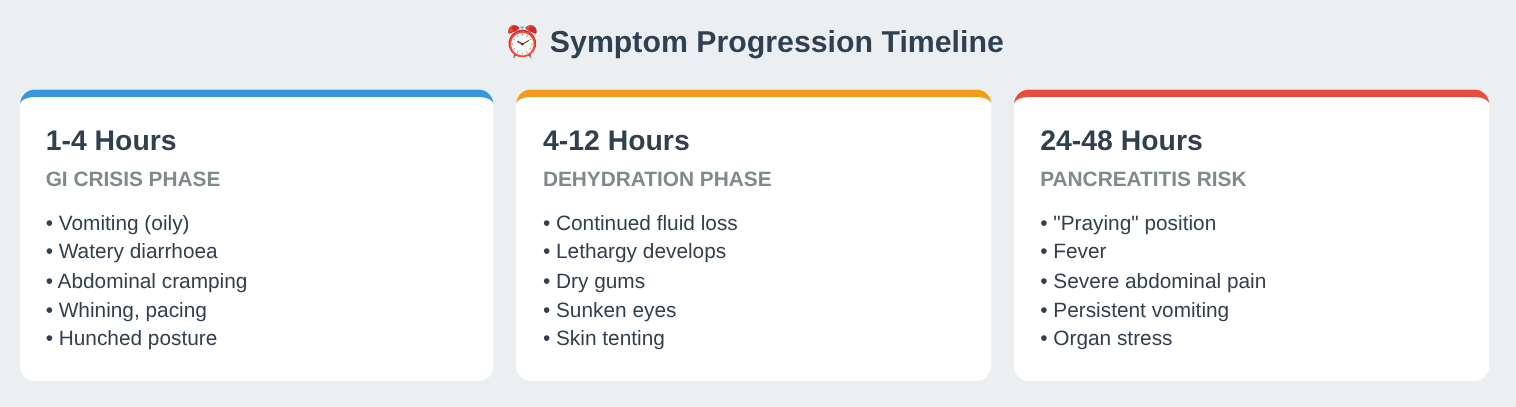
Dogs who consume koeksisters often develop symptoms within one to four hours due to the immediate impact on the digestive system. Vomiting typically occurs first as the stomach attempts to expel the rich, fatty contents. The vomit may have an oily appearance due to the absorbed cooking fat. Simultaneously, the concentrated sugar begins drawing water into the intestines. This triggers profuse watery diarrhoea that may be accompanied by abdominal cramping and obvious discomfort.
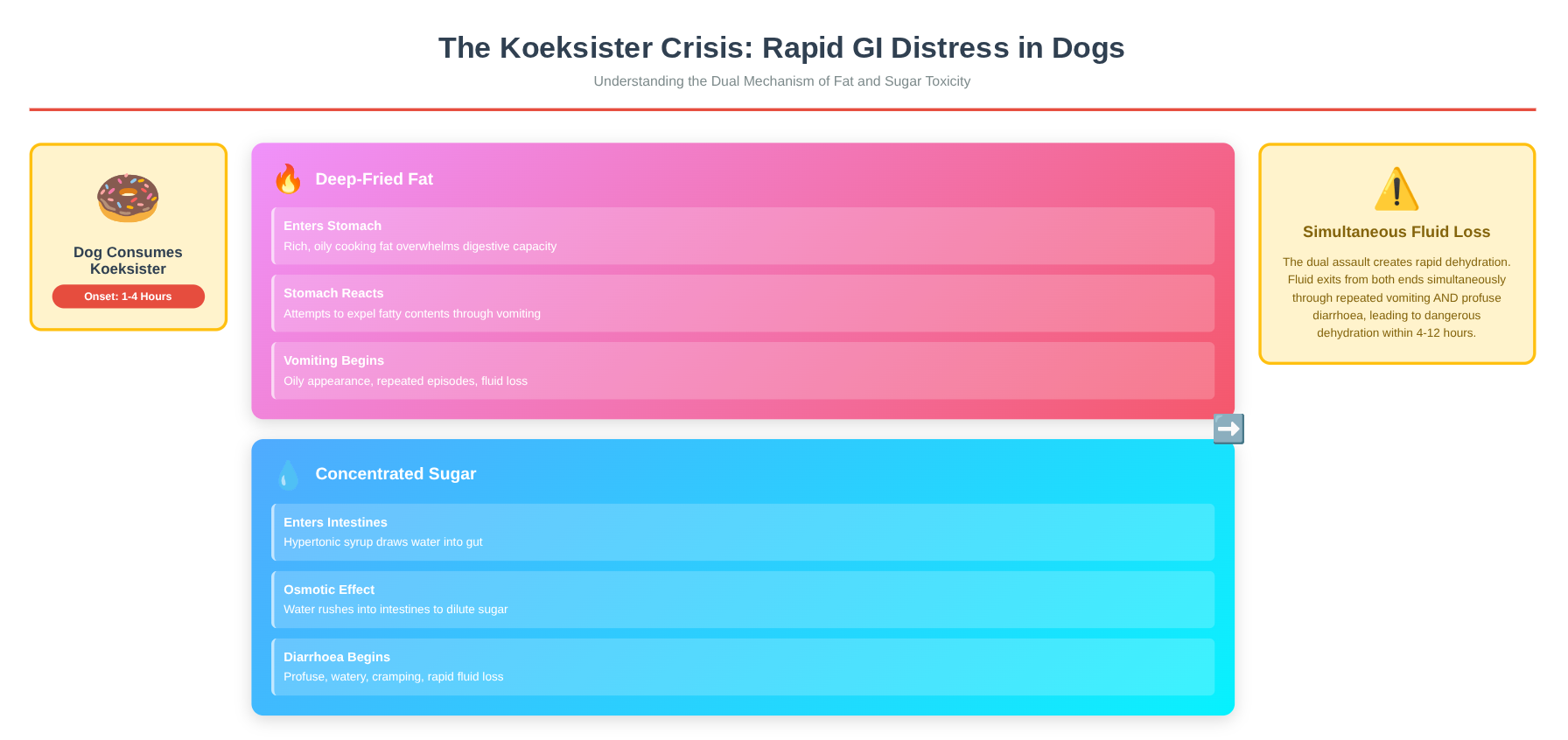
The speed and severity of these gastrointestinal symptoms often surprise owners who expect a gradual onset of illness. However, the extreme nature of koeksisters—combining fried food with sugar syrup—produces rapid physiological responses. Dogs may exhibit signs of abdominal pain including whining, pacing, reluctance to settle and a hunched posture. Consequently, dehydration develops quickly from the combined fluid losses through vomiting and diarrhoea. This is particularly dangerous in smaller dogs who have less fluid reserve.
As mentioned previously in the context of other sugary treats, pancreatitis symptoms may emerge over the following twenty-four to forty-eight hours. This occurs as the pancreas responds to the fat load. The spices in the syrup, including ginger and cinnamon, generally do not cause toxicity at the concentrations found in koeksisters. However, these flavourings can irritate an already distressed digestive system, potentially worsening vomiting and diarrhoea.
Interesting Fact: The temperature contrast between hot koeksisters and ice-cold syrup is essential to the traditional preparation, as it creates the crystalline texture that prevents the pastry from becoming soggy. This same process, however, enables maximum syrup absorption. This is exactly what makes koeksisters so dangerous for dogs who encounter them.
4. Peppermint Crisp Tart: A Toxic Festive Treat
Peppermint Crisp tart layers Tennis biscuits, caramel and whipped cream with crushed Peppermint Crisp chocolate bars throughout. These chocolate bars contain milk chocolate wrapped around bright green peppermint candy, creating the distinctive appearance that makes this dessert instantly recognisable. Whilst the cream and caramel add sugar and fat to the mix, the chocolate component poses the most serious acute threat to dogs. Theobromine, the primary toxic compound in chocolate, affects the cardiovascular, central nervous and respiratory systems with potentially fatal consequences.
Understanding Chocolate Toxicity in Dogs
Chocolate contains two methylxanthine compounds: theobromine and caffeine. Dogs metabolise these substances far more slowly than humans. Theobromine has a biological half-life of seventeen and a half hours in canines compared to just two to three hours in people. This prolonged presence in the system allows toxic levels to accumulate, even from amounts of chocolate that seem modest. Consequently, dogs remain at risk for up to seventy-two hours after ingestion as theobromine circulates through their bodies.
Theobromine works by inhibiting phosphodiesterase enzymes, which leads to increased levels of cyclic adenosine monophosphate within cells. This biochemical change stimulates the heart muscle. It causes increased heart rate and stronger contractions that can progress to dangerous arrhythmias. Furthermore, theobromine antagonises adenosine receptors in the central nervous system, producing hyperexcitability, tremors and potentially seizures. The compound also acts as a diuretic, increasing urine production and contributing to dehydration. Simultaneously, it relaxes smooth muscle in the respiratory system.
The concentration of theobromine varies dramatically depending on the type of chocolate. Milk chocolate, which forms the basis of Peppermint Crisp bars, contains approximately two milligrams of theobromine per gram. Whilst this is significantly less than dark chocolate or cocoa powder, it still poses substantial risk when dogs consume entire portions of tart. A typical Peppermint Crisp tart might contain two to three chocolate bars. This provides enough theobromine to cause moderate to severe toxicity in small to medium-sized dogs.
Cardiac and Neurological Symptoms in Dogs
The initial symptoms of chocolate toxicity emerge within two to four hours of ingestion. However, delays of up to twelve hours can occur depending on stomach contents and the form of chocolate consumed. Early signs include restlessness, increased thirst and excessive urination as theobromine begins affecting the kidneys and cardiovascular system. Dogs may exhibit hyperactivity that seems out of character, pacing constantly and unable to settle. Vomiting and diarrhoea often develop as the gastrointestinal tract reacts to the chocolate’s irritant properties.
As theobromine levels rise in the bloodstream, more severe cardiovascular symptoms emerge. The heart rate accelerates markedly. In severe cases, it sometimes exceeds two hundred beats per minute where normal resting rates range from sixty to one hundred. This tachycardia places enormous stress on the heart muscle and can progress to arrhythmias where the heart beats irregularly or ineffectively. Consequently, blood pressure may spike, and in extreme cases, the cardiovascular system can fail entirely, leading to collapse and death.
Neurological symptoms indicate serious toxicity and typically appear as theobromine concentrations reach critical levels. Muscle tremors begin in the limbs and may progress to whole-body shaking that dogs cannot control. Hyperirritability makes dogs unusually reactive to stimuli, and they may snap or show aggression uncharacteristic of their normal temperament. Seizures represent the most severe neurological complication. They occur at doses above sixty milligrams of theobromine per kilogram of body weight. The caramel and cream in Peppermint Crisp tart add the sugar and fat issues discussed earlier, whilst the Tennis biscuits contribute additional carbohydrates that compound the metabolic stress.
5. Boozy Trifle: A Dangerous Food for Dogs
Trifle ranks amongst the most popular festive desserts, traditionally featuring layers of sponge cake or biscuits soaked in alcohol, combined with jelly, custard and whipped cream. The South African festive version often includes generous amounts of sherry, brandy or Amarula cream liqueur. This alcohol is poured over the cake layer to add flavour and moisture. Whilst many trifle recipes exist, the boozy versions pose particular danger to dogs because alcohol affects their systems far more severely than it does humans. Dogs have significantly lower tolerance to ethanol, and even small quantities can produce life-threatening toxicity.
How Alcohol Devastates Dogs
Ethanol, the intoxicating component of alcoholic beverages, is rapidly absorbed from the stomach and small intestine into the bloodstream. Once absorbed, it crosses the blood-brain barrier easily, where it acts as a central nervous system depressant. Dogs metabolise alcohol more slowly than humans and lack certain liver enzymes that help break down ethanol efficiently. Consequently, lower doses of alcohol produce more severe effects in dogs. Furthermore, these effects persist for longer periods. A dog’s small body size relative to typical serving sizes means that even a modest amount of trifle can deliver a dangerous dose.
Alcohol interferes with neurotransmitter function in the brain. Initially, it produces symptoms similar to human intoxication: disorientation, loss of coordination and behavioural changes. However, as blood alcohol levels rise, the depression of the central nervous system becomes more profound. The respiratory centres in the brainstem become less responsive, causing breathing to slow and become shallow. Furthermore, alcohol causes hypoglycemia by impairing the liver’s ability to produce glucose through gluconeogenesis. This blood sugar drop can occur rapidly in dogs, particularly smaller breeds, leading to weakness, seizures and potentially coma.
The cardiovascular effects of alcohol add another dimension to the toxicity. Ethanol causes peripheral vasodilation. This drops blood pressure and can lead to hypothermia as heat escapes through dilated blood vessels near the skin surface. Moreover, alcohol acts as a diuretic, increasing fluid losses through urine production and potentially causing dehydration that compounds the hypotension. The combination of respiratory depression, low blood sugar, reduced blood pressure and hypothermia creates a medical emergency requiring immediate intensive care.
Signs of Alcohol Poisoning in Dogs
The onset of alcohol toxicity symptoms in dogs occurs within thirty to sixty minutes of ingestion, reflecting the rapid absorption of ethanol. Early signs closely mimic human intoxication. They include apparent disorientation, stumbling gait and lack of coordination when attempting to walk. Dogs may bump into furniture or walls, unable to judge distances properly. Drowsiness develops quickly as the central nervous system depression takes effect, and dogs may seem confused or unresponsive to familiar commands.
As toxicity progresses, more alarming symptoms emerge. Vomiting is common and poses aspiration risk if dogs are too sedated to protect their airways. The respiratory rate decreases noticeably, with breaths becoming shallow and ineffective at oxygenating the blood. Body temperature drops as vasodilation allows heat loss. This is particularly dangerous in smaller dogs who lose heat more rapidly. Consequently, dogs may begin shivering, though profound intoxication can suppress even this protective response. Muscle tremors may occur as neurological function deteriorates further.
Severe alcohol poisoning produces life-threatening complications that require emergency veterinary intervention. Seizures may occur secondary to hypoglycemia or direct neurotoxic effects. The level of consciousness deteriorates from drowsiness to stupor and potentially coma as blood alcohol reaches dangerous concentrations. Respiratory failure represents the most common cause of death in severe cases. This occurs as the brainstem centres controlling breathing cease functioning adequately. The jelly, custard and cream in trifle add the sugar and fat concerns discussed throughout this article, whilst the sponge cake or biscuits contribute carbohydrates that can worsen blood sugar fluctuations.
FAQs – Festive Treats Toxic to Dogs
How quickly do symptoms appear after dogs eat festive treats toxic to dogs?
Symptom onset varies depending on the toxic ingredient consumed. Alcohol and concentrated sugar cause symptoms within thirty minutes to four hours, whilst chocolate toxicity typically manifests within two to twelve hours. Raisin toxicity may not produce obvious signs for twelve to twenty-four hours. However, kidney damage begins much earlier. Consequently, immediate veterinary contact is essential even if your dog appears normal initially.
Can a small amount of these festive treats harm my dog?
Yes, even small quantities can cause serious illness, particularly with raisins where individual susceptibility varies unpredictably. Chocolate toxicity depends on the dog’s size and the type of chocolate. However, small dogs can develop severe symptoms from amounts that seem trivial. Furthermore, the combined effects of sugar, fat and other ingredients in festive treats mean that “just a taste” can trigger pancreatitis or gastrointestinal distress.
What should I do immediately if my dog eats Christmas cake or other festive treats?
Contact your veterinarian or emergency animal hospital immediately without waiting for symptoms to develop. Note what your dog ate, approximately how much, and when the ingestion occurred. Do not attempt to induce vomiting at home, as this can cause additional complications. Your veterinarian will advise whether immediate evaluation is necessary. Alternatively, they may determine that monitoring at home is appropriate based on the specific circumstances.
Are sugar-free festive treats safer for dogs?
No, sugar-free products often contain xylitol, an artificial sweetener that is extremely toxic to dogs. Xylitol causes rapid insulin release leading to life-threatening hypoglycemia and can also trigger acute liver failure. Moreover, sugar-free versions of festive treats still contain other problematic ingredients such as chocolate, raisins or alcohol, making them equally or more dangerous than traditional recipes.
Will my dog definitely get sick if he eats festive treats toxic to dogs?
Not all dogs develop severe illness from every toxic ingestion, but predicting individual responses is impossible. Raisin toxicity demonstrates this clearly, as some dogs remain unaffected whilst others develop fatal kidney failure from identical exposures. Therefore, every ingestion must be treated as potentially dangerous. This applies regardless of whether your dog has previously consumed similar items without apparent harm.
How long does treatment take for dogs who eat toxic festive treats?
Treatment duration varies considerably based on the toxin and the severity of illness. Simple cases involving early decontamination may require only a few hours of veterinary monitoring. However, serious toxicities such as raisin-induced kidney failure or severe pancreatitis often necessitate several days of hospitalisation. This includes treatment with intravenous fluids and supportive care. Furthermore, some conditions like kidney damage may require ongoing management even after the acute crisis resolves.
Can I prepare dog-safe versions of festive treats?
Whilst you can create dog-friendly treats, they should not replicate human festive foods. Dogs thrive on simple, meat-based diets rather than desserts. If you wish to include your dog in celebrations, offer small amounts of plain cooked meat or vegetables without seasonings, sauces or added fats. Commercial dog treats formulated specifically for canine nutritional needs provide safer options for rewarding your companion during festivities.
In Closing
Festive treats toxic to dogs transform joyous celebrations into potential medical emergencies when vigilance lapses. The five treats discussed represent only the most common culprits found on South African holiday tables. However, they demonstrate the diverse mechanisms through which seemingly innocent foods cause harm. Raisins destroy kidneys through mysterious pathways, sugar and fat overwhelm digestive systems, chocolate attacks the heart and brain, and alcohol depresses vital functions. Understanding these dangers empowers owners to protect their companions effectively during festivities.
Prevention remains far more effective than treatment when addressing festive food toxicities. Keep all holiday treats stored securely out of canine reach, educate family members and guests about the risks, and dispose of wrappers and leftovers promptly. If ingestion occurs despite precautions, immediate veterinary contact provides the best chance for positive outcomes. Your veterinarian can assess the specific risk based on what was consumed, how much, and your dog’s individual characteristics. They can then recommend appropriate intervention. Protecting your dog from festive treats toxic to dogs ensures that celebrations remain happy occasions for every member of your family.