Executive Summary
Dog skin in winter behaves differently from the rest of the year. The main reason is simple: cold air holds far less moisture. As that air dries out, so does the thin outer layer of skin that normally locks water in. For many South African dogs this shows up as flaking and more scratching than usual. The reassuring part is that most winter skin trouble responds well to gentle barrier care and the right diet, long before it ever needs medication.
Why Dog Skin In Winter Dries Out
Dog skin in winter loses water faster than most owners expect. The reason sits in the air itself. Cold air carries very little humidity. On the dry interior of South Africa, that effect grows stronger still. Skin works as a barrier that keeps water inside the body. When the surrounding air turns dry, water escapes through that barrier more quickly. Vets measure that escape as transepidermal water loss. Higher water loss leaves the skin scaly and quick to itch.
South Africa Has Two Very Different Winters
South Africa does not have a single winter, so dog skin in winter does not follow one pattern either. On the Highveld, around Johannesburg and Pretoria, winter days stay sunny while the air turns very dry and the rain almost stops. That dryness pulls moisture straight from the coat and the skin beneath it. The Western Cape sits at the other end of the scale. Its winters turn cold and wet, often with a hard wind behind them. So the skin problems there lean towards damp conditions rather than pure dryness. Along the KwaZulu-Natal coast the air stays mild and humid through winter, which softens the seasonal effect altogether. Where you live, therefore, shapes what you should watch for.
Dry Winter Skin And The Barrier Underneath
The single biggest driver of dog skin in winter is a weakened skin barrier. Picture healthy skin as a brick wall, where the cells form the bricks and natural oils form the mortar. That mortar holds water in place. Dry winter air strips those oils away, and harsh or too-frequent bathing makes it worse. Once the mortar thins, water slips out and irritants slip in, so the skin grows itchy and inflamed. This is why dry winter skin so often starts as a mild nuisance and then snowballs into raw, scratched patches. Protecting the barrier early stops that slide, which is really the whole game with dog skin in winter.
When Itchy Winter Skin Signals Allergy
Sometimes dog skin in winter points to more than dryness. A fair number of dogs live with atopic dermatitis. This inherited allergic condition affects roughly one in ten dogs. The exact figure, however, is hard to pin down. Many of these dogs react to house dust mites, which thrive indoors. Because dogs spend longer inside during the cold months, that exposure climbs. Their itch can then flare just as winter sets in. A recent study tracking atopic dogs found something useful here. Humidity lined up with how much the dogs scratched, more closely than temperature did. So watch the pattern. If your dog itches hard every winter and barrier care alone does not settle it, an allergy may sit underneath.
What Usually Improves In The Cold
Not every skin problem gets worse in winter. Some actually ease off. Fleas are the clearest example. In South Africa, flea numbers on dogs sit very low through winter. They only climb towards a late-summer peak. So flea-driven itching tends to settle in the colder months. Yeast overgrowth, which loves warmth and humidity, usually quietens down too. Bacterial skin infections are the exception worth flagging. Local laboratory work found almost no seasonal pattern in the bacteria behind canine skin infections. As a result, these stay a year-round risk rather than a summer-only one. These shifts explain why dog skin in winter can look healthier in some ways even as dryness rises.
Daily Winter Skin Care At Home
Good winter skin care starts with leaving the natural oils alone. Bath your dog less often through the cold months. When you do, reach for a gentle, soap-free wash rather than anything stripping. After a bath, a light moisturising oil or spray made for dogs can help lock water back into the coat. Keep indoor heaters from running too hot. That heated air dries dog skin in winter almost as fast as the weather outside. Brushing also matters, because it spreads the skin’s own oils along each hair and lifts away loose flakes. None of this is complicated, and most of it costs very little.
Feeding Your Dog’s Skin Barrier
What goes into the bowl reaches the skin too. The barrier that protects dog skin in winter relies partly on fats. A diet short on the right oils shows up first in a dull, flaky coat. Omega-3 fatty acids matter most here, especially the EPA and DHA found in fish oil. They help calm inflammation and support that barrier from the inside. Many South African owners add a dedicated omega supplement through winter for exactly this reason. Whole fresh foods that include oily fish or good plant oils work along the same lines.
A Practical Option
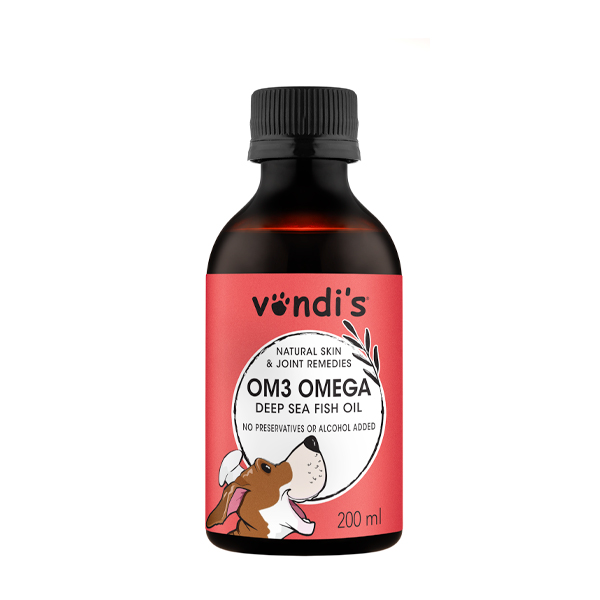
VONDIS OM3 Omega Oil
VONDIS OM3 Omega Oil
A preservative-free fish oil rich in the EPA and DHA your dog cannot make in useful amounts. A daily measure stirred into food is a low-fuss way to feed the skin barrier and steady a dry coat through the cold season.
When To Call Your Vet
Most winter dryness settles with the steps above. Some signs, though, call for a professional eye. Book a visit if the scratching breaks the skin or keeps your dog awake at night. Spreading bald patches or sores also deserve a check, and so does a sudden greasy smell. These can point to an infection or an allergy that needs proper treatment. One local note matters here. Resistant skin bacteria are common in South African dogs. So vets increasingly start with medicated washes. They reach for antibiotics only once a test shows the dog truly needs them. Watching dog skin in winter closely lets you catch problems early, while treatment stays simple.