Executive Summary
Cleaning your dog’s ears works best as an occasional, purposeful job, not a daily habit. A healthy ear largely looks after itself. Most vets step in only when wax, discharge, odour, itching, or a recent swim calls for it. One safety step comes first and matters most: the vet checks the eardrum. Several common cleaners can harm a dog’s hearing and balance if the eardrum has a hole in it. Done gently and only when needed, cleaning helps. Pushed too far, it causes the very problems it should prevent.
Why Cleaning Your Dog’s Ears Is Not A Daily Chore
Cleaning your dog’s ears can feel like basic grooming, yet the science points the other way. The canine ear canal cleans itself by design. Skin grows near the eardrum and slowly travels outward over weeks. As it moves, it carries old wax and dirt towards the opening, where it falls away. Researchers have measured this slow conveyor in dogs, at about a tenth of a millimetre a day. Thanks to that system, many dogs with healthy ears never need much help. Problems usually begin when owners turn cleaning into a daily ritual. Wash a healthy canal too often and the skin softens and weakens. In turn, that invites the irritation and infection you hoped to avoid.
How The Healthy Ear Keeps Itself Clean
The canal is not a straight tube. It drops down, then bends inward into an L-shape. The eardrum sits at the far end, tucked around that bend. This shape matters for two reasons. First, it keeps the eardrum out of reach of a finger or cotton pad, so gentle wiping at the entrance stays low risk. Second, the bend is where wax gathers once the self-cleaning slows. Glands in the canal wall make a wax that is mildly protective and slightly oily. In a settled ear, that wax stays in balance. In an inflamed ear, the glands swell and the wax worsens. The warm, damp canal then lets the natural outflow stall.
When Your Vet Suggests Cleaning Your Dog’s Ears
Cleaning earns its place in a few clear situations. Cleaning your dog’s ears helps most when an infection has taken hold. By then, clearing the wax and discharge lets medicated drops reach the skin. It also strips away the debris that bacteria and yeast feed on. A clean canal lets the vet see the eardrum and take a sample too. Away from infection, a gentle routine suits dogs whose ears trap moisture easily. That includes dogs with heavy, low-hanging ears, and those with narrow or very hairy canals. A quick clean after swimming helps them as well, since standing water softens the skin and invites trouble.
The Eardrum Check Before Any Ear Cleaning
One step matters more than any other. Before cleaning your dog’s ears in earnest, the vet checks whether the eardrum is whole, using a lighted scope. Several common cleaners can damage the hearing and balance structures behind the eardrum. The danger appears if they slip through a hole in it. In one well-known study, researchers tested four wax-dissolving agents inside the middle ear. Only one, an oil called squalene, caused no harm. The other three did damage. So when the vet cannot see the eardrum, or knows it is torn, the list of safe cleaners shrinks fast. The vet then rinses the canal with plain sterile salt water. This is also why forcing a bottle tip deep and squeezing hard is risky, as the pressure can rupture a weak eardrum.
Choosing A Safe Ear Cleaning Solution
Pet shops stock dozens of ear products, and they do different jobs. Some aim to dissolve and lift wax. Others mainly dry the canal or tackle bacteria and yeast. The right pick depends on what the vet finds, and above all on the eardrum. When the eardrum is whole, vets can choose from a wide range. When its state is unknown, only the gentlest options stay sensible. Cleaning your dog’s ears then usually means plain saline or a squalene-based cleaner. A buffered rinse called Tris-EDTA is another gentle option, and it helps antibiotics work better. The panel below sets the safer picks against the ones to avoid with a questionable eardrum.
The Right Way To Clean Your Dog’s Ears At Home
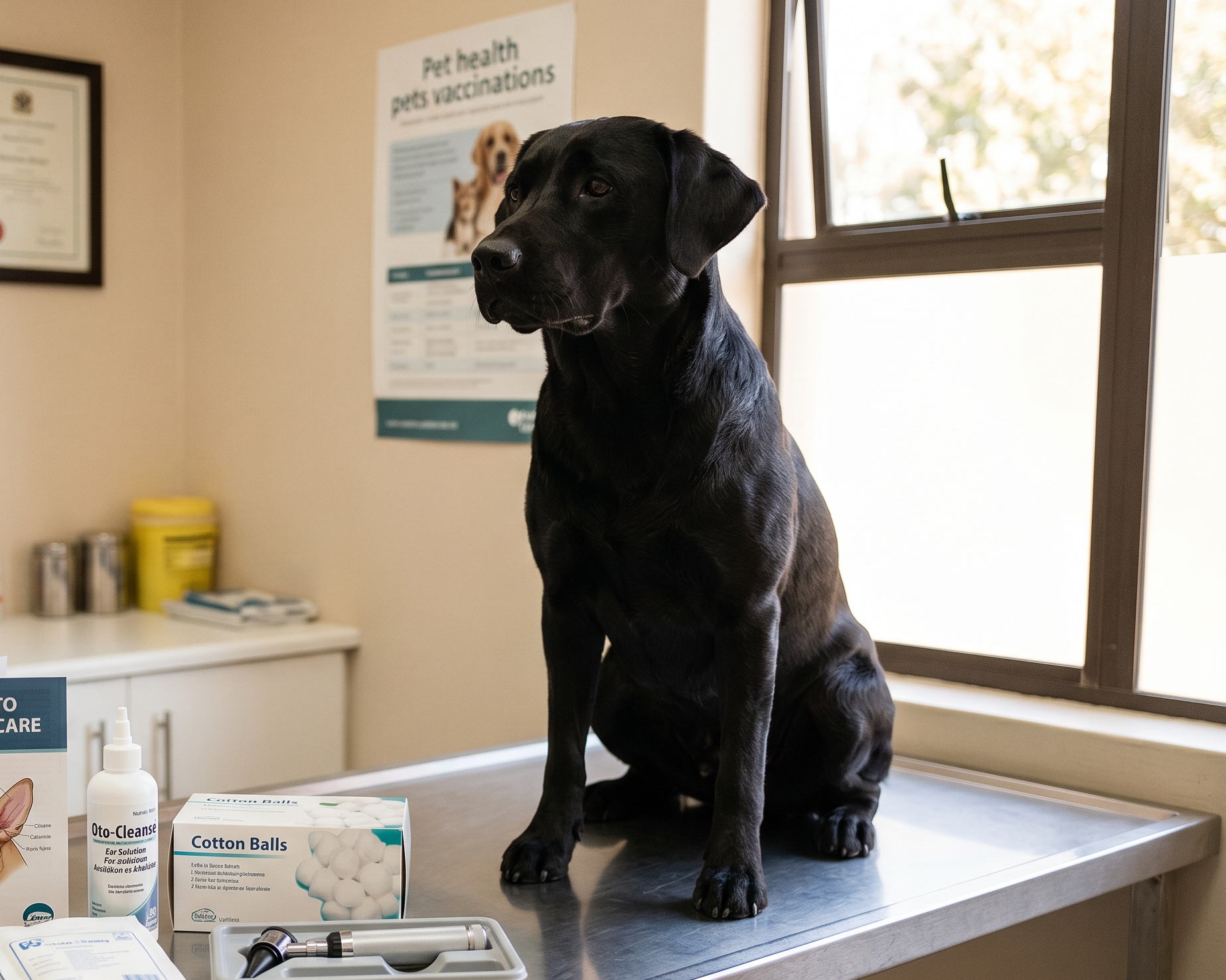
Once the vet shows you the method, home cleaning is straightforward. Warm the solution to body temperature first, since a cold liquid makes most dogs flinch. Fill the canal until the cleaner pools at the opening. Then massage the base of the ear gently for a minute. You will often hear a soft squelch, a sign the liquid is working through the wax. Next, step back and let your dog shake its head. That shaking throws loosened debris up and out of the bend. Finally, wipe the visible canal and the ear flap with a cotton ball or gauze. Use a fresh surface each time.
Never push a cotton bud into the canal. It packs the wax inward and fights the ear’s own system. Cleaning your dog’s ears well means reaching only as far as a fingertip fits, no deeper. If your dog yelps or pulls away, stop and call the vet. A sore ear usually needs a few days of medicine before any cleaning feels kind or does any good.
How Often Should Ear Cleaning Happen
Frequency is where good intentions slip. During an active infection, the vet may ask you to clean daily for the first week. After that, ease off as the ear settles, towards a light routine of about once a week. For a normal, healthy ear, the honest answer is simpler. Clean only when you spot a wax build-up or notice dampness after a swim. Cleaning your dog’s ears more than once a week, when nothing is wrong, rarely helps. More often, it does harm. The schedule below shows how a sensible plan eases off over time.
A Typical Ear Cleaning Schedule
1
Active Infection
Up to once a day for the first week, only on the vet’s instruction.
2
Settling Down
Ease off to every second or third day as the ear calms.
3
Maintenance
A light clean about once a week for ears that need it, or none at all.
Looking Past The Ear To The Skin
Most repeat ear problems are not really about the ear. In many dogs, the real driver is allergic skin disease. It is the same sensitivity that shows up as itchy paws or a dull coat. Skin lines the ear canal, so when the skin barrier struggles, that warm canal flares up again and again. This is why vets treat recurring ears as a skin problem first.
A Practical Option
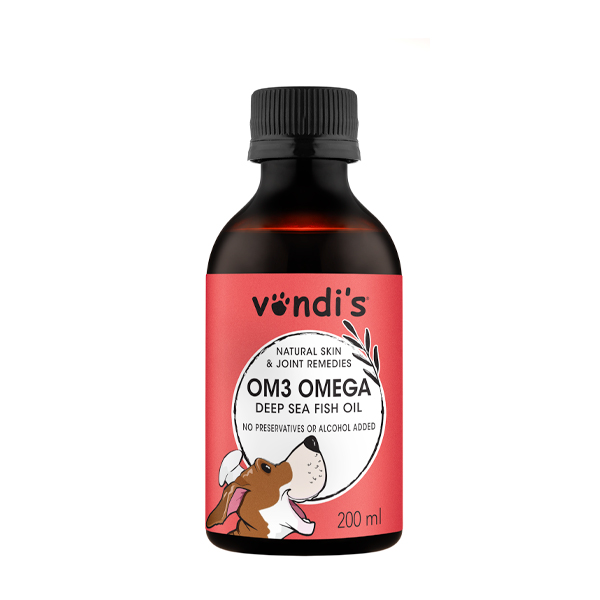
VONDIS OM3 Omega Oil
VONDIS OM3 Omega Oil
A preservative-free fish oil rich in the EPA and DHA your dog cannot make in useful amounts. Stirred into food each day, it gives steady support to the skin barrier that often sits behind repeat ear and skin flare-ups. Treat it as quiet background help, never a replacement for veterinary care.
Cleaning your dog’s ears manages the symptom inside the canal. Calming the allergy and feeding the skin barrier is what cuts down how often the trouble returns. Diet plays a quiet part here, and steady support from the inside can sit alongside whatever your vet prescribes.
What Ear Cleaning Research Still Cannot Settle
The firm evidence on routine cleaning is thinner than you might expect. Much of it comes from lab tests and expert opinion, not large trials in living dogs. A 2024 study tried to answer one question head-on. It compared infected ears that got a proper clean against ears that staff merely wiped with gauze. Both groups improved on medication. That result caught some vets off guard. The clear extra benefit of cleaning showed up mainly in ears carrying rod-shaped bacteria, among the tougher infections to treat. So cleaning your dog’s ears clearly earns its keep in the messier cases. Its value in every mild case, though, stays open to debate. An ear-product company also funded that study, and the sample was small, so it proves less than it first seems.
The Vondi’s View
At Vondi’s, we see the ear as a window onto the whole dog. A canal that keeps flaring up is usually telling you something about the dog’s skin and overall comfort. Good cleaning, done gently and only when needed, is a real help. Even so, it works best as one piece of a bigger plan, with your vet leading. They can check the eardrum and pin down the true cause. When in doubt, book the visit rather than reaching for the bottle. Your dog’s ears, and hearing, are worth that patience.