Executive Summary
You can clean your dog’s eyes safely at home. The trick lies in knowing which tools to trust. You also learn to read the gap between normal mess and a real problem. The American College of Veterinary Ophthalmologists steers owners towards sterile saline and soft pet eye wipes. A warm compress helps too, since it loosens stubborn crust before you lift it away. That same college warns plainly against household fixes such as contact lens solution. Most staining below the eyes comes from ordinary tears. They overflow onto the fur, so the marks rarely point to illness. Flat-faced breeds and dogs with inward-rolling eyelids do show it more often, though. Squinting or thick coloured discharge tells a different story. Either sign sends a dog to the vet for a proper look.
You can clean your dog’s eyes with real confidence once you understand what counts as normal. Brown crust in the corner of the eye alarms plenty of owners. In a healthy dog, though, it usually amounts to little more than dried tears and old skin cells, with a bit of dust mixed in. The harder question is spotting when that build-up hints at something worse. So this article walks through what vets actually say about cleaning a dog’s eyes and knowing when to worry. Every point below rests on guidance from veterinary ophthalmologists, and none of it leans on guesswork.
Why Vets Want You To Clean Your Dog’s Eyes Often
Veterinary ophthalmologists genuinely want you to clean your dog’s eyes on a regular basis. Left to sit, discharge and everyday bacteria gather around the eye and start to irritate it. Your fingers cannot harm the eye while you work, so there is no need for nerves about going near it. Even then, the aim stays gentle. Here, patience matters more than speed.
The Tools Vets Choose For Dog Eye Area Cleaning
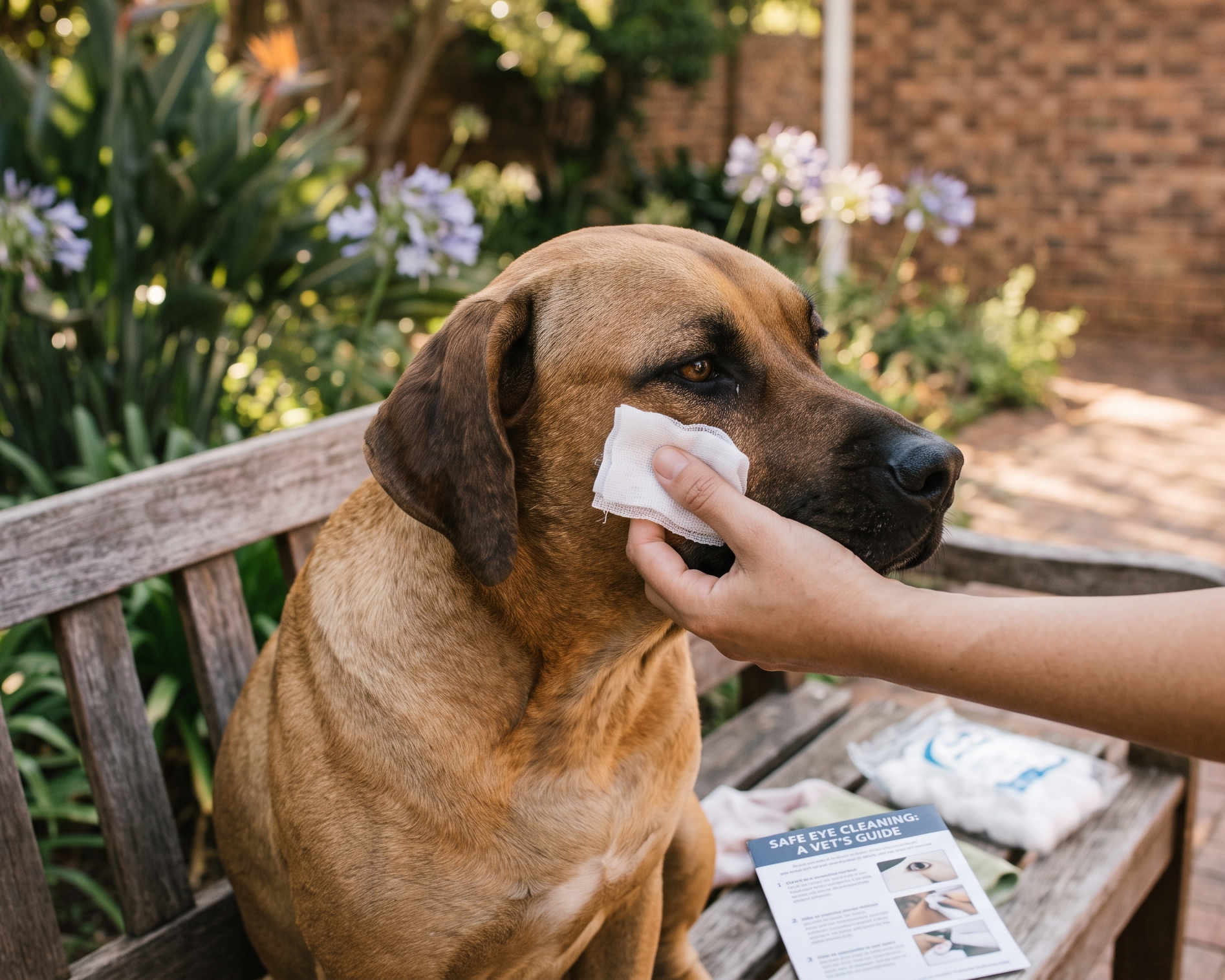
Vets keep the toolkit simple. Sterile saline eye wash leads the list, and you can rinse the eye with it freely. Soft pet wipes come next, and you will spot them under names like Optixcare and I-Lid ‘N Lash. They lift crust without leaving fibres behind. For anything stuck fast, a warm damp cloth over the closed lids for a few minutes softens the debris first. Always work from the inner corner outwards. Use a fresh part of the cloth for each eye, so nothing travels from one side to the other. These few items are all you need to clean your dog’s eyes well.
What Tear Staining Around The Eyes Really Means
That reddish-brown mark under the eyes worries owners, especially on a white or pale coat. The colour comes from porphyrins. The body makes these natural pigments as it breaks down old red blood cells. They leave the body in tears, and they show up in urine and saliva too. Once a tear dries in the open air, the pigment darkens and becomes easy to see.
The cause often surprises people. Most dogs with these marks make a perfectly normal amount of tears. The real issue is where those tears end up. They cannot always drain through the tiny ducts near the inner corner of the eye. So they spill onto the face, and that overflow leaves the stain. All of this also guides how often you clean your dog’s eyes.
Breed Traits That Vets Watch For
A few physical features make some dogs far more prone to staining. Flat-faced breeds carry shallow eye sockets and loose lids. That looseness lets the lower lid roll inward and cover the drainage opening near the nose. Small breeds such as Poodles and Shih Tzus often have a similar inward fold at the inner corner. Stray hairs there brush the eye and set off extra tearing. Some dogs also grow extra or misplaced lashes, and these rub the surface until it waters in protest. None of this means a dog is ill. It does explain why the marks keep returning, however well you tend the area.
Frequency follows the breed. For these dogs, you may clean your dog’s eyes daily. Others need attention only when discharge gathers. Trimming the hair around the eye with blunt-tipped scissors helps as well, since it stops the fur from carrying tears across the face.
Red Flags That Go Beyond Cleaning The Eye Area
Most discharge is harmless, and a quick wipe to clean your dog’s eyes settles it. A handful of signs, though, mean the vet should see the eye. Squinting and obvious pain come top of that list. Redness or cloudiness belongs there too, alongside any thick yellow or green discharge. Each one can flag an infection or a scratch on the surface of the eye. Some point to deeper trouble, such as dry eye or rising pressure inside the eye. A dog that paws at its face or shies away from bright light is telling you that something hurts. Watch the eye itself, and note any change in its size or clarity. One condition deserves special fear. A sudden surge of pressure inside the eye, known as glaucoma, can blind a dog within a single day when it goes untreated. A change like that never waits.
Treat anything on the red side of that comparison as a same-day matter for the vet. Home cleaning will not fix it.
Products Vets Warn Against When You Clean Your Dog’s Eyes
Some well-meaning advice about how to clean your dog’s eyes points to products that vets actively warn against. Contact lens solution tops that list. It carries enzymes meant for plastic lenses, and those enzymes can damage the living surface of the eye. Alcohol and hydrogen peroxide cause similar harm, so keep both well away from the face. The same goes for soap and essential oils, along with any human eye drop your own vet has not prescribed.
Cotton wool brings its own trouble. Loose fibres catch on the lashes or drift onto the eye. A clean cloth or a proper pet wipe sidesteps that risk completely. If your dog fights the handling, or the eye already looks sore, stop. Call your vet before you press on.
Tear Stain Cleaning Products And The Evidence
Plenty of tear stain removers promise fast results, so it pays to know what sits behind the label. These sit well apart from the plain routine you follow to clean your dog’s eyes each day. A few years ago, several of these products contained tylosin, an antibiotic, and the label often failed to say so. The American Veterinary Medical Association reported that the United States Food and Drug Administration sent formal warning letters to three makers in 2014. The agency called the products unapproved animal drugs. It stated that tylosin had never earned approval for dogs or cats, nor for treating tear stains. Eye specialists have since made the same point. Dosing a dog with antibiotics for a cosmetic mark rarely justifies the risk of breeding resistant bacteria, above all when the staining causes no discomfort at all.
Newer products tend to drop the antibiotic. Many lean on gentler ingredients such as probiotics or boric acid. Some add fish oils for the skin. Firm proof that any of them clears staining stays thin, however. That gap does not make every supplement worthless. It does mean you should treat bold claims with caution, and look first at the underlying cause, whether that comes down to breed shape or a treatable eye condition.
A Practical Option
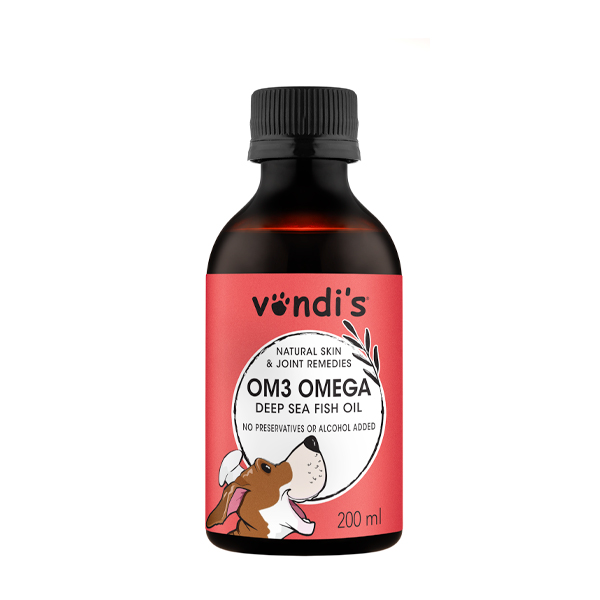
VONDIS OM3 Omega Oil
VONDIS OM3 Omega Oil
VONDIS OM3 Omega Oil is a preservative-free fish oil rich in EPA and DHA. No strong evidence shows that omega-3 lifts tear stains on its own. Still, a daily measure can support healthy skin and a glossy coat around the eyes, working alongside the cleaning routine above.
Fish Oil Suppliments
Fish oils earn their place in skin and coat care for that reason. The omega-3 they carry feeds the skin across the whole body. Its reach stops short of fixing the eye by itself, so keep your hopes sensible about what any supplement can manage.
Whatever routine suits you, clean your dog’s eyes gently, and reach only for products that vets actually back. Watch the colour and the texture of any discharge. Notice any sign that the eye truly hurts. Then book a vet the moment something looks off for your dog. Day-to-day eye care should stay calm and quick. A vet visit should win out the moment anything looks wrong.