
Executive Summary
Canine Cognitive Dysfunction (CCD), a neurodegenerative disorder frequently misdiagnosed as normal ageing, is mechanistically characterised by cerebral glucose hypometabolism, oxidative stress, and neuroinflammation, drawing strong parallels to human Alzheimer’s Disease and “Type 3 Diabetes.” The pathology is driven by neuronal insulin resistance creating a critical energy gap, which manifests clinically through disorientation, altered interactions, and sleep-wake disturbances (DISHAA). Effective management has shifted from palliative care to metabolic rescue, primarily through the dietary inclusion of Medium-Chain Triglycerides (MCTs) that provide ketone bodies as an alternative fuel source for glucose-starved neurons. Such a nutritional strategy is critically supported by a synergistic antioxidant network (Vitamins E, C, Selenium) to mitigate mitochondrial dysfunction and Omega-3 fatty acids to preserve membrane fluidity and modulate inflammation. Furthermore, contemporary interventions increasingly target the Gut-Brain Axis, utilising probiotics and specific nutrients to reduce systemic inflammation, thereby offering a multimodal therapeutic approach that does not merely mask symptoms but actively restores neuronal bioenergetics and cognitive function in the senescent canine.
Introduction
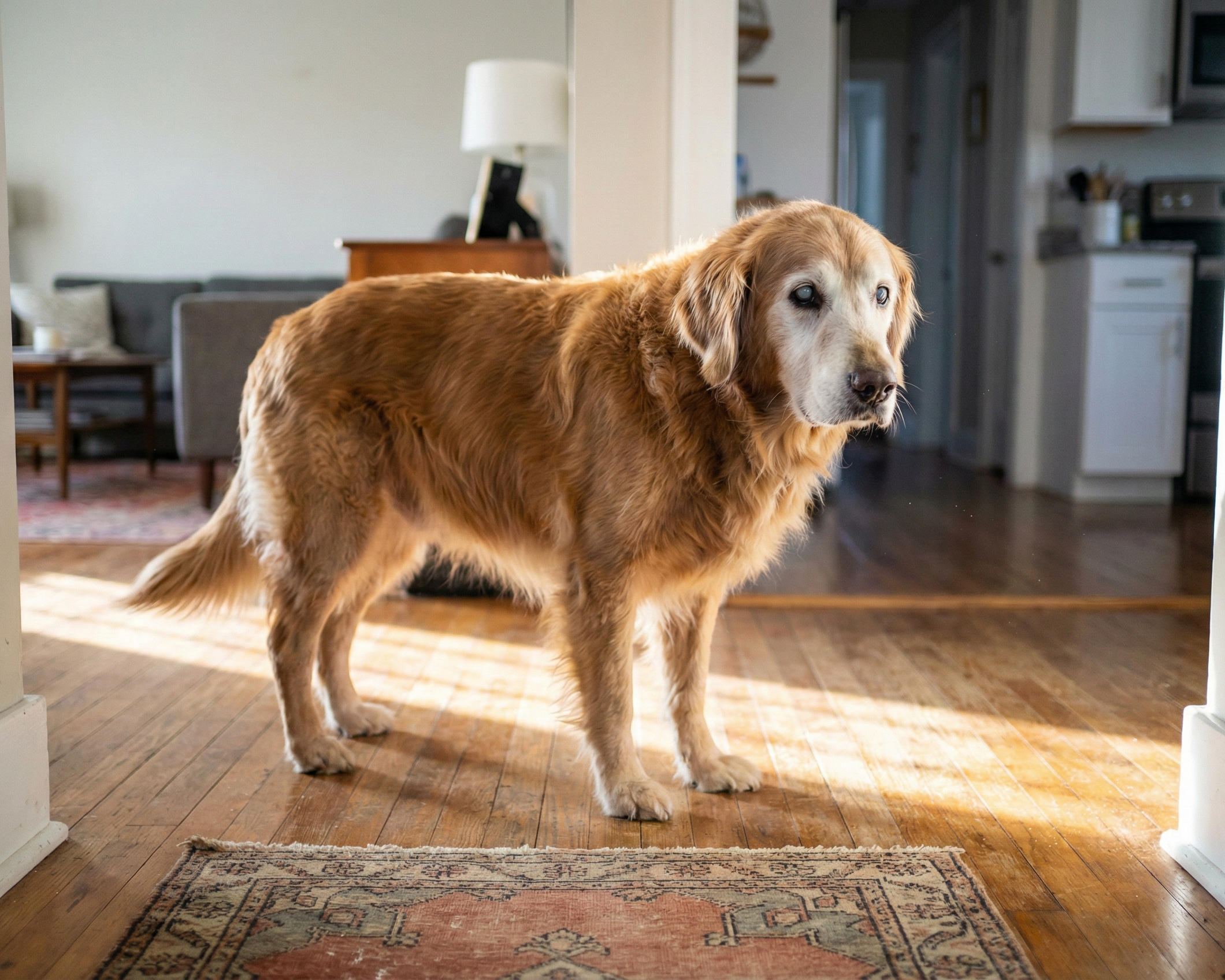
Watching your older companion struggle with Canine Cognitive Dysfunction, often manifesting as memory loss and confusion, can feel heartbreaking and frustrating. You might notice them staring blankly at walls, getting stuck in corners, or forgetting the housetraining habits they held for years. Many owners accept these changes as an inevitable part of ageing. In fact, we often dismiss them with a shrug, assuming nothing can be done and that “he is just getting old.”
A Shift in Understanding Canine Cognitive Dysfunction
Historically, veterinary medicine offered little for these ageing minds beyond palliative care. Conversely, modern research and holistic practice reveal that Canine Cognitive Dysfunction (CCD), often called dog dementia, is not merely a consequence of time. Instead, it acts as a visible signal that the ageing brain is facing a profound metabolic crisis.
To understand these signals, we must first appreciate how the brain ages. The brain is the body’s most energy-demanding organ, and in senior dogs, it undergoes profound changes. Specifically, the neurons struggle to utilise glucose, their primary fuel source. The pathology is so similar to human Alzheimer’s Disease that researchers often refer to it as “Type 3 Diabetes” of the brain. Additionally, toxic proteins accumulate, and oxidative stress “rusts” the cellular machinery.
Furthermore, the ageing brain does not suffer in isolation. It is influenced by the gut, the immune system, and a lifetime of metabolic wear and tear. Consequently, the mind of an older dog becomes a vulnerable landscape, prone to anxiety, disorientation, and a disconnect from the family they love.
Understanding the Signs of Dog Dementia
Importantly, a diagnosis of Canine Cognitive Dysfunction does not mean we simply watch them fade away. The modern veterinary philosophy teaches us that CCD demands a systemic, nutritional approach. We must look beyond the symptoms of confusion and ask why the brain is starving.
Moreover, we must examine the diet, the energy supply to the neurons, and the cumulative effects of inflammation. By doing so, we empower ourselves to support our ageing companions through their golden years with dignity and mental clarity.
The Ageing Brain: Causes of Senior Dog Memory Loss
Before exploring specific interventions, we must establish the biological reality of the geriatric brain. Current estimates suggest that cognitive decline affects up to 68% of dogs by the age of 15. Regardless of the breed, the physiological changes are consistent.
The Metabolic Crisis: Type 3 Diabetes
A metabolic crisis occurs because the ageing brain develops insulin resistance. A younger dog’s brain absorbs glucose efficiently, powering thoughts and memories. An older dog, by contrast, cannot. As a result, the neurons are surrounded by fuel they cannot use, leading to starvation and cell death. The resulting “energy gap” drives the confusion and lethargy we see on the outside.
Structural Changes and Dog Dementia Symptoms (DISHAA)
Additionally, the brain shrinks physically, particularly in areas controlling memory and learned behaviours. Toxic beta-amyloid plaques build up, disrupting communication between cells. The cumulative effect, consequently, is a system that misfires. The clinical signs of Canine Cognitive Dysfunction, summarised by the acronym DISHAA (Disorientation, Interaction changes, Sleep disturbances, House soiling, Activity changes, and Anxiety), are therefore not random misfortunes. Instead, they are predictable outcomes of an energy-starved organ.
Natural Treatment for Dog Dementia: Metabolic Rescue
The MCT Revolution: MCT Oil for Dogs
If the front door to energy (glucose) is locked, we must find a back door. Here, Medium-Chain Triglycerides (MCTs) change the game. Unlike standard fats, MCTs are processed by the liver to produce ketone bodies.
These ketones are unique. They can bypass the broken glucose pathways and enter the brain directly. Once there, they serve as a potent alternative fuel, restoring energy to starving neurons. Studies show that dogs with Canine Cognitive Dysfunction fed MCT-enriched fresh diets demonstrate improved memory and alertness, sometimes within just 30 days.
The Antioxidant Shield
The ageing brain is under constant attack from “free radicals”, unstable molecules that damage cells, much like rust damages metal. The phenomenon is known as oxidative stress. To combat this, the senior dog needs a robust antioxidant defence.
Specifically, a blend of Vitamin E, Vitamin C, and Selenium works to neutralise these threats. Furthermore, nutrients like Alpha-Lipoic Acid help recharge these antioxidants, keeping the defence system active. When combined with a diet rich in fruits and vegetables, such a “shield” protects the delicate structures of the brain from further decay.
Omega-3 Fatty Acids and Structure
Just as a house needs strong walls, neurons need healthy membranes to function. Docosahexaenoic Acid (DHA), an Omega-3 fatty acid found in fish oil, is the structural scaffold of the brain. In ageing dogs, DHA levels drop, making cell membranes stiff and unresponsive.
Supplementing with fish oil restores this fluidity. Moreover, another Omega-3, EPA, acts as a powerful anti-inflammatory, calming the “fire” in the brain caused by ageing.
🛡️ The Cognitive Defence Triad
A synergistic three-pronged strategy to protect the ageing brain.
⛽
MCT Oil (The Fuel)
Bypasses blocked glucose channels to directly re-energise starving neurons with ketones.
Bypasses blocked glucose channels to directly re-energise starving neurons with ketones.
🛡️
Antioxidants (The Shield)
Vitamins E, C & Selenium neutralise oxidative “rust” and protect delicate mitochondria.
Vitamins E, C & Selenium neutralise oxidative “rust” and protect delicate mitochondria.
🧱
Omega-3s (The Structure)
Maintains cell membrane fluidity and reduces chronic neuro-inflammation.
Maintains cell membrane fluidity and reduces chronic neuro-inflammation.
The Gut-Brain Axis: The New Frontier
Emerging research highlights a fascinating connection between the belly and the brain, offering new avenues to treat Canine Cognitive Dysfunction. As dogs age, their gut bacteria change, often leading to inflammation that travels through the blood to the brain.
Repairing the Connection
Supporting gut health with probiotics and proper fibre can help reverse this. Healthy gut bacteria produce compounds like butyrate, which protect the brain and lower anxiety. Consequently, treating the stomach may be one of the best ways to heal the mind.
Processed Diets vs. The Best Food for Dogs with Dementia
Why Kibble Fails the Ageing Brain
While many commercial manufacturers offer “brain health” kibbles, holistic philosophy suggests that highly processed dry foods may contribute to the problem. The high-heat processing required to produce kibble destroys fragile nutrients, particularly the delicate Omega-3 fatty acids and antioxidants essential for cognitive repair.
Furthermore, kibble is typically high in starch (carbohydrates) to bind the biscuit together. High-carbohydrate diets spike insulin levels. Since brain insulin resistance drives Canine Cognitive Dysfunction, feeding a high-starch diet is counterproductive, essentially adding fuel to the metabolic fire. Additionally, the preservatives and synthetic additives found in ultra-processed foods can contribute to systemic inflammation, further stressing the gut-brain axis.
The Fresh Food Gold Standard
Instead, the gold standard for cognitive health is a fresh, species-appropriate diet. This allows for the inclusion of unadulterated Medium-Chain Triglycerides (MCTs), fresh leafy greens for antioxidants, and high-quality animal proteins without the inflammatory burden of preservatives and fillers.
Transitioning to a fresh food diet, rich in healthy fats and low in refined sugars, directly supports the metabolic rescue the ageing brain requires. Steamed vegetables provide bioavailable antioxidants, while fresh meats provide the amino acids necessary for neurotransmitter synthesis.
Canine Cognitive Dysfunction FAQ
1. Is my dog just old, or is it dementia?
Normal ageing involves slowing down physically. However, getting lost in the house, staring at walls, or forgetting family members signals Cognitive Dysfunction. Use the DISHAA acronym to track changes.
2. Can nutrition really reverse the signs?
Yes. While we cannot cure the disease, providing the brain with alternative fuel (MCTs) and antioxidants can significantly improve quality of life and alertness.
3. What is the “Energy Gap” in my dog’s brain?
It is a condition where the brain becomes resistant to insulin and cannot process sugar (glucose) effectively. The neurons starve for energy, leading to confusion.
4. How fast can a diet change help?
Diets rich in MCTs can raise brain fuel levels within hours. Visible behavioural improvements are often reported by owners within 30 to 90 days of starting a targeted fresh food plan.
5. Are there supplements I can add to their current food?
Yes. If a complete fresh diet isn’t immediately possible, supplements containing MCT oil, Omega-3s (fish oil), and antioxidants (like SAMe) can provide similar benefits.
6. Does the gut really affect the brain?
Absolutely. An unhealthy gut can send inflammatory signals to the brain. Probiotics and a healthy diet can support the “Gut-Brain Axis” and reduce anxiety.
7. Is it too late to start if my dog is already 15?
It is never too late. Even in advanced age, providing the brain with a usable fuel source like ketones can improve alertness and interaction.
8. Can I prevent this in my middle-aged dog?
Prevention is ideal. Starting an antioxidant-rich diet and maintaining a healthy weight in middle age can help protect the brain before significant damage occurs.
9. Why is my dog waking up at night?
Sleep-wake cycle disturbance is a classic sign of CCD. The brain loses its internal clock. Nutrition and daytime enrichment can help reset this rhythm.
10. What is the best diet for a senior dog with memory issues?
A fresh, whole-food diet enriched with MCTs (for fuel), Arginine, B vitamins, and antioxidants. Avoid high-carbohydrate processed foods that exacerbate insulin resistance.
Conclusion
Canine Cognitive Dysfunction is not merely a “senior moment.” It is a conversation between the ageing body and the observant owner. By learning to read the signs: the confusion, the anxiety, the aimless wandering, we gain insight into the internal workings of our companions. The brain reflects the metabolism, the gut, and the cumulative effects of time.
Addressing these conditions naturally and holistically, therefore, honours the years of loyalty our dogs have given us. We cannot stop time, but by bridging the energy gap with targeted nutrition, we can ensure that their golden years are comfortable, dignified, and filled with recognition. Observe, support, and act with compassion.