Executive Summary
For many susceptible breeds, year round dog shedding results directly from a fascinating intersection of canine genetics and modern indoor living conditions. Ancestral dogs rely entirely on seasonal light and temperature shifts to trigger massive moults. Today, artificial lighting and climate control disrupt these natural signals completely. Consequently, the rapid-cycling undercoat follicles default to an independent growth rhythm. This biological shift forces specific double-coated breeds into a continuous shedding state.
To truly grasp this common veterinary dermatological phenomenon, we must examine the biological mechanics driving year round dog shedding in specific breeds. Initially, many pet owners assume hair loss represents a simple failure of the skin to hold the coat. In reality, shedding requires a highly active phase of the growth cycle called exogen. Consequently, this complex proteolytic process relies heavily on specific microscopic environments operating autonomously across millions of individual hair follicles.
Understanding Continuous Pet Hair Shedding
The Anatomy of Perpetual Dog Coat Shedding
Fundamentally, most domestic dogs possess a complex compound follicular architecture where multiple hairs emerge simultaneously from a single pore. Within this structure, each unit contains one coarse primary guard hair alongside up to twenty finer secondary hairs. Typically, primary hairs grow slowly and remain anchored firmly for years to provide crucial protection against moisture. Conversely, the soft secondary undercoat hairs manage thermodynamic regulation exclusively. As a direct result, these undercoat hairs complete their life cycle rapidly. Ultimately, when evaluating year round dog shedding, we find the core biological cause within this vast population of fast-cycling secondary follicles. During this shedding phase, specialised enzymes actively dissolve the cellular anchors holding the resting club hairs to push them out cleanly.
How Genetics Influence Constant Canine Hair Loss
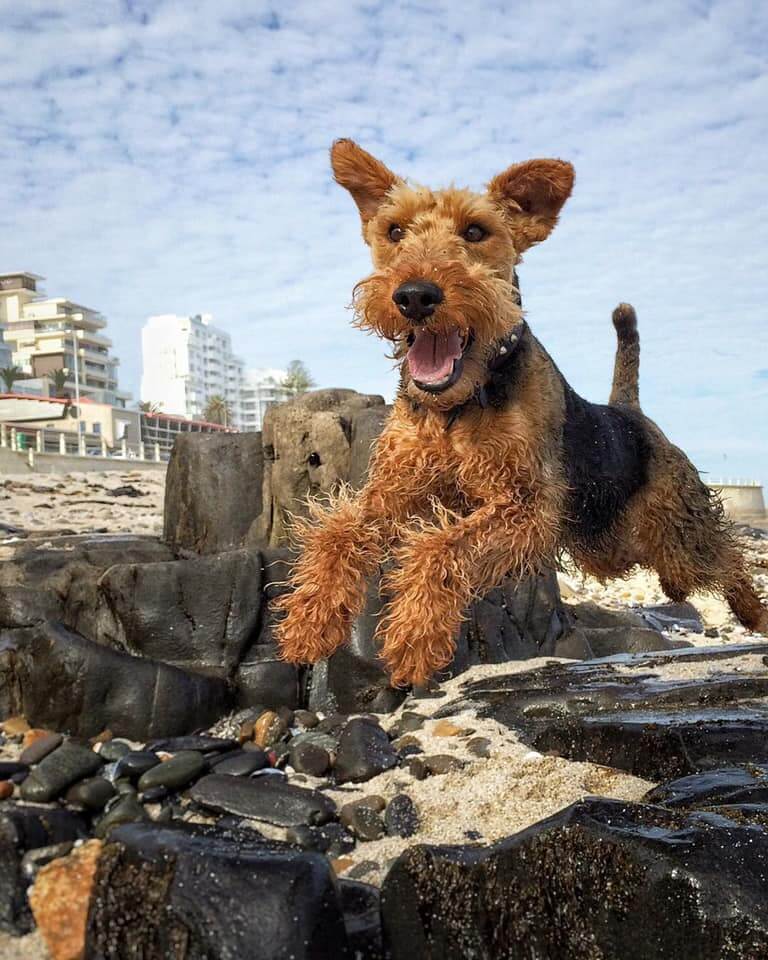
At a cellular level, specific genetic markers strictly govern the duration a hair spends in the active growth phase. Specifically, the FGF5 gene acts primarily as the molecular brake for this cycle. For instance, certain breeds carrying the wild-type FGF5 allele, such as Labrador Retrievers or Beagles, grow short coats rapidly to trigger frequent follicular turnover and heavy, year round dog shedding. Conversely, breeds exhibiting recessive mutations in this gene, like Poodles, delay the regression phase drastically to allow the hair to grow for extended periods. Consequently, this genetic alteration successfully reduces the overall shedding frequency. Additionally, the ADRB1 regulatory locus dictates whether a dog develops a dense secondary undercoat initially. By nature, double-coated breeds naturally possess millions of these highly reactive secondary follicles.
Why Indoor Living Drives Daily Canine Fur Shedding
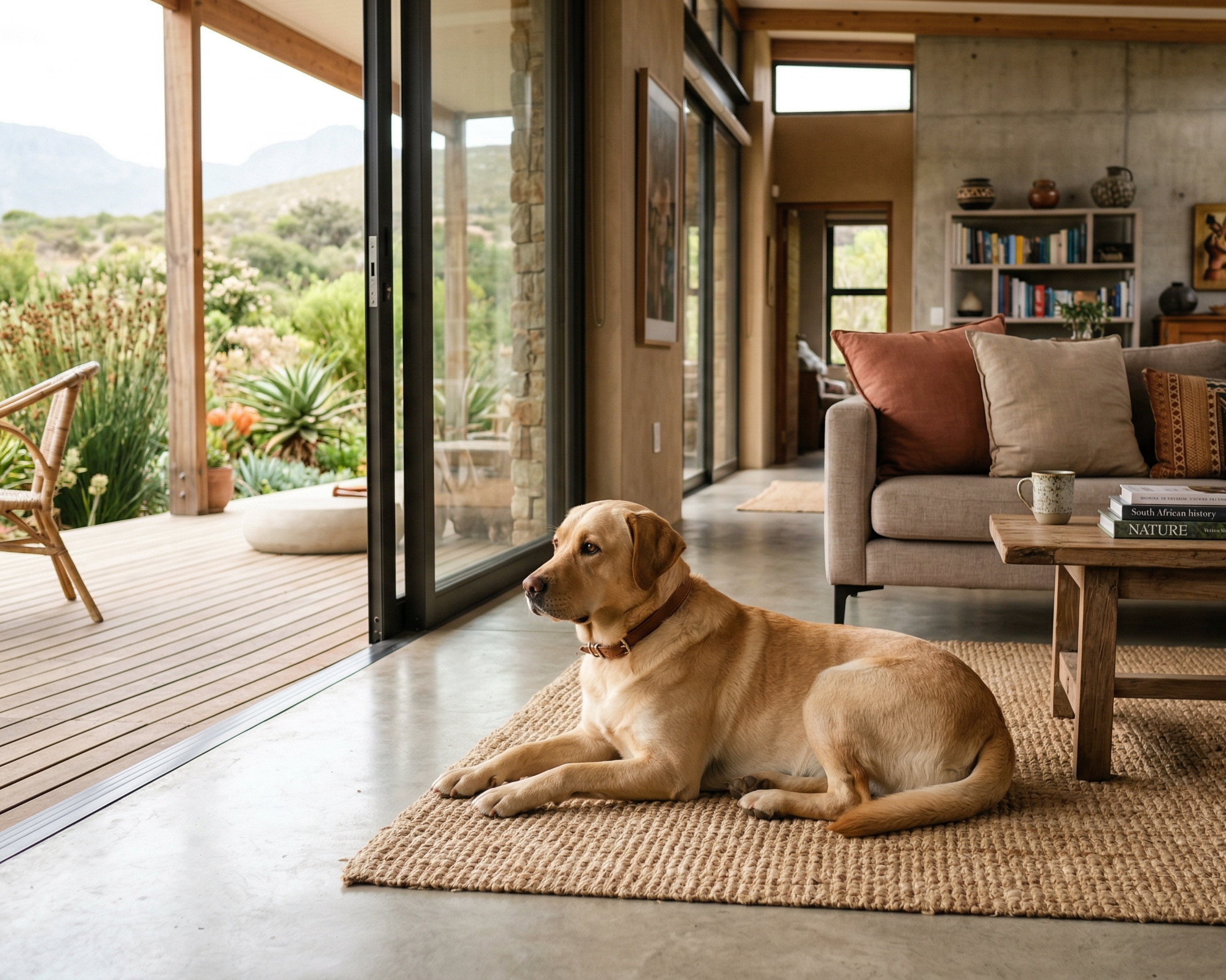
Beyond genetics, modern indoor environments exert a massive epigenetic influence on the canine hair cycle. Historically in nature, varying daylight hours and severe temperature shifts trigger systemic hormonal changes to prompt synchronised seasonal moults. Today, artificial lighting extends daylight hours past sunset, effectively blinding the pineal gland to natural seasonal progressions. Simultaneously, central heating and air conditioning eliminate crucial thermal cues completely. Deprived of these vital environmental triggers, the undercoat follicles subsequently default to an asynchronous pattern where each follicle operates entirely independently. Ultimately, this widespread hormonal uncoupling guarantees year round dog shedding in affected double-coated dogs, ensuring these specific pets drop small amounts of hair daily rather than moulting seasonally.
Key Takeaway
Roughly thirty percent of an affected dog’s coat actively synthesises new protein at any given time, while the remainder rests securely or undergoes active enzymatic shedding.
Managing Perpetual Dog Coat Shedding
In the end, for these affected breeds, the continuous loss of hair represents a completely normal physiological response to an artificially stable climate. Fortunately, asynchronous follicular cycling prevents complete baldness while ensuring constant coat renewal for the animal. By understanding these biological triggers, pet owners can better appreciate the immense cellular activity occurring within their dog’s skin daily. Because of this, proper nutrition supports this relentless metabolic demand effectively. Specifically, diets rich in essential amino acids maintain strong hair shafts to prevent premature breakage and excessive follicle failure.
Frequently Asked Questions
Why do indoor dogs lose hair constantly?
Fundamentally, indoor artificial lighting disrupts the natural production of melatonin. As a result, this disruption stops the body from signalling a seasonal moult, forcing the follicles to shed independently every day.
Does winter heating increase shedding?
Yes, primarily because central heating severely reduces ambient humidity to dry out the epidermal tissue. Subsequently, this desiccation weakens the cellular adhesions within the follicle, mechanically hastening the release of resting hairs.
How does the FGF5 gene affect the coat?
Biologically, this specific gene produces a protein that actively forces the hair follicle to stop growing. Therefore, dogs with a mutated version of this gene grow longer hair and shed significantly less frequently.
What separates a single coat from a double coat?
Essentially, a genetic variation at the ADRB1 locus determines coat type. Consequently, single-coated dogs lack the dense, rapid-cycling secondary undercoat that ancestral wolves pass down to double-coated breeds.
Can stress trigger sudden hair loss?
Absolutely, as severe physiological stress causes the body to release high levels of cortisol. Following this, the hormone prematurely halts the active growth phase, forcing millions of follicles to shed their hair simultaneously weeks later.