
Executive Summary
Why dogs play bow has a deeper answer than simple invitation. The bow interrupts the dog’s own ancestral hunting sequence, and during play dogs deliberately weaken themselves so the game stays fair.
Why dogs play bow is a question every owner has asked at the park. The answer, according to play research, is more calculated than charming. In fact, the bow is a piece of self-control: a predator switching off its own hunt.
Why Dogs Play Bow Before A Chase
Wild canids hunt through a fixed sequence: orient, eye, stalk, chase, grab-bite, kill. The play bow cuts directly into that sequence. The pose declares that the chasing and wrestling to follow are strictly affiliative. As a result, the partner can join the game without reading it as an attack.
Researchers describe the bow as a highly specific signal of non-aggressive intent. That signal is the heart of why dogs play bow at all. It lets the dog rehearse the chase while keeping everyone safe.
Self-Handicapping In Dogs: The Hidden Brake
The bow is only the opening move. Once play begins, dogs practise self-handicapping in the most literal sense: they deliberately limit their strength and speed so a smaller partner stays in the game. In studies of dog horse play, both partners handicapped themselves at equal rates. Each animal adjusted its bite inhibition and momentum to the other’s limits. This means your dog holds a precise sense of how much force a playmate can take.
A Practical Option
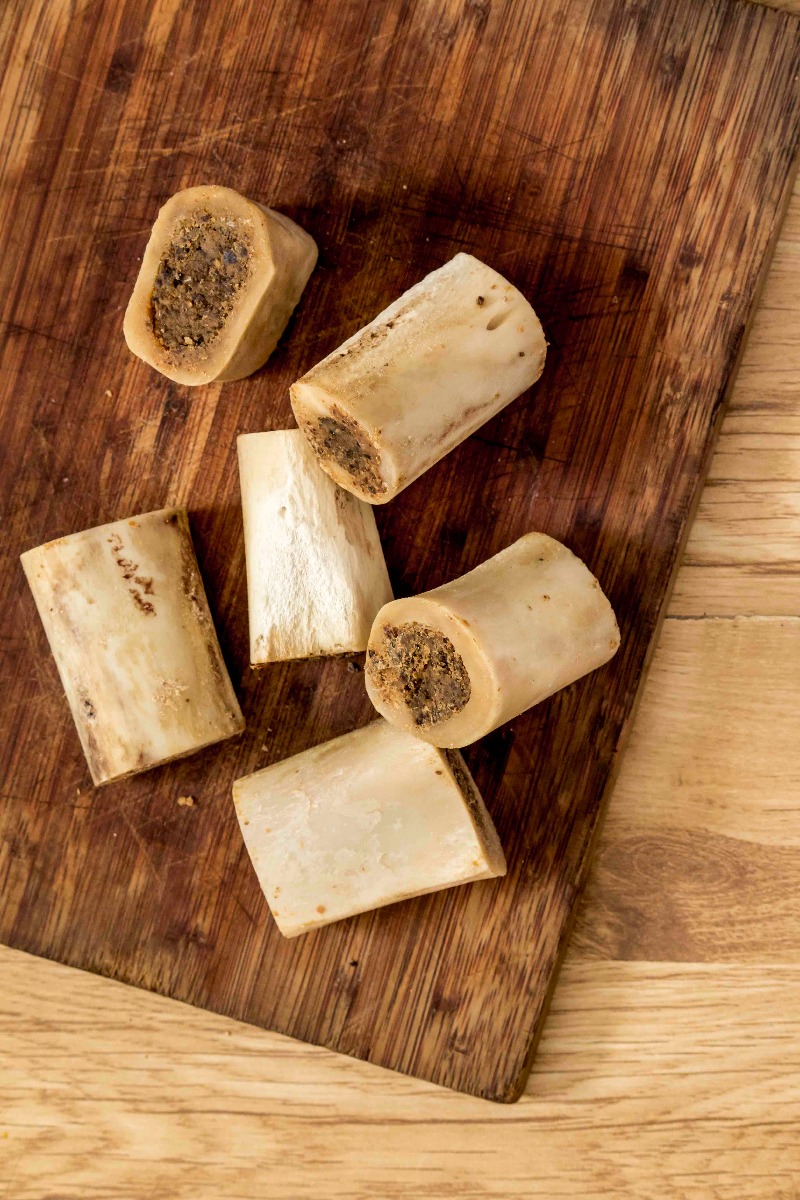
Vondis Beef Boredom Busters (Small)
Vondis Beef Boredom Busters (Small)
Six small hollow marrow bones filled with liver-biltong-infused peanut butter. Sized for small breeds, they give a smaller playmate an absorbing solo game once shared play winds down. Working the filling out also cleans teeth.
Self-handicapping also explains why dogs play bow again mid-game. A repeated bow resets the signal after a rough moment, so the play contract stays intact for both partners.
Dog Play Signals That Other Species Trust
Dog play signals work across species because dogs adapt their whole performance. With cats and horses, dogs modify their motor patterns to sustain the bout and avoid triggering a predatory response. Instead of following its own script, each partner reads the other continuously.
Reading The Bow At Home
For owners, the lesson is practical. A bow before the chase means the roughness is theatre rather than threat. A large dog that lies down for a small playmate is managing the game kindly. If the bows vanish and the play grows one-sided, calmly end the session. Our natural treat range then offers a settled way to finish the afternoon.
Sources And Further Reading
These studies of why dogs play bow cover the evidence in full, and each link opens in a new tab.