Executive Summary
Vets recommend you trim a dog’s nails in small sections from underneath, at an angle. Stop the moment the colour inside the nail starts to change. Most dogs need this roughly every three to four weeks. Dogs that walk often on hard pavement may need it less. The biggest shift in recent veterinary guidance concerns handling. Vets now favour gradual training with treats over holding a frightened dog still by force. In stubborn cases, calming medication agreed with a vet beforehand can help. Skipping regular trims risks sore feet and an altered gait. In some dogs, the nails curl back into the paw.
Learning to trim a dog’s nails matters more than it looks. Nails that grow too long cause quiet discomfort long before a limp ever shows. This guide draws on veterinary teaching hospitals, AAHA’s behaviour guidelines, and recent canine gait research. It sets out what vets actually recommend. It covers the anatomy behind the cut, the technique, the tools worth choosing, and how often the job needs doing. It also looks at handling dogs who find nail trims frightening.
Why You Should Trim A Dog’s Nails Regularly
Underneath the hard outer nail sits a softer core that vets call the quick. It carries the blood supply and the nerves, so cutting into it hurts and bleeds. This matters before you trim a dog’s nails for the first time. In pale nails, the quick shows as a pink stripe down the centre. The same sits inside dark nails too, but you cannot see it from outside.
Nails that grow too long do not stay harmless. A dog’s weight shifts backwards, and the foot begins to splay. Vets count overgrown nails among the more common problems seen in UK dogs, close to gum disease and ear infections. Left unchecked, a dewclaw can grow into the pad and cause a painful sore.
A small 2026 study measured healthy dogs walking before and after a trim, and found little change. Long nails may sometimes be a symptom of how a dog moves, not the cause. That is why learning to trim a dog’s nails properly is worth doing well from the start.
The Vet Recommended Way To Cut A Dog’s Nails
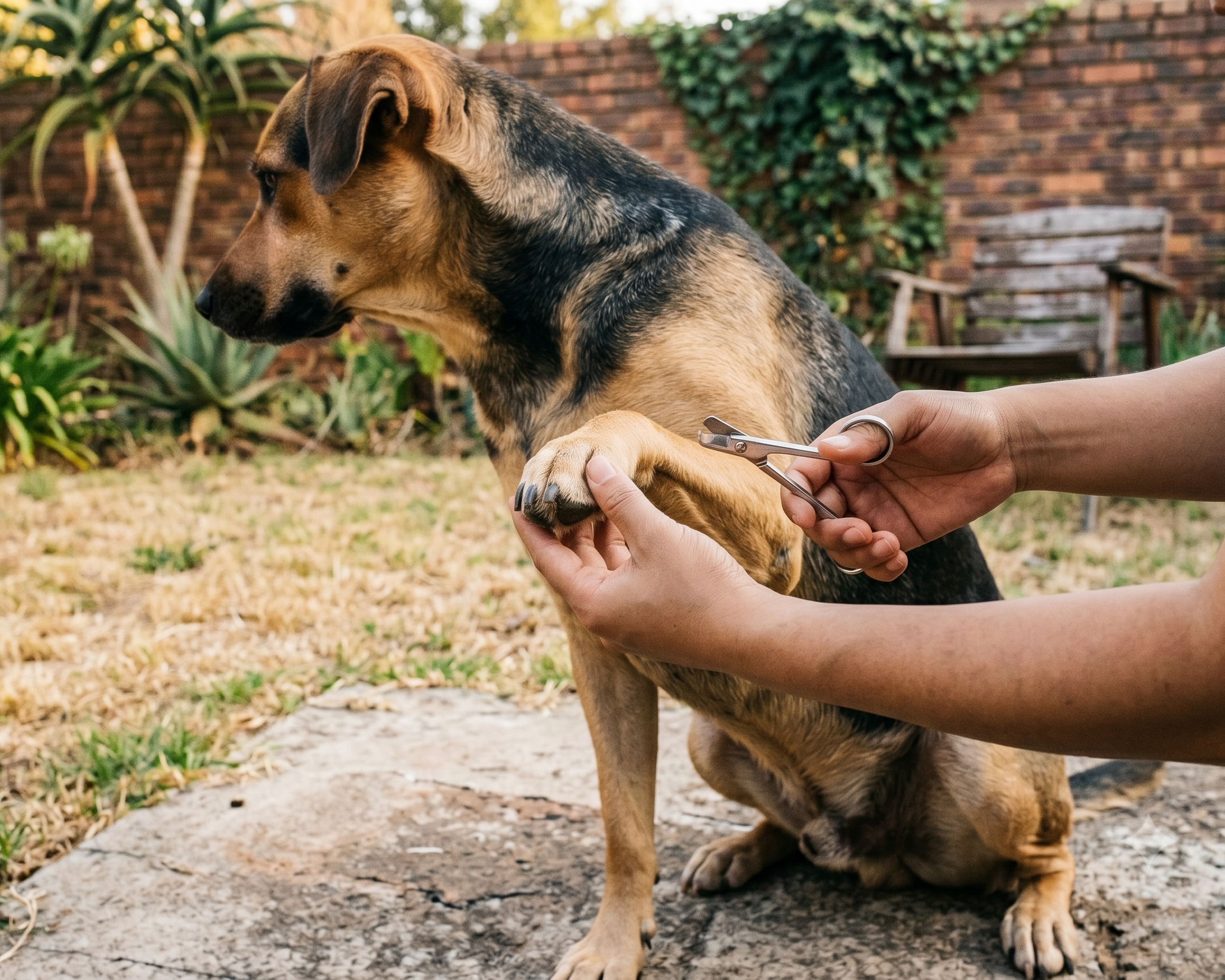
Vets generally agree on the basic method, even if their tools vary. Hold the paw gently, working one toe at a time. Support it well, so the dog feels secure rather than trapped. Position the clipper with the blade facing towards you. Then cut from underneath at roughly a 45 degree angle, following the nail’s natural curve.
Patience matters more than speed. Take off only a couple of millimetres with each cut. Look at the flat surface just created. On pale nails, watch for a pale grey or pink oval. On dark nails, watch for a small dark dot instead. As soon as either shows up, stop and move to the next nail.
Dewclaws need the same care. Nothing wears them down, so they can curl into the leg if owners forget them. Once you trim a dog’s nails this way a few times, the whole process feels far less daunting.
Tools To Use When You Clip A Dog’s Nails
Choosing the right tools makes it easier to trim a dog’s nails calmly. Scissor style clippers work well on thick nails, giving a clear view of the blade. Guillotine clippers feed the nail through a hole and cut with a rising blade. Many vets find them fine for everyday use. Even so, some prefer the scissor type, because it is easier to judge where you are cutting.
A grinder suits dark nails well, filing the nail down gradually instead of cutting in one motion. It takes some getting used to, given the noise and vibration, so introduce it slowly.
Even vets who trim a dog’s nails daily will nick the quick occasionally. When that happens, the nail bleeds more than such a small cut would suggest. Styptic powder is the standard fix. Press a little onto the tip and hold briefly. It works by closing off the tiny blood vessels at the surface. Plain cornstarch will do the job in a pinch. Staying calm helps too, since a calmer dog bleeds less and settles faster.
A nicked quick is also an open wound for a short while. Keeping the area clean afterwards helps guard against infection.
A Practical Option
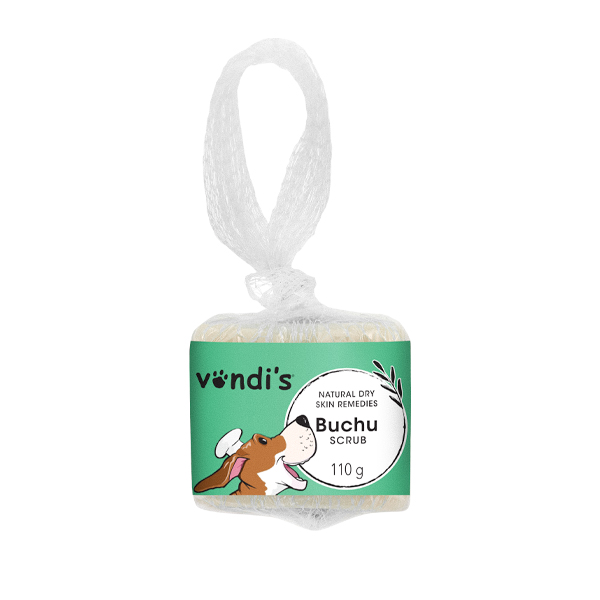
Buchu Anti-Bacterial Soap Scrub
Buchu Anti-Bacterial Soap Scrub
A natural soap scrub made with South African Buchu, valued for its antimicrobial and anti-inflammatory properties. Washing the paw with a small amount after a trim helps guard against infection if the quick is nicked. It also offers gentle support for skin around nails prone to irritation.
If bleeding has not slowed after about ten minutes, call your vet rather than waiting it out. The same goes if the toe looks swollen the next day.
How Often Vets Recommend You Trim A Dog’s Nails
Most vets recommend you trim a dog’s nails roughly every three to four weeks, though this varies. A simple test works as well as any calendar. If the nails touch the floor when your dog stands normally, it is time for a trim. The same applies if you hear clicking on hard flooring.
Dogs walked often on pavement wear their nails down naturally. They may need trimming less than dogs kept mostly indoors. If a dog’s nails have already grown long, small trims every week or two let the quick recede gradually. This beats trying to fix everything in one sitting. Older, arthritic dogs often need more frequent attention, since they walk less and their nails wear down more slowly.
Helping An Anxious Dog Through The Process
For many dogs, having their paws handled feels worse than almost anything else asked of them. A 2022 study found heart rates climbed sharply during nail trims, compared with resting levels. Nearly half the dogs struggled hard or showed early signs of aggression at some point. Veterinary behaviour guidelines now warn against this. They flag the old practice of several people holding a dog still to force a trim through.
A gentler approach works far better, even though it takes longer to trim a dog’s nails this way at first. Start by touching the paw alone, with no clippers involved, and reward calmly every time. Build up slowly from there, adding the sound of the clippers before ever attempting a single nail. Move forward only when your dog looks relaxed, not just still.
For dogs who stay frightened despite training, vets can prescribe calming medication ahead of the appointment. In tough cases, referral to a vet who specialises in behaviour can help.
When To Call Your Vet
Most of the time, trimming a dog’s nails at home is perfectly safe, aside from an occasional nicked quick. A few situations call for a vet instead. A nail visibly curling into the pad needs proper attention. By that point, the skin underneath is often already sore or infected.
The same goes for a toe that looks swollen or smells unusual. Discharge near the nail bed is another sign to get it checked. If your dog’s nails keep growing back unusually fast despite regular trims, mention it at your next check-up. That pattern can point to an underlying issue with how your dog walks, rather than the nails themselves.
Finally, ask your vet or a veterinary nurse to show you the technique in person at least once. A short demonstration on a real dog beats any amount of reading.