Executive Summary
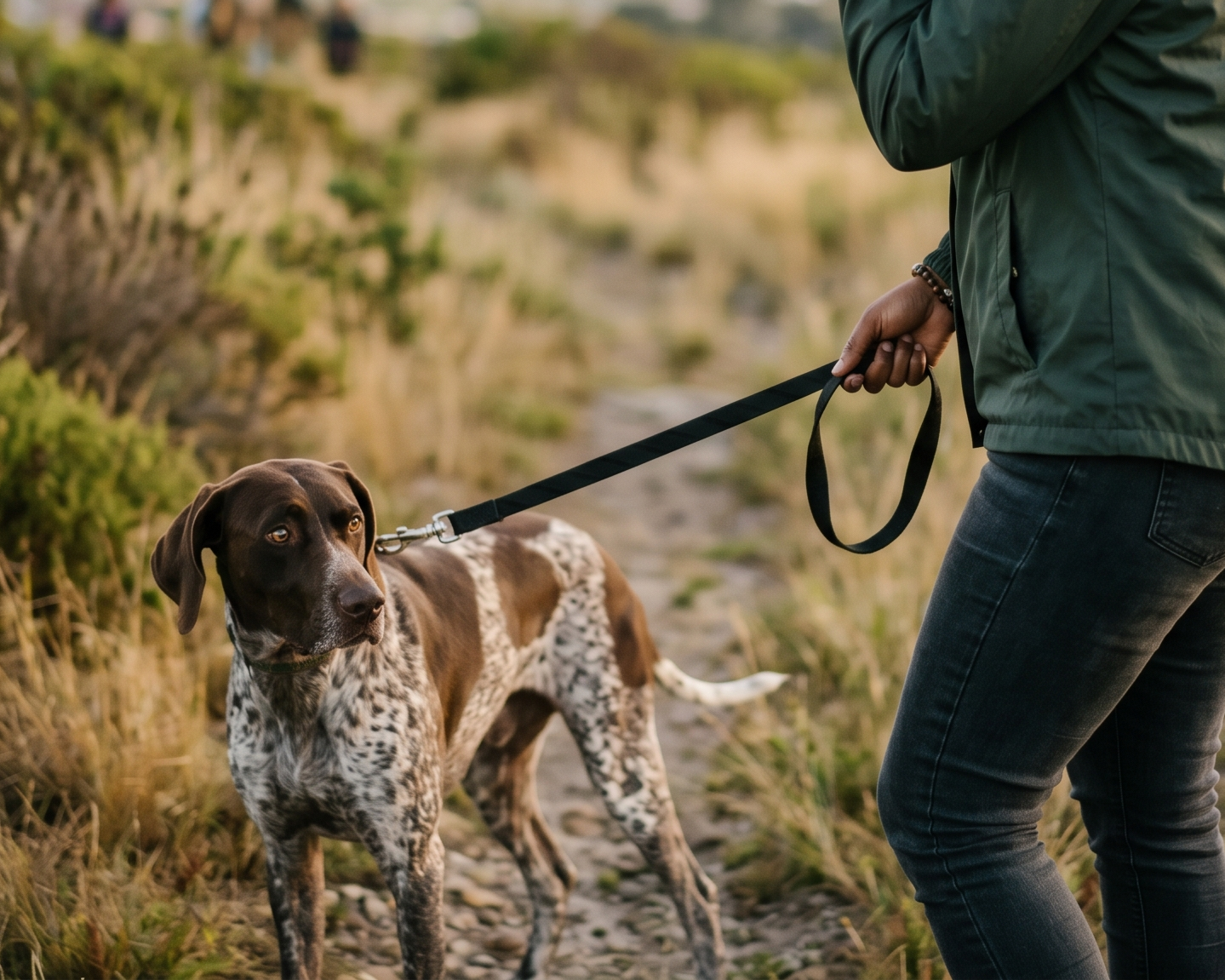
The dog stress response is far more connected to the owner than most people realise. Research now reveals a biological syncing between human and canine that runs deeper than ordinary companionship. The owner’s personality, hormonal state and physical approach all shape the dog’s nervous system in measurable ways. The leash connecting them is invisible. Its effects are not.
The Biology Behind the Dog Stress Response
The dog stress response cannot be understood by studying the dog in isolation. The bond between dogs and humans operates as a deeply coupled biological system. Within this system, intense neurobiological synchrony links the two species together. This physiological mirroring happens during acute interactions. It also accumulates across much longer timeframes.
The consequences run deep. A dog’s stress level, emotional state and capacity to learn all get shaped by this synchrony. Owners therefore exert a far greater influence on canine stress than most people imagine. The mechanism operates beneath the level of conscious training and outside the realm of verbal commands entirely.
Long-Term Canine Stress and the Owner Connection
The clearest evidence for stress synchrony comes from hair cortisol concentration analysis. Cortisol slowly incorporates into the hair shaft as it grows. As a result, hair samples provide a reliable cumulative record of chronic stress over many months. The method captures the long arc of physiological data in a single non-invasive sample.
Breakthrough studies have used this approach to compare dogs and their owners across summer and winter seasons. The results were striking. Long-term stress levels between the two species turned out to be highly synchronised. Chronically stressed owners tend to live with chronically stressed dogs. The pattern held across both seasons consistently.
The most surprising finding emerged from the statistical analysis. Specific human personality traits exert measurable influence on the dog’s cortisol levels. Neuroticism shows the strongest effect, with conscientiousness and openness also producing significant impacts. These owner traits often override the dog’s own personality in determining its physiological stress baseline. A calm dog can absorb the stress profile of an anxious owner, regardless of the dog’s natural temperament. The dog stress response gets written, in part, by the human living alongside.
Active daily interaction tightens the link further. Dyads engaged in agility or obedience competition show particularly strong stress synchrony. Standard pet households show the same pattern, just less intensely. The more time and energy the human and dog invest in shared activity, the stronger the neurobiological coupling between them becomes.
When Personality Travels Down the Lead
Beyond the long-term picture, the dog stress response also reacts to moments as they happen. Electroencephalogram studies of human brain activity during contact with dogs reveal clear patterns. Walking and casual play increase the human’s alpha brain wave activity significantly. This indicates relaxation and emotional stability in the handler.
Structured activities such as grooming and massaging the dog produce a different signature entirely. These activities activate beta brain wave patterns. Neurologically, these patterns link to heightened concentration and focus. Importantly, this kind of focus carries no stress component for the human. The owner reaches a state of calm attentiveness while engaged with the dog.
The hormonal systems of both species activate together during these calmer interactions. Higher basal oxytocin levels in the human handler correlate with calmer behaviour in the dog. Specifically, the dog shows fewer position changes and reduces its pacing. The handler’s hormonal calm therefore translates directly into observable canine settledness. Stress synchrony works in the gentle direction too, not only the anxious one.
When Affection Triggers a Dog Stress Response
The same physical interaction can present a serious physiological mismatch. The research identifies a specific category called the “activating touch.” This means sudden, vigorous scratching or patting initiated by the owner rather than invited by the dog. The owner’s own internal state drives the contact. Meanwhile, the dog’s actual readiness gets ignored entirely.
The biological consequences are immediate. Handler-driven contact of this kind causes acute spikes in canine salivary cortisol. The dog shifts into defensive or hyper-alert postures within seconds. What was meant as affection becomes a measurable source of canine stress almost instantly.
The owner stress impact runs deeper than the moment of contact. An owner’s internal state and physical approach act as powerful unconditioned stimuli. These stimuli modulate the dog’s emotional state directly. Verbal commands have no bearing on this layer of communication. The dog reads the human’s body and breath long before it processes any spoken instruction.
Reading Canine Stress Signals During Learning
The dog communicates its internal state through specific physical signals. Observational research has mapped these signals during operant training tests. The findings are precise. High learning achievement links directly to a recognisable set of visual cues. The body of the dog reports what the brain of the dog is doing.
Successful learners show wide-open eyes paired with closed mouths. Their ears stand erect and orient forward. The tail rides high and forward, either stationary or moving in short quick wags. Together these signals indicate optimal cognitive arousal, attention and positive motivation. A dog displaying this configuration sits in the zone where learning happens fastest.
Handlers who recognise these micro-expressions gain a real-time feedback loop. They can adjust the rate of reinforcement on the fly. They can also modify the difficulty of the task or change the environment around it. All of these adjustments keep the dog within its optimal learning threshold. Watching the dog stress response moment by moment becomes the difference between productive training and wasted sessions.
South African owners increasingly turn to natural supports like CBD for dogs to help take the edge off chronic stress in anxious animals. Used alongside good handler habits and veterinary guidance, such aids can form part of a calmer environment that the dog can read and respond to.
Living With the Invisible Leash
The picture from this research is coherent and a little uncomfortable. Owners shape their dogs more profoundly than they typically realise. The owner stress impact reaches the dog through pathways that bypass training entirely. Long-term cortisol, acute hormonal feedback and the physical micro-language of approach all converge on the dog’s nervous system.
The practical implications follow naturally. Owners who want calmer dogs need to start with themselves. Personal stress management benefits the dog as directly as it benefits the human. Likewise, learning to read canine body language transforms ordinary interactions into informed ones. Effective dog training and a stable dog stress response both depend on this awareness.
The invisible leash works in both directions. Tighten one end and the other tightens too. Soften the human side and the canine side softens with it. Of all the findings in modern dog behavioural science, this one places the most responsibility, and the most opportunity, in the owner’s hands.