Executive Summary
Dog sports injury prevention starts with understanding physics. Athletic events push dogs to their absolute physical limits. Consequently, the line between a flawless run and a severe injury remains incredibly thin. Advanced movement science now shows us exactly how these accidents happen. Ultimately, we can use this knowledge to protect our dogs.
Understanding Dog Sports Injury Prevention
Dog sports injury prevention demands our full attention today. Modern competitive events require massive physical exertion. They ask dogs to perform highly unnatural movements at extreme speeds. Unsurprisingly, this creates a significant physical toll on the body. Recent data from Swedish veterinary studies paints a rather concerning picture. Researchers found injuries in almost sixty percent of competitive dogs. These severe injuries often force a complete halt to training. Most of these problems specifically involve muscle tearing or joint damage. Therefore, dog sports injury prevention requires a careful examination of these hidden forces.
Launching the Rocket: Avoiding Athletic Dog Injuries
Basic movements often hide the greatest physical strain. Consider a dog standing up rapidly from a sitting position. This simple action begins from a deeply crouched posture. Biomechanically, this starting position offers terrible leverage for the animal. To overcome gravity, the dog must generate enormous kinetic force. Greyhounds, for example, do not simply push their bodies upward. Instead, they fire their back legs like a tightly coiled spring. The movement ripples rapidly upward from the hip to the knee. Finally, the ankle joint snaps open to launch the dog forward. Naturally, this explosive action requires extreme muscle contraction.
The lower leg muscles cannot handle this massive force alone. Therefore, the dog relies heavily on stretched tendons for power. These powerful tendons act exactly like thick elastic bands. They snap the body forward with incredible, sudden speed. Consequently, this explosive start places massive stress on the lower limbs.
Hurdle Jumping: The Shock Absorbers
Dog sports injury prevention requires understanding the mechanics of canine locomotion
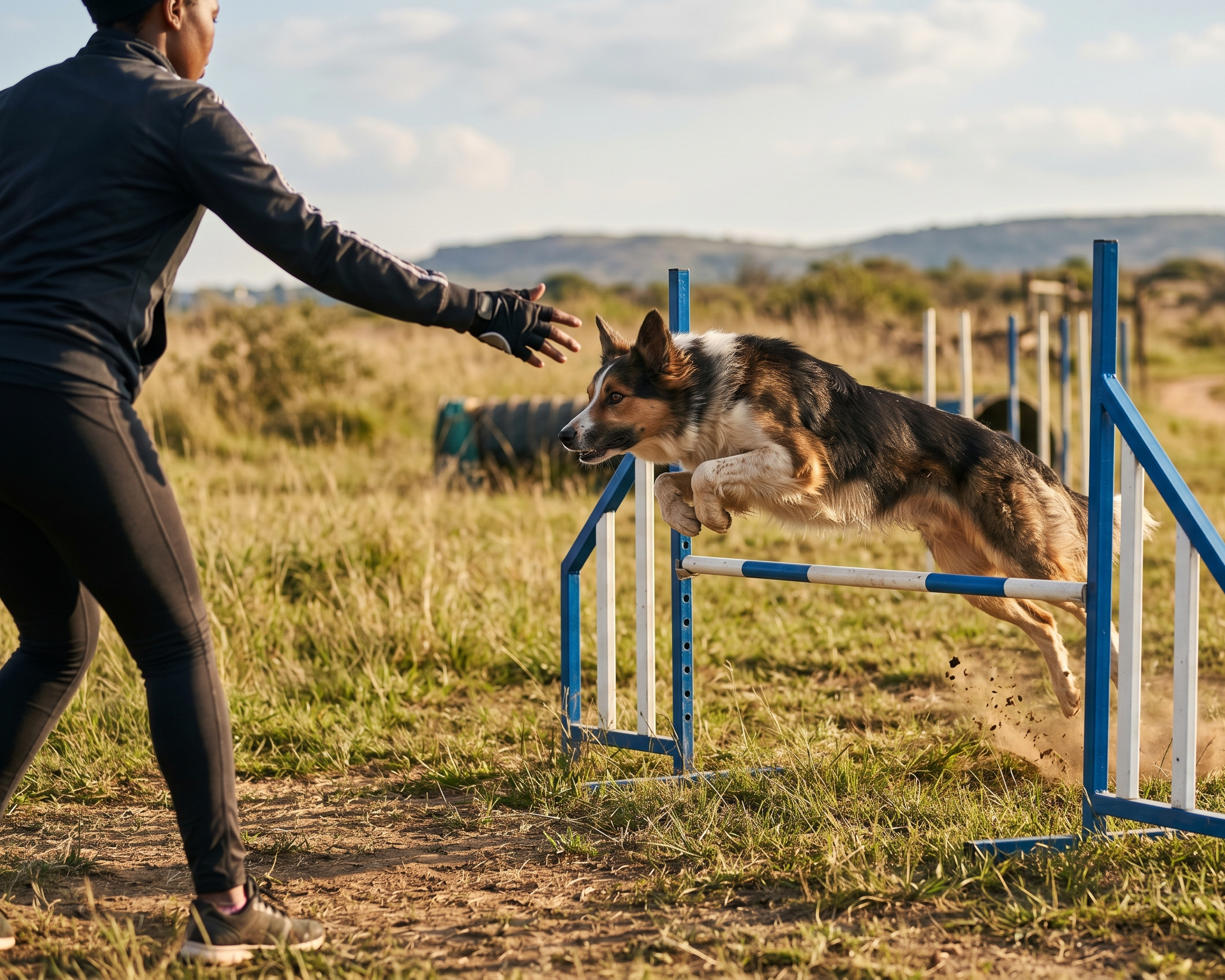
Jumping over hurdles introduces violent physical impacts to the skeleton. When a dog lands, the front legs act as rigid struts. Experience dictates exactly how well a dog handles this impact. Elite dogs keep their leading front leg incredibly stiff upon landing. This purposeful stiffness bounces the energy safely forward into the next stride. Consequently, the dog maintains speed and easily avoids physical damage. Beginners struggle significantly with this precise physical coordination.
Nutrition plays a critical role in maintaining optimal health and avoiding athletic dog injuries. Healthy, whole foods are best.
Novice dogs bend their front legs far too much during impact. As a result, the leg muscles absorb the full, violent shock. This massive strain literally tears the delicate muscle fibres apart. Predictably, beginners suffer a much higher rate of shoulder injuries. Furthermore, jump height changes the physical math drastically for the animal. When facing a high jump, the dog must launch at a steeper angle. The front legs hit the ground simultaneously upon landing. This harsh landing generates forces exceeding four times the dog’s body weight.
Weave Poles and Reducing Dog Agility Risks
Weave poles create uniquely dangerous sideways twisting forces. Dogs must navigate a straight line of tight poles rapidly. This action requires unnatural spinal bending and violent shoulder movements. Researchers identified three distinct physical styles dogs use to weave. The most dangerous method involves hopping with the front feet. This hopping style creates a severe, sudden physical impact.
The outer legs absorb massive amounts of force instantly. The impact happens over a tiny fraction of a second. Consequently, this sends a violent shockwave deep into the joints. Dogs using the stepping style distribute this weight much better. Therefore, hopping heavily increases the risk of chronic spinal damage. Understanding these distinct forces remains essential for proper dog sports injury prevention.
The Canine Shoulder Anatomy Problem
The canine shoulder represents a major anatomical weak point. Human hips sit securely inside a deep, rounded bone socket. A dog’s shoulder completely lacks this deep protective bone structure. Instead, soft ligaments must hold the entire joint tightly together. These ligaments pull tight when the leg straightens fully. This completely straight position makes the shoulder relatively stable. However, the ligaments go completely loose when the dog bends.
Suddenly, the joint loses almost all its primary structural support. Agility requires dogs to turn sharply with bent legs frequently. This loose joint must then absorb massive physical impacts alone. Predictably, this leads to chronic shoulder instability and long-term pain. Veterinarians struggle immensely to spot this hidden joint looseness manually. This hidden structural damage makes dog sports injury prevention extremely difficult.
Who Gets Hurt? Dog Sports Injury Prevention Stats
Certain breeds face much higher physical risks on the field. According to recent veterinary studies, the Belgian Malinois unfortunately tops the injury charts. Researchers noted injuries in over seventy percent of these active dogs. Border Collies follow closely behind with very similar injury rates. Age also plays a massive role in injury likelihood over time. Years of tiny, repetitive damages eventually break the entire body down.
Human fitness matters just as much as canine fitness. Handlers carry a massive physical responsibility in the competition ring. An overweight handler drastically increases the dog’s overall injury risk. Heavy handlers often give physical directional cues far too late. Consequently, the fast dog must make violent, last-second course corrections. These erratic changes tear vital ligaments and destroy soft joints quickly. We must keep ourselves completely fit to protect our dogs. True dog sports injury prevention demands a dedicated, lifelong team effort.