
Executive Summary
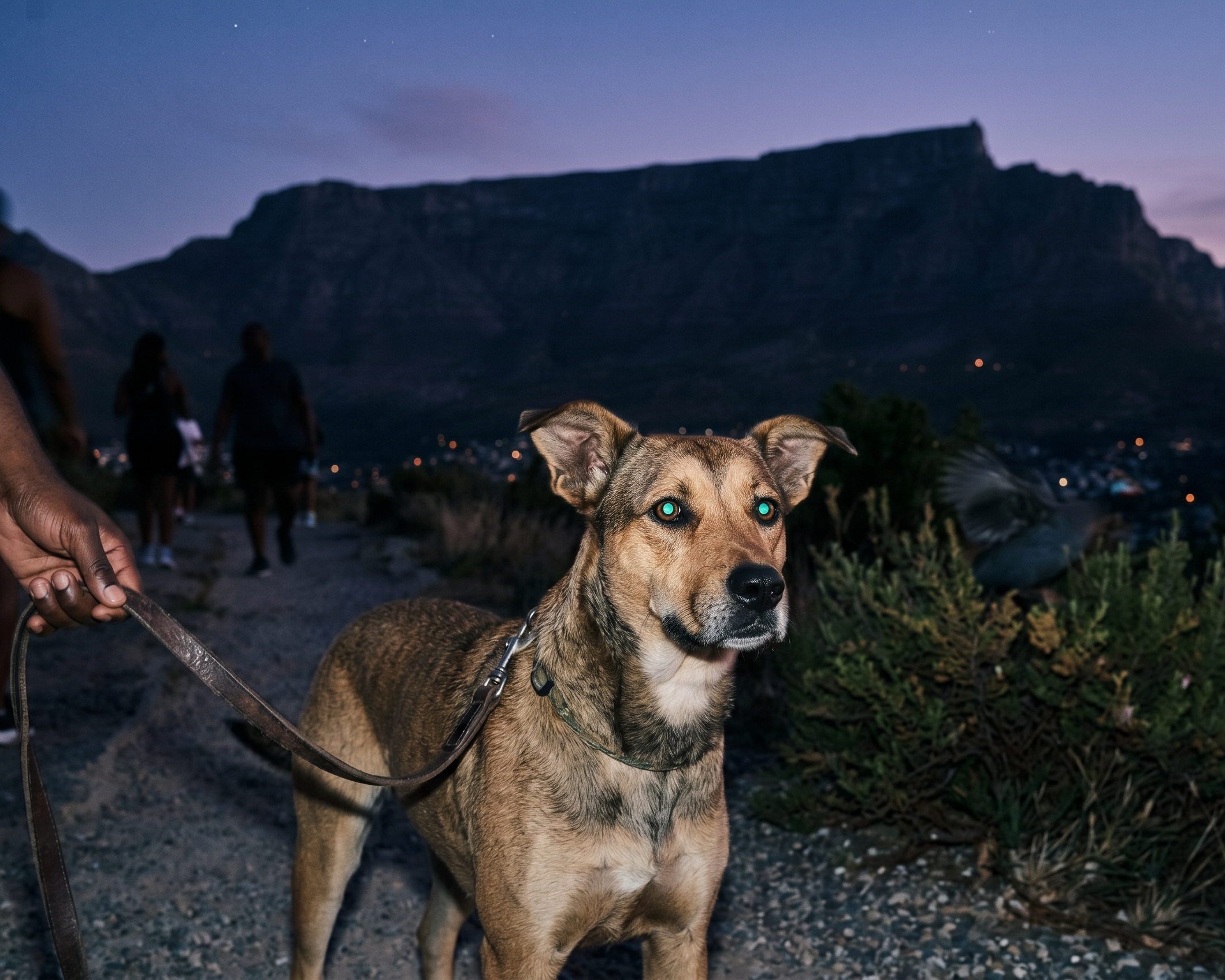
Have you ever taken a flash photograph of your dog outside? You probably ended up capturing a glowing, demon-eyed monster. Perhaps you marvelled at their twilight antics recently. They spot a hare moving easily in distant, dark shadows. Your dog possesses a formidable biological night-vision system. Furthermore, their high-speed motion-tracking abilities put our human eyes to shame. This second article explores the fascinating science of canine night vision. Dog night vision facts reveal a perfectly adapted twilight hunter.
The Twilight Hunter: Evolutionary Origins
Dog night vision facts reveal an incredible evolutionary journey. Modern dogs evolved directly from twilight-hunting wolves. Consequently, their entire visual architecture prioritises extremely specific survival tasks. They must catch rapid movement in the dark effectively. Therefore, they gladly sacrifice seeing crisp details during bright midday hours. Modern science explains this biological trade-off perfectly. Humans possess retinas packed tightly with detail-oriented cone cells. Alternatively, your dog features a strongly rod-dominated retina.
Specifically, these unique rod cells excel at gathering minimal ambient light. They function beautifully during extreme scotopic or night-time conditions. Researchers estimate that rods comprise ninety-seven percent of their peripheral retina. Consequently, this massive cellular density allows them to navigate darkness effortlessly. They absorb the faintest moonlight or distant streetlamps efficiently. Furthermore, their visual field operates fundamentally differently than ours. Humans rely completely on a central spot of extreme visual clarity. We confidently call this specific focal point the fovea. Dogs lack this detail-focused anatomical structure entirely. Instead, they utilize a broad, sensitive visual streak across their retina. Ultimately, this horizontal band scans the horizon for movement constantly.
The Shape of the Eye and Peripheral Vision
We must explore how their facial structure heavily aids night vision. A dog’s eyes sit significantly further apart than human eyes do. Consequently, they enjoy a much wider overall field of view. Humans generally possess a restricted visual field of 180 degrees. Conversely, an average dog sees around 240 degrees entirely. This sweeping panoramic vision allows them to scan vast areas quickly. Therefore, they monitor their surroundings efficiently during dim twilight hours. They detect unexpected threats or hidden prey from almost any angle instantly. This extremely wide angle compensates for their lack of sharp focus nicely.
The Built-In Mirror: Understanding The Tapetum Lucidum
We must examine the complex science behind that eerie eyeshine next. The famous glow originates from a highly specialized biological structure. Scientists officially call this reflective layer the tapetum lucidum. It sits neatly behind the highly sensitive retina. Essentially, it acts as a highly efficient biological mirror. Incoming light passes directly through the retinal cells initially. Sometimes, these sensory cells miss the light particles entirely. Subsequently, the tapetum lucidum bounces those unabsorbed photons back forwards. This bright reflection sends the crucial light through the retina again. This clever mechanism gives their receptors a wonderful second chance. They get another critical opportunity to catch the available light.
Consequently, this biological mirror increases their overall light sensitivity massively. Clinical studies show a staggering forty percent increase in light capture. Therefore, a dog sees perfectly in practically pitch-black rooms. Interestingly, puppy eyes often reflect a bright blue hue initially. This happens because their young tapetal layer lacks mature pigment entirely. Eventually, this specific reflection changes to yellow or green as they grow.
Cellular Magic Inside the Tapetum
We can dive slightly deeper into this incredible biological mirror. The canine tapetum lucidum features truly unique cellular materials. Specifically, it contains high amounts of a substance called riboflavin. This particular compound excels at reflecting incoming light intensely. Interestingly, riboflavin also shifts the specific wavelength of the reflected light slightly. It subtly changes the light to a frequency their eyes process better. Therefore, it acts successfully as both a mirror and a light enhancer. This dual function explains their incredible low-light navigation skills perfectly. Furthermore, the tapetum exclusively covers the superior half of their eye. This strategic placement reflects light coming from the dark ground below. Simultaneously, it effectively prevents blinding glare from the brighter sky above them.
Why They Notice Every Flinch: Visual Processing Speeds
Dog night vision facts also involve incredibly fast mental processing speeds. Processing speed matters immensely. We must translate a scientific concept called Critical Flicker Fusion carefully. This complex term describes how quickly the brain processes incoming visual data. Simply put, dogs process visual frames much faster than average humans do. Human vision generally maxes out around sixty hertz. We blend sixty separate flashing images into perfectly smooth, continuous motion. Conversely, a healthy canine reaches roughly seventy-five to eighty hertz. They absorb significantly more visual frames per second. Consequently, they remain hypersensitive to incredibly tiny, rapid movements happening nearby.
Remember those bulky, older televisions sitting in your childhood living room? Those older CRT screens refreshed exactly sixty times every single second. Sadly, they looked like horribly flashing strobe lights to dogs. The television appeared completely unwatchable. Their fast eyes caught every single black flicker between the broadcasted frames. Fortunately, modern technology solved this specific frustrating issue completely. High-refresh-rate televisions currently output exceptionally smooth images for canine eyes too. Now, your dog can finally watch the television properly. They can enjoy those exciting wildlife documentaries alongside you seamlessly.
Photoreceptor Recovery and Rapid Tracking
Why do their sensitive eyes process these frames so rapidly? The definitive answer lies in their specific photoreceptor recovery times. After a visual cell fires, it must quickly reset itself internally. Canine retinal cells reset significantly faster than human cells do. Consequently, they continuously feed perfectly fresh visual data to the brain. Furthermore, this rapid biological reset allows for superior high-speed tracking capabilities during intense physical play. Think about an athletic dog catching a fast-moving frisbee flawlessly during a windy afternoon at the park. They calculate the trajectory and speed flawlessly in real-time. Their rapid frame rate makes this impressive athletic feat entirely possible. A significantly slower visual system would simply lose the fast-moving target entirely.
The T-Rex Effect: Prioritising Motion Over Detail
Motion detection overrides fine detail constantly in the complex canine brain. This biological quirk creates a fascinating “T-Rex effect” essentially. Imagine a highly trained police dog working diligently on night patrol. They can confidently spot a moving person nearly a kilometre away. Their broad visual streak detects the absolutely slightest horizontal disruption. However, they might remarkably miss that exact same person otherwise. If the suspicious suspect stands perfectly still, the dog struggles immensely. The stationary human blends completely into the blurry, dark background entirely.
Evolution shaped this extreme motion sensitivity for basic survival purposes over millions of challenging years. A stationary object rarely poses an immediate, life-threatening danger to a wild canine navigating the forest. Conversely, a moving object represents either dangerous predators or highly potential prey. Therefore, the canine brain understandably prioritises movement above absolutely everything else. Specialized nerve cells within their retina exist strictly to detect sudden motion across their immediate environment. Scientists refer to these incredible structures as direction-sensitive ganglion cells within the complex canine visual system. These specific sensory cells fire intensely when an object crosses their horizontal visual field.
Conclusion: Appreciating Their Twilight Capabilities
We should truly appreciate their unique evolutionary adaptations today. Your beloved dog might not appreciate the sharp details of a sunset. They certainly cannot read the fine print on a neighbourhood signpost either. Nevertheless, they are perfectly adapted for their natural, nocturnal ecological niche. Dog night vision facts prove they rule the twilight hours.
They definitively spot the evening wildlife with absolute, flawless precision. Their glowing tapetum lucidum maximizes every single tiny scrap of moonlight. Furthermore, their incredible frame rate catches the fastest flinch imaginable. Their eyes absolutely remain genuine marvels of biological engineering. Ultimately, understanding these dog night vision facts improves our daily interactions. We can comfortably accommodate their specific visual strengths and weaknesses better now. You must actively use large, sweeping hand signals during twilight obedience training to ensure absolute success. Always remember their incredibly unique visual perspective during those quiet, late evening walks together.