
Executive Summary
Dog anxiety treatment is among the most carefully studied areas of veterinary behavioural science. Severe conditions like separation-related problem behaviours and reactivity demand structured clinical methods. The research now points clearly to what works. It also exposes where well-intentioned owner attempts commonly come apart.
Understanding Severe Canine Anxiety
Dog anxiety treatment for severe behavioural problems calls for more than patience and good intentions. Conditions such as separation-related problem behaviours (SRPB) constitute genuine neurobiological disorders. The dog suffers real distress, and the household suffers along with it.
SRPB shows distinct patterns when the dog is alone. The dog may turn destructive against household items such as doors or furniture. Inappropriate elimination often follows. Some dogs vocalise persistently throughout the owner’s absence, with whining and barking continuing for hours on end. All these signs share one underlying cause. The dog cannot self-regulate emotionally when separated from its attachment figures.
The picture is genuinely clinical. As a result, dog anxiety treatment for serious cases sits outside the territory of ordinary obedience work. The methods involved demand specialist knowledge and careful execution.
The Causes Behind Separation Anxiety
Researchers have mapped the predisposing factors for SRPB in detail. Male dogs show higher statistical risk than females. Several other factors also raise the risk. Dogs sourced from animal shelters display elevated rates of the condition. Puppies separated from their mothers before sixty days of age face substantially heightened risk too.
Protective factors point in the opposite direction. Stable household routines help buffer young dogs against developing the condition. Varied non-threatening experiences between five and ten months of age also build resilience. The window matters because this period overlaps with key developmental stages.
The implications for dog anxiety treatment trace right back to puppyhood. Owners who maintain consistency from early on tilt the odds against trouble later. The choices made during a puppy’s formative months affect the likelihood of severe anxiety appearing as an adult dog.
The Classical Foundation of Dog Anxiety Treatment
Effective dog anxiety treatment at this clinical level draws on classical conditioning principles. Two methods work together at the heart of the approach. The first is systematic desensitisation. The dog encounters its specific trigger at an intensity below the threshold that produces fear. Exposure stays carefully controlled and graduated throughout.
The second method is counterconditioning. The dog receives something of high value, such as exceptional food or play, while the sub-threshold trigger is present. Over time, this pairing transforms the dog’s underlying emotional state. What once produced fear or aggression starts to produce positive anticipation. The change runs deep enough to alter how the dog actually feels in the presence of the trigger.
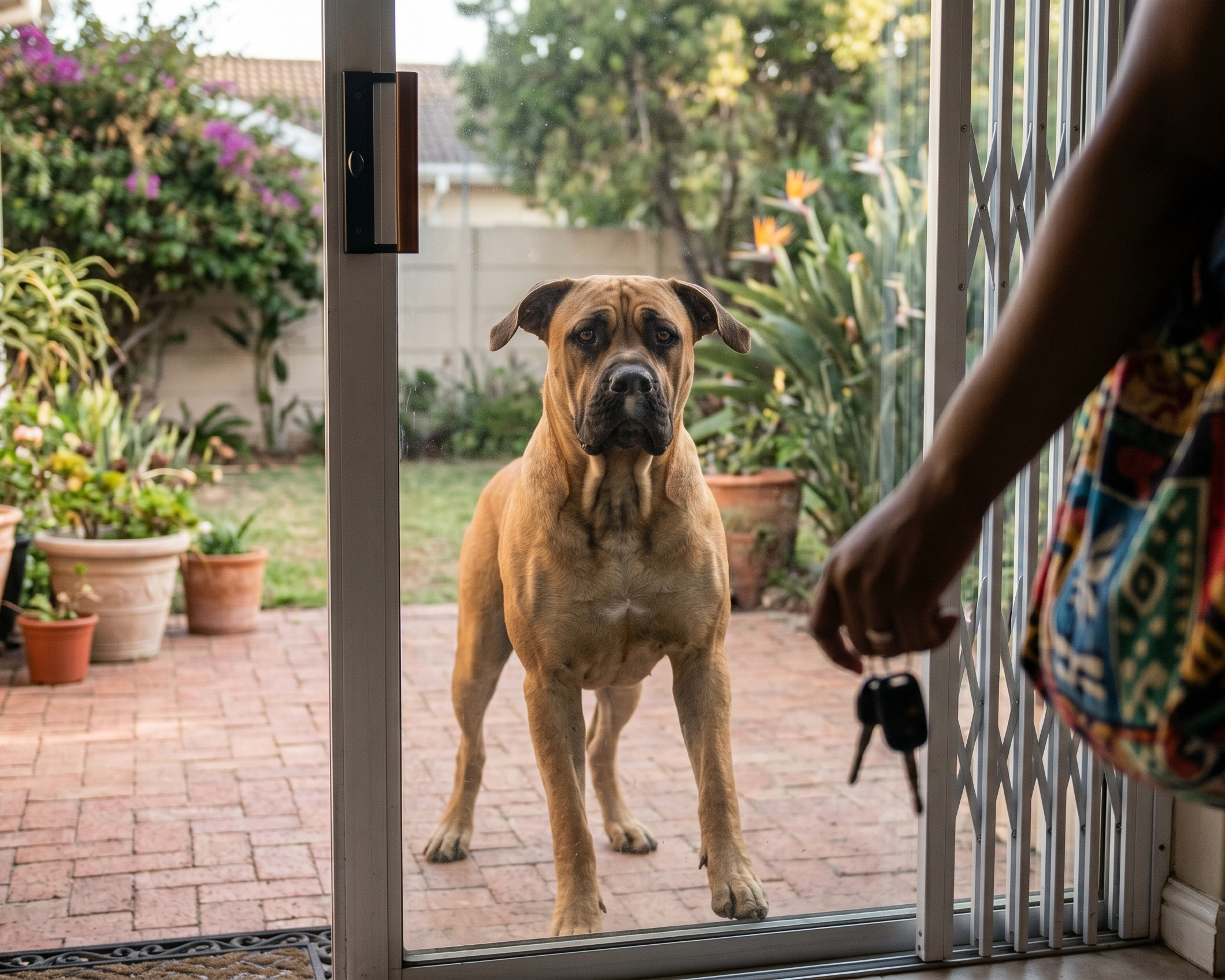
Application varies by condition. For leash reactivity, the trigger might be a strange dog seen at distance. For separation anxiety, the trigger could be a handler departure cue such as picking up keys. The principle stays the same regardless. Owners aim to keep the dog below threshold throughout. Pairing the trigger with something positive does the bulk of the work. Tolerance builds gradually as the process continues.
The Operant Refinement for Separation Anxiety Treatment
Newer research has identified a profound mechanical flaw in how owners often apply classical methods. The problem centres on what the owner’s return actually means to the dog. Advanced models now propose an explicit operant approach to separation anxiety treatment. Under this model, the owner’s return becomes a functional reinforcer in its own right.
The distinction sounds technical, yet it matters enormously. Under the operant model, the owner only returns when the dog meets specific criteria. The dog must engage in a desirable behaviour, or at minimum maintain a calm and non-vocal state. The return becomes a reward the dog earns through staying composed.
The opposite scenario explains where most owners go wrong. A standard desensitisation attempt sees the owner come back while the dog is whining or destroying property. The intention behind the return is comfort. The effect on the dog’s learning is the opposite of what was intended. The owner has just reinforced the exact anxious behaviour the protocol was designed to extinguish. Effective dog anxiety treatment depends on getting this single principle right.
Why Compliance Shapes Dog Anxiety Treatment
The biological logic behind strict contingency management is sound. Yet executing precise operant timing creates real cognitive demands on the owner. Empirical research has documented this problem extensively. Dog owners struggle with complex behavioural plans. Adherence to dog anxiety treatment protocols falls off once instructions cross a certain threshold of complexity.
The threshold sits surprisingly low. When clinical instructions for addressing SRPB exceed five distinct simple steps, owner compliance drops sharply. Multi-week follow-up studies tell the story plainly. Between ten and twenty-five percent of owners report no behavioural improvement at all. Some even report that the pathology has worsened during the intervention period.
The practical implication is straightforward. A clinical plan that looks brilliant on paper can fail entirely if owners cannot execute it consistently. Effective dog anxiety treatment matches what the owner can actually carry out week after week. The protocol that succeeds is the one that gets followed.
Medication and Adjuncts in Anxiety Treatment
To address compliance challenges and lower the dog’s baseline arousal, clinicians often supplement behavioural work with pharmacological support. Selective serotonin reuptake inhibitors (SSRIs) such as fluoxetine carry the strongest clinical evidence for dog anxiety treatment. Administered at approximately 1.5 mg/kg daily, fluoxetine adjusts circulating levels of serotonin and its active metabolite norfluoxetine.
The medication does its work alongside behavioural training. It lowers the dog’s reactive threshold, making the animal more receptive to counterconditioning. The combination proves especially useful in cases of dominance-related aggression. Severe SRPB cases that involve clinical panic also respond well to this combined approach. Medication does not replace training; it complements it.
Non-pharmaceutical options have also gained ground. Targeted pulsed electromagnetic field (tPEMF) technology offers localised neurological targeting of anxiety-related brain regions. The device lowers cortisol levels and anxiety-related behaviours without systemic drug interactions. As a result, it suits owners looking for an at-home adjunct that needs no veterinary prescription.
Many South African owners also explore natural complementary support such as CBD products as part of a broader strategy for anxious dogs. Used alongside structured behavioural work and veterinary guidance, these aids form part of the supportive picture some households build around dogs with severe anxiety.
Putting Theory Into Practice
The research points to a coherent set of priorities for owners pursuing dog anxiety treatment in severe cases. Start with veterinary assessment to rule out medical causes. The same consultation can establish whether medication might form part of the approach. Then engage a qualified behaviourist who applies systematic desensitisation and counterconditioning correctly.
For separation anxiety specifically, the operant principle is critical. Owners must learn to return only when the dog stays calm. The discipline is harder than it sounds. Yet the alternative reinforces the exact behaviour the protocol aims to remove.
Most importantly, the plan needs to fit the owner who has to execute it. Five simple steps that get followed consistently will outperform fifteen elegant steps that get abandoned within a month. Realistic dog anxiety treatment respects the cognitive load on the human as much as the emotional state of the dog. The two succeed together or fail together.