Executive Summary
Canine kidney stones cause significant pain and can lead to life-threatening urinary blockages. These mineral formations require prompt veterinary attention, with treatment depending entirely on their exact composition. Modern veterinary medicine offers several effective options, from prescription diets that dissolve certain stones to advanced procedures like laser lithotripsy and shockwave therapy that break up stubborn formations without invasive surgery. With proper management, including increased hydration and tailored nutrition, most dogs can recover fully and avoid future recurrences.
Introduction to Canine Kidney Stones
Watching your dog struggle to urinate or discovering blood in their urine ranks among the most frightening experiences for any pet owner, and these symptoms often point toward canine kidney stones as the underlying cause. The sudden onset of these symptoms often leaves you feeling helpless, unsure of what is happening inside your companion’s body or how to ease their visible distress. Your dog cannot tell you where it hurts, and the urgency of the situation demands immediate action. Without quick intervention, kidney stones can cause permanent damage to your dog’s renal system, leading to complications that extend far beyond the initial discomfort.
Thankfully, veterinary medicine has advanced considerably in its approach to treating canine kidney stones. Gone are the days when major surgery represented the only path forward. Today, your veterinarian can choose from an array of sophisticated, minimally invasive techniques tailored to your dog’s specific situation. Some stones dissolve completely with carefully formulated prescription foods, while others break apart under targeted shockwaves delivered from outside the body. For the most stubborn cases, laser technology allows veterinarians to vaporise blockages through natural openings, meaning your dog experiences less pain and returns to normal far more quickly than ever before.
Understanding what causes these stones to form in the first place empowers you to protect your dog’s urinary health for years to come. Different mineral types require different approaches to both treatment and prevention, and knowing what to watch for helps you catch problems early when they are most manageable. The following sections explore the science behind stone formation, the distinct varieties your veterinarian might encounter, the warning signs you should never ignore, and the full spectrum of treatment and prevention strategies available to keep your companion healthy and comfortable.
Understanding Canine Kidney Stones and Uroliths
Canine kidney stones, technically termed uroliths, develop through a gradual process of mineral accumulation within the urinary tract. These formations can appear anywhere along the path urine travels, from the kidneys themselves down through the ureters, bladder, and urethra. The specific location determines both the symptoms your dog experiences and the treatment approach your veterinarian will recommend.
Stones residing in the kidneys, known as nephroliths, remain relatively uncommon in dogs, accounting for only about two percent of urinary stone cases. However, they pose serious risks because they can obstruct the flow of urine from the kidney to the bladder. When this happens, pressure builds within the kidney, potentially destroying the delicate tissues responsible for filtering waste from the bloodstream. More frequently, veterinarians encounter stones in the lower urinary tract, particularly within the bladder or lodged in the urethra where they create immediate, dangerous blockages.
The Formation Process of Dog Urinary Calculi
Stone development begins when the chemical balance of urine shifts unfavourably. Under normal conditions, your dog’s urine contains dissolved minerals that pass through the system without incident. Adequate water intake keeps these minerals diluted, while the natural pH of healthy urine maintains them in their dissolved state. Problems arise when the concentration of minerals exceeds what the urine can hold in solution, a state veterinarians call supersaturation. This represents the first step toward canine kidney stones.
Once supersaturation occurs, microscopic crystals begin to precipitate out of the urine. This condition, known as crystalluria, represents the earliest stage of stone formation. These tiny crystals may pass harmlessly during normal urination, or they may begin to aggregate into larger structures. The aggregation process often requires a scaffold upon which crystals can accumulate. This scaffolding might consist of sloughed cells from the urinary tract lining, inflammatory debris, or in rare cases, material left behind from previous surgeries.
The body possesses natural defences against this progression. Frequent urination flushes out crystal formations before they grow large enough to cause trouble. Additionally, normal canine urine contains substances that inhibit crystal aggregation, such as citrates which bind to calcium and keep it safely dissolved. When these protective mechanisms fail, stones begin to take shape.
Types of Canine Uroliths in Dogs
Veterinarians classify uroliths according to their mineral composition, information that proves essential for determining both the underlying cause and the most effective treatment. Each stone type forms under specific conditions and responds to different management strategies. Understanding these distinctions helps you grasp why canine kidney stones require such individualised care.
Calcium Oxalate Canine Kidney Stones
Calcium oxalate currently stands as the most frequently diagnosed canine kidney stone, with studies showing it comprises over seventy percent of upper tract uroliths. These stones form when urine contains excessive calcium that combines with oxalic acid derived from dietary sources or internal metabolic processes.
Several factors contribute to calcium oxalate formation. Some dogs suffer from idiopathic hypercalciuria, meaning their kidneys excrete too much calcium even in the absence of other disease. Others develop secondary hypercalciuria due to conditions like hyperparathyroidism or Cushing’s disease, which disrupt normal calcium metabolism. Diet plays a significant role as well, with high-carbohydrate foods and those promoting acidic urine increasing the risk. Certain breeds show strong predispositions, particularly small terriers like Miniature Schnauzers and Yorkshire Terriers, and male dogs face higher odds of developing these stones than females.
Once a dog forms a calcium oxalate stone, the risk of recurrence remains high throughout their life. These stones do not respond to dietary dissolution, meaning they require physical removal or breakdown through medical procedures.
Struvite Dog Bladder Stones
Struvite stones, composed of magnesium ammonium phosphate, rank second in prevalence among canine uroliths. Unlike calcium oxalate stones, struvites nearly always develop as a direct consequence of urinary tract infection. Specific bacteria, particularly Staphylococcus and Proteus species, produce an enzyme called urease that breaks down urea in the urine. This chemical reaction releases ammonia, which raises the urine pH and creates ideal conditions for magnesium and phosphate to precipitate out of solution.
Female dogs develop struvite stones far more frequently than males due to their shorter, wider urethras, which allow bacteria easier access to the bladder. Breeds such as Shih Tzus and various mixed breeds appear in veterinary studies with higher incidence rates. The encouraging news about struvite stones is their responsiveness to medical treatment. With appropriate antibiotics to clear the underlying infection and specially formulated diets that acidify the urine, these stones can dissolve completely without any surgical intervention.
Urate Stones and Canine Nephrolithiasis
Urate stones form from uric acid and its salts, typically appearing in dogs whose livers cannot properly process protein metabolites. The most famous example involves Dalmatians, who carry a genetic mutation preventing normal uric acid conversion. This leads to high concentrations of uric acid in their urine, which crystallises readily in acidic conditions. English Bulldogs carry a separate genetic defect producing the same result.
Beyond genetics, urate stones frequently signal underlying liver dysfunction. Dogs with portosystemic shunts, abnormal blood vessels that bypass the liver, cannot adequately filter toxins from their bloodstream. The resulting metabolic disturbances lead to elevated uric acid levels and subsequent stone formation. These stones require specialised low-purine diets and medications to alkalinise the urine, creating an environment where uric acid remains dissolved.
Xanthine Stones
Xanthine uroliths occur rarely in dogs, typically resulting from either inherited metabolic defects or as a complication of medical treatment. Cavalier King Charles Spaniels sometimes carry a genetic mutation causing hereditary xanthinuria, where their bodies cannot properly metabolise xanthine. More commonly, veterinarians inadvertently contribute to xanthine stone formation when prescribing allopurinol to manage urate stones. This medication, when dosed inappropriately, causes xanthine to accumulate and precipitate into stones of its own.
Cystine Stones and Canine Uroliths
Cystine stones stem from an inherited defect in how the kidneys handle certain amino acids. Healthy kidneys reabsorb cystine from the filtrate, returning it to the bloodstream. Dogs with cystinuria lack this ability, allowing cystine to concentrate in the urine where it forms characteristic hexagonal crystals. These crystals then aggregate into soft, yellowish stones.
This condition shows a marked sex predilection, with intact male dogs accounting for nearly all clinical cases. Breeds including English Bulldogs, Rottweilers, and Newfoundland dogs carry strong genetic predispositions. Interestingly, castration often resolves the condition in affected males, suggesting hormones play a role in its expression. Cystine stones present diagnostic challenges because they remain invisible on standard X-rays, requiring ultrasound for detection.
Silica Stones
Silica stones account for approximately one percent of canine uroliths and show strong geographic variation related to soil composition. These stones develop when dogs ingest excessive silicates, typically from plant-based dietary components like grain hulls or corn gluten. They display a characteristic jackstone appearance with sharp radiating spicules that cause significant irritation to the urinary tract lining. Male Golden Retrievers appear disproportionately affected by this environmentally-linked condition.
Recognising the Signs of Canine Kidney Stones
The symptoms your dog displays depend heavily on where stones have lodged within the urinary tract. Stones in the bladder produce different signs than those blocking the ureters or kidneys, and recognising these distinctions helps you provide your veterinarian with useful information. Early recognition of canine kidney stones significantly improves treatment outcomes.
The Escalation of Canine Renal Pain
🐕
Silent Stage
Stones remain asymptomatic within the kidney pelvis for years.
⚠️
Renal Colic
Migration causes acute capsule distension and praying postures.
🚨
Systemic Crisis
Buildup of toxins leads to lethargy and vomiting.
Lower Urinary Tract Symptoms of Dog Bladder Stones
When stones reside in the bladder or urethra, you will likely notice changes in your dog’s urination habits. Blood in the urine, ranging from barely detectable pink tinges to obvious red discolouration, commonly appears as stones scrape against the delicate bladder lining. Your dog may ask to go outside more frequently, yet produce only small amounts of urine each time. Straining to urinate, sometimes with visible discomfort or vocalisation, signals that something obstructs the normal flow.
Complete urethral obstruction constitutes a true medical emergency. A dog unable to pass urine experiences rapid bladder distension, immense pain, and within hours begins to suffer systemic effects as waste products accumulate in the bloodstream. Any suspicion of urinary blockage demands immediate veterinary attention.
Upper Tract Signs of Canine Nephrolithiasis
Canine kidney stones present a more subtle picture, at least initially. Small stones lodged within the kidney itself may produce no symptoms whatsoever for months or even years. Problems arise when a stone dislodges and begins travelling down the ureter, the narrow tube connecting kidney to bladder. This movement stretches the kidney capsule, the fibrous covering containing pain receptors, producing a distinctive discomfort known as renal colic.
Dogs experiencing renal colic cannot tell you their back hurts, but they show it through behaviour. The classic praying position, where your dog drops their front end to the floor while keeping their hindquarters elevated, often indicates severe abdominal or back pain. Restlessness, pacing, and crying out when attempting to settle also signal significant internal distress.
As kidney function deteriorates, systemic signs emerge. Lethargy replaces normal energy levels, appetite disappears, and vomiting may begin as toxins accumulate in the bloodstream. These signs indicate advanced disease requiring immediate intervention to preserve remaining kidney function.
Diagnostic Approaches for Dog Urinary Calculi
Arriving at an accurate diagnosis requires your veterinarian to combine several pieces of information. The process typically begins with basic laboratory work and progresses to imaging studies that reveal the stones directly. Confirming the presence of canine kidney stones represents the first step toward effective treatment.
Laboratory Testing
Blood tests assess how well your dog’s kidneys are functioning and whether obstruction has occurred. Elevated creatinine and blood urea nitrogen levels suggest urine cannot flow normally, allowing waste products to back up into the circulation. These markers also establish a baseline for monitoring response to treatment.
Urinalysis provides complementary information that must be interpreted quickly. Fresh urine samples, examined within an hour of collection, reveal the presence of crystals, blood, and infection. Urine pH offers critical clues about stone type, as different minerals precipitate under different acidity conditions. Alkaline urine suggests possible struvite stones, while acidic urine favours formation of oxalate, urate, and cystine stones. Your veterinarian will also request a urine culture to identify any bacterial infection requiring antibiotic treatment.
Imaging Studies
Most urinary stones require imaging for definitive diagnosis. Standard X-rays detect calcium-containing stones like oxalates and struvites readily, but they miss urate and cystine stones completely. For this reason, ultrasound examination has become essential in comprehensive stone evaluation. Ultrasound reveals stones of all compositions while also showing any damage obstruction has caused to the kidneys themselves.
When stones are removed, either surgically or through voiding, laboratory analysis provides the final piece of the diagnostic puzzle. Infrared spectroscopy identifies the exact mineral composition, information your veterinarian needs to recommend appropriate preventive measures going forward.
Treatment Options for Canine Kidney Stones
Modern veterinary urology offers multiple treatment pathways, with the choice depending on stone composition, location, and your dog’s overall health status. Minimally invasive techniques have largely replaced traditional surgery for many patients, reducing recovery times and complications. The approach to managing canine kidney stones has evolved dramatically in recent years.
Medical Dissolution of Dog Urinary Calculi
For appropriate candidates, medical management offers the least invasive approach. Struvite stones dissolve reliably when the underlying infection clears and urine pH drops. Your veterinarian will prescribe antibiotics based on culture results, along with a therapeutic diet designed to acidify the urine and restrict the minerals needed for stone formation. This approach requires several weeks to months of consistent treatment, with periodic imaging to monitor progress.
Urate stones also respond to medical therapy. Low-purine diets reduce the building blocks available for stone formation, while medications like potassium citrate raise urine pH to keep uric acid dissolved. Allopurinol may be prescribed to block uric acid production, though careful dosing prevents the complication of xanthine stone formation.
Calcium oxalate and silica stones do not dissolve medically. Once these stones form, they require physical removal or fragmentation.
Extracorporeal Shock Wave Lithotripsy
Shock wave therapy offers a completely non-invasive option for treating canine kidney stones. During this procedure, your dog lies on a padded table while a machine generates focused acoustic waves that travel through the body. These waves strike the stone with sufficient force to shatter it into tiny fragments, which then pass naturally during urination.
This technique works best for stones within the kidney or upper ureter, and it requires general anaesthesia to keep your dog perfectly still during wave delivery. Most patients return home the same day and resume normal activities quickly, though multiple sessions may be needed for larger stones.
Laser Lithotripsy
When stones lodge in the lower urinary tract, laser lithotripsy provides an incision-free alternative. Your veterinarian passes a tiny camera through the urethra, visualising the stone directly. A specialised laser fibre then delivers energy that vaporises the stone while leaving surrounding tissues unharmed.
The thulium laser currently used in veterinary practice works exceptionally well on the small patients veterinarians treat. Procedures typically complete within forty minutes, and dogs experience minimal discomfort afterward. This approach eliminates the need for surgical incisions and the recovery time they require.
Urohydropropulsion
For very small bladder stones, your veterinarian may recommend voiding urohydropropulsion. This technique involves filling the bladder with sterile fluid under anaesthesia, then applying external pressure to expel the stones through the urethra. It works only for stones small enough to pass through the urethral opening, but when appropriate, it offers the simplest possible resolution.
Ureteral Stents
When stones completely obstruct the ureter, immediate relief requires bypassing the blockage. Surgeons can place tiny tubes called stents that hold the ureter open, allowing urine to flow past the stone. These stents remain in place temporarily or permanently, depending on the situation, and they provide immediate relief from obstructive kidney damage.
Traditional Surgery for Canine Uroliths
Despite advances in minimally invasive techniques, open surgery remains necessary in certain situations. Stones too large for other approaches, those lodged in positions inaccessible to endoscopes, and complex cases involving multiple large stones may require cystotomy, surgical opening of the bladder, for removal. Your veterinarian will discuss the risks and benefits of this approach, including the small but real possibility that suture material left behind could serve as a scaffold for new stone formation.
Prevention Strategies for Dog Kidney Stones
Once your dog has formed urinary stones, the risk of recurrence remains significant without consistent preventive measures. Long-term management focuses on three main areas: hydration, nutrition, and monitoring. Preventing future canine kidney stones requires commitment to these strategies.
The Central Role of Water
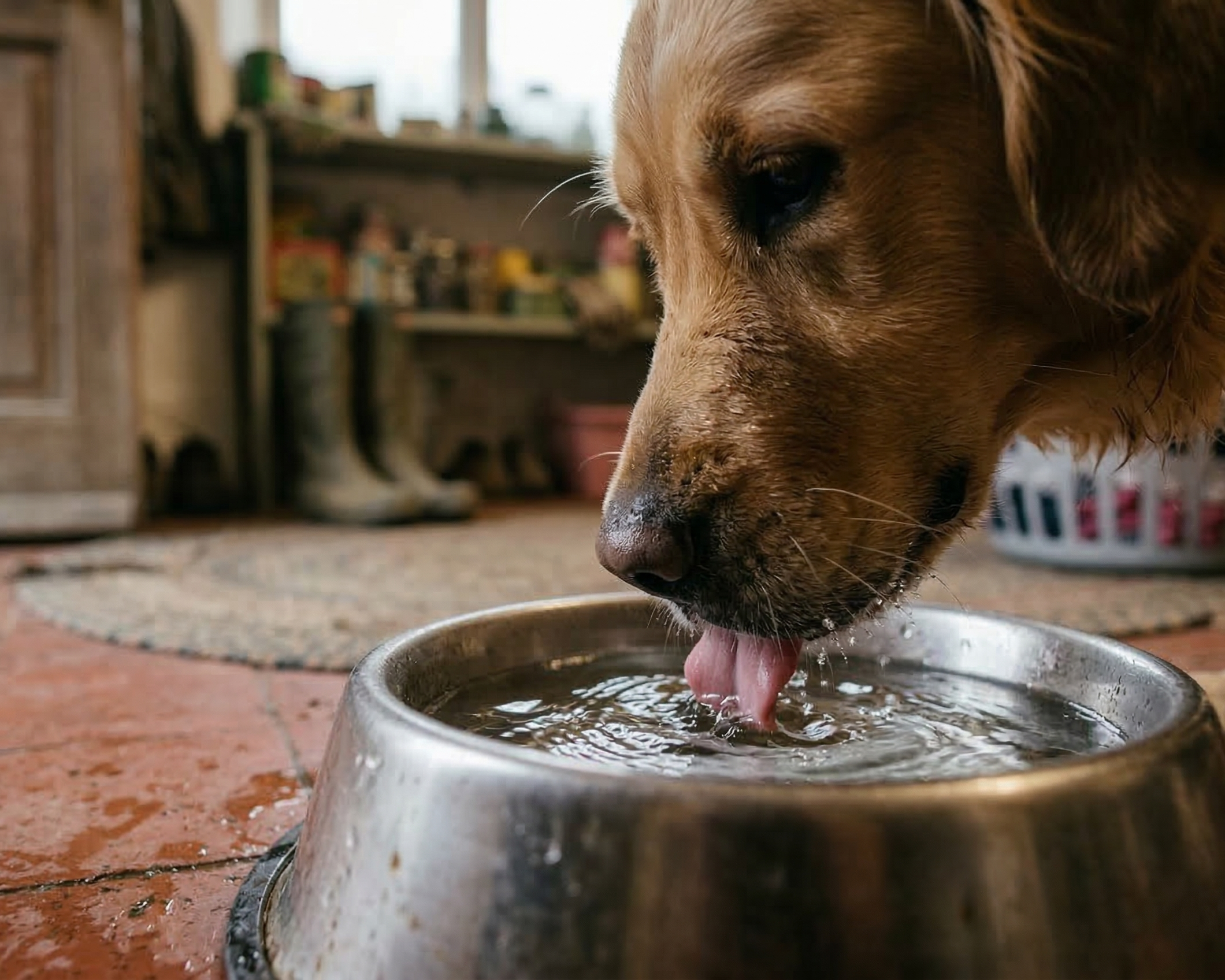
Dilute urine prevents stone formation by keeping mineral concentrations below the threshold where crystallisation occurs. Increasing your dog’s water intake therefore represents the single most important preventive measure you can implement. Vondi’s meals contain dramatically more moisture than dry kibble, making them excellent choices for stone-prone dogs. Water fountains encourage drinking through their constant circulation and appealing sound. Some dogs benefit from flavouring their water with small amounts of sodium-free broth, always checking with your veterinarian first.
Dietary Management of Canine Uroliths
Nutritional strategies vary according to stone type, which is why knowing your dog’s specific mineral composition proves essential. Therapeutic diets formulated for urinary health restrict the components that feed stone formation while promoting urine conditions that keep minerals dissolved. These diets require strict adherence to be effective. Even small treats or table scraps can disrupt the carefully balanced urinary chemistry these foods create, potentially allowing crystals to form anew.
Your veterinarian may recommend periodic urine testing to monitor how well your preventive program is working. Testing urine specific gravity confirms adequate dilution, while pH measurement ensures conditions remain unfavourable for crystallisation. Dipstick tests allow home monitoring between veterinary visits for motivated owners.
Breed Considerations
If you own a breed predisposed to stone formation, early discussions with your veterinarian about preventive strategies make sense even before problems arise. Breeds including Miniature Schnauzers, Yorkshire Terriers, Dalmatians, and English Bulldogs benefit from proactive management that may delay or prevent stone development entirely.
Frequently Asked Questions About Canine Kidney Stones
1. How do dogs act when they have kidney stones?
They frequently show intense pain through a rigid praying posture. Distressed animals might relentlessly pace around the family home constantly. Severe cases cause sudden vomiting and extreme lethargic behaviour.
2. Can a dog pass a kidney stone naturally?
Very small fragments might occasionally pass out through the urethra. However, large rocks inevitably create highly dangerous, fatal mechanical blockages.
3. What foods cause kidney stones in dogs?
Diets featuring high carbohydrates severely predispose pets to dangerous crystals. Furthermore, plant hulls like corn gluten introduce massive silica risks.
4. How much does it cost to treat canine kidney stones?
Treatment costs vary wildly based on the exact required procedure. Advanced laser lithotripsy naturally commands a premium over simple dissolution.
5. Are kidney stones fatal in dogs?
Yes, untreated obstructions absolutely destroy healthy renal tissue causing death. Toxins quickly overwhelm the entire bloodstream without immediate veterinary intervention.
6. What is the praying posture in dogs?
Afflicted dogs press their chests low while keeping hindquarters elevated. This desperate stance attempts to relieve intense internal visceral pressure.
7. Can I dissolve my dog’s kidney stones at home?
You cannot safely attempt this without strict veterinary diagnostic guidance. Only specific types like struvite respond to precise dietary changes.
8. How long does a dog kidney stone operation take?
Modern laser procedures incredibly finish in under forty fast minutes. Conversely, highly invasive open surgeries require much longer general anaesthesia.
9. Why is my dog peeing blood?
Jagged urinary stones violently scratch the delicate internal mucosal lining. This intense physical abrasion directly causes severe bleeding and inflammation.
10. Do female dogs get kidney stones more often than males?
Females develop infection-based struvite stones incredibly frequently due to anatomy. However, males generally face a statistically higher risk for oxalates.
Conclusion
Protecting your beloved pet requires deep understanding and immediate action. You now possess the vital knowledge to spot these killers. Recognising the subtle signs of pain ensures rapid veterinary intervention.
Always prioritise aggressive hydration and strict dietary management going forward. Partner closely with your chosen vet to maintain healthy habits. Dedication to these preventative strategies guarantees a wonderful, pain-free future.
References and Further Reading