
Executive Summary
Canine ear infections rank among the most frequently treated conditions in South African veterinary practice. Most cases involve bacterial or yeast overgrowth in the outer ear canal, yet the underlying driver is almost always allergy. South African research from Onderstepoort has also uncovered alarming antibiotic resistance rates in ear pathogens, making early, correct diagnosis more important than ever. This article covers the seven most common ear conditions seen in South African dogs, what causes each one, and how vets treat them.
Why Ear Disease Is So Prevalent in Dogs
Canine ear infections affect dogs worldwide, and South Africa is no exception. The warm, humid conditions inside a dog’s ear canal create an environment where bacteria and yeast thrive easily. Add in allergy, breed anatomy and moisture from swimming, and the ear canal quickly becomes a problem area. According to a large UK primary-care study of over 22,000 dogs, ear infections held the second spot among the most common disorders diagnosed, with a one-year prevalence of 7.3%. South African vets report similar clinical patterns, though no equivalent national prevalence figure has yet been published here.
One key point the research makes clear is that dog ear disease is rarely a single, simple problem. Clinicians at the University of Pretoria have long described it as a syndrome with layers: predisposing factors such as drop ears or excess ear hair, a primary cause such as allergy, secondary bacterial or yeast infection, and perpetuating factors that keep the problem alive. Treat only the infection and you will almost certainly see it return.
The Seven Most Common Canine Ear Infections
1. Bacterial Otitis: A Leading Dog Ear Infection
Bacterial infection of the outer ear canal sits at the top of the list. The organism most often responsible is Staphylococcus pseudintermedius, a bacterium that normally lives on dog skin but causes trouble when the canal environment changes. In chronic or neglected cases, Pseudomonas aeruginosa moves in and is considerably harder to clear, partly because it forms a protective biofilm inside the canal.
South African data from Onderstepoort reveals a serious resistance problem. A five-province study published in the Journal of the South African Veterinary Association found that 85.9% of Staphylococcus pseudintermedius isolates from skin and ear infections carried the mecA gene, which confers resistance to all penicillin-type antibiotics. A separate Onderstepoort study found that 92% of canine Pseudomonas isolates were multidrug-resistant. These figures mean that a vet cannot simply prescribe a standard antibiotic and expect results. Culture testing to identify the correct drug is essential, particularly when the infection involves rod-shaped bacteria on a cytology slide.
Treatment starts with a thorough ear clean, followed by targeted topical antibiotics chosen according to the organism identified. Systemic antibiotics are reserved for severe cases or those involving the middle ear. Addressing the primary cause, most often allergy, is what prevents recurrence.
2. Yeast Otitis: Another Common Ear Infection in Dogs
Yeast infections of the ear canal, caused by the organism Malassezia pachydermatis, are the second most common presentation vets see. This yeast lives on healthy dog skin as a normal resident. When the ear canal becomes inflamed or overly waxy, though, it multiplies rapidly and causes significant discomfort.
The discharge produced is distinctive: dark brown, waxy and carrying a sweet, musty smell. Diagnosis is straightforward via cytology, where the yeast appears in its characteristic peanut-shaped, budding form. Treatment relies on antifungal ear drops containing agents such as miconazole or clotrimazole, usually paired with a corticosteroid to reduce the inflammation that allowed the yeast to establish in the first place. Recurring yeast infections almost always point to an uncontrolled allergy beneath the surface.
3. Allergic Otitis: The Root of Most Ear Problems
Allergy is the single most important primary cause of ear canal inflammation in dogs. A clinical study of 100 dogs presenting with ear disease found that allergy was the primary driver in 43% of cases, the largest single cause by a considerable margin. Up to 75% of all ear infection cases at specialist referral practices are ultimately allergy-related.
Canine atopic dermatitis (a hypersensitivity to environmental allergens) and adverse food reactions both produce inflammation in the ear canal that sets the stage for bacterial and yeast overgrowth. Dogs with allergies also tend to scratch at their ears, which introduces more bacteria and worsens the environment further. Certain breeds carry higher risk: Labradors, Cocker Spaniels, West Highland White Terriers, German Shepherds and Boxers appear regularly in the literature. Drop-eared breeds also carry significantly higher odds of developing ear disease due to reduced airflow in the canal.
Managing allergic otitis requires two phases. The first is clearing the active infection and reducing inflammation with ear drops and cleaning. The second, and more important, is long-term allergy control through dietary elimination trials, allergy testing and appropriate anti-itch medication. Without phase two, canine ear infections will return on a predictable cycle.
How Ear Infections Progress Without Treatment
👂
Early Stage
Mild redness, occasional head-shaking, slight odour. Bacterial or yeast overgrowth begins in the outer canal. Responsive to topical treatment.
⚠️
Chronic Stage
Persistent infection, thickened canal walls, pain, and possible spread to the middle ear. Antibiotic resistance becomes likely. Systemic treatment often required.
🏥
End-Stage
Calcified canal, permanent structural damage, potential nerve involvement. Surgical removal of the ear canal (TECA) may be the only remaining option.
4. Ear Mites and the Spinose Ear Tick
Parasitic canine ear infections take two distinct forms in South Africa. The first involves infestation by the ear mite Otodectes cynotis, a highly contagious surface mite that completes its entire life cycle inside the ear canal. Even a small number of mites can trigger intense irritation, because much of the damage comes from the dog’s immune reaction to mite proteins rather than the mites themselves. The resulting discharge is characteristically dark, crumbly and described as resembling coffee grounds.
The second form is specific to South Africa’s more arid regions. The spinose ear tick, Otobius megnini, is an argasid tick whose larvae and nymphs feed deep inside the ear canal. It is established in southern Africa and causes significant discomfort in affected animals.
Treatment for ear mites centres on macrocyclic lactone drugs. Selamectin applied to the skin achieved a 100% cure rate in published clinical trials after one or two monthly applications. Newer isoxazoline drugs administered orally or topically have also shown strong efficacy. All animals in the household need treatment simultaneously, as the mite spreads easily between dogs and cats.
5. Otitis Media: When Dog Ear Disease Goes Deeper
Otitis media is inflammation of the middle ear, the space behind the eardrum. In dogs, it most commonly develops when chronic otitis externa goes unresolved and the infection spreads through or around the eardrum. Research shows it complicates between 50% and 80% of chronic outer ear infection cases, yet it often goes undetected because the eardrum can appear intact even when the middle ear is already infected.
When the middle ear is involved, signs extend beyond the ear itself. A dog may show pain when opening its mouth, head tilt, balance problems or a drooping face on the affected side. Diagnosis typically requires CT or MRI scanning alongside video-guided ear examination and, in confirmed cases, a procedure to puncture and sample the eardrum.
Treatment requires prolonged courses of systemic antibiotics, often four to six weeks, guided by culture results. Cases that do not respond to medical management may need surgery to remove the ear canal entirely. Catching middle-ear disease early is the single most effective way to avoid that outcome.
6. Aural Haematoma
An aural haematoma is a pocket of blood that forms between the skin and cartilage of the ear flap, caused by repeated violent head-shaking or scratching. It is not an infection in itself, rather a consequence of the pain and irritation that any of the above ear conditions can cause. The ear flap swells suddenly, feels warm to the touch and is often painful.
Treatment options range from needle drainage with a corticosteroid injection through to surgical incision and suturing. Surgery, which stitches the skin layers back together to close the space, gives the most reliable results with the lowest recurrence rate. Critically, treating the haematoma without also treating the underlying ear disease means the head-shaking continues and the problem returns.
7. Foreign-Body Otitis
Grass seeds and plant material entering the ear canal account for a meaningful share of acute ear disease, particularly in dogs that spend time outdoors in long grass. A clinical study of 100 dogs presenting with ear infections found grass awns as the cause in 12% of cases, making them the second most common primary cause after allergy. The onset is sudden and typically affects one ear only: the dog shakes its head vigorously, scratches at the ear and shows obvious discomfort.
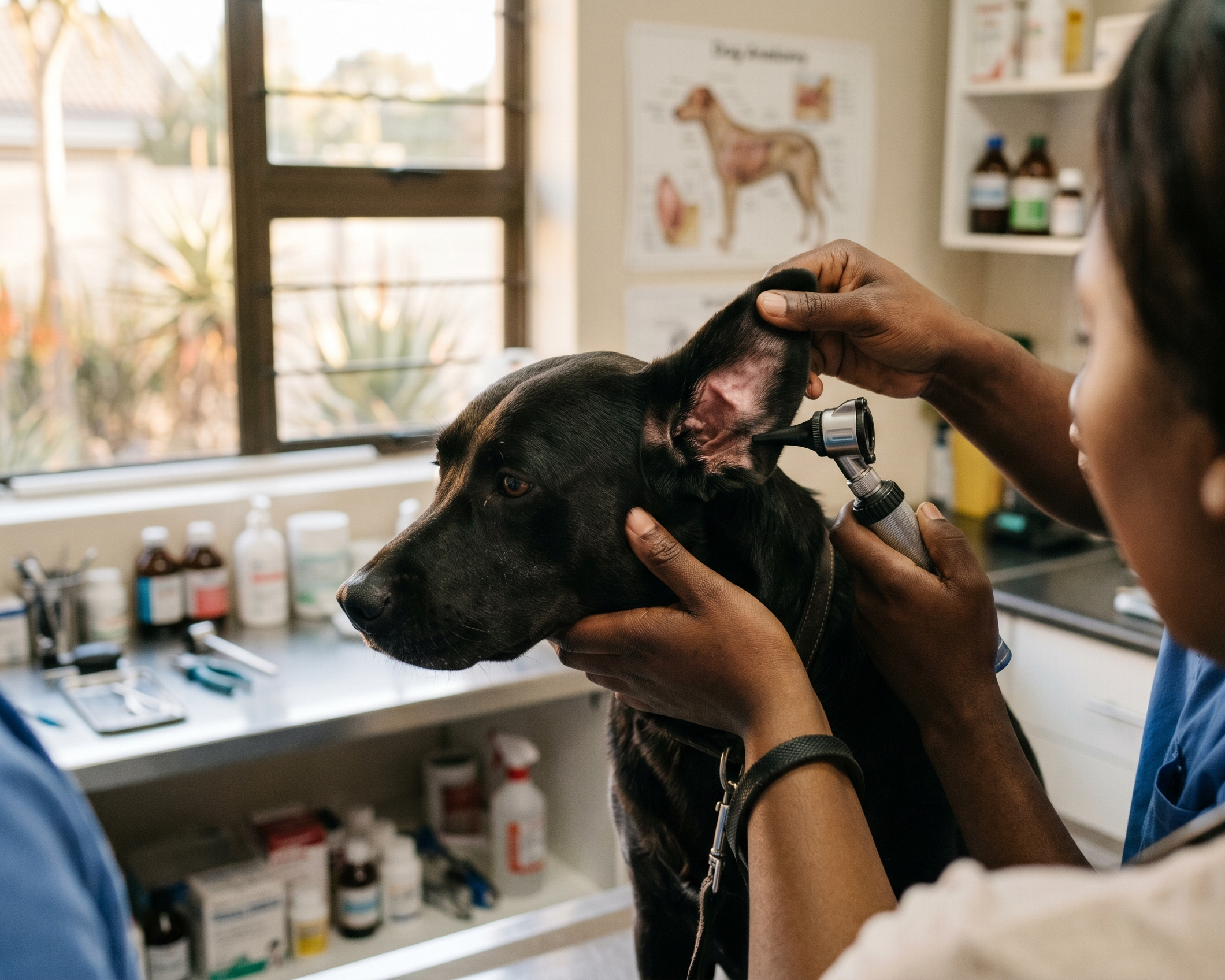
Diagnosis requires a direct look into the canal using an otoscope, often under sedation. Once the seed is removed with forceps, recovery is generally rapid. A short course of anti-inflammatory medication helps settle the residual irritation. As with all ear problems in dogs, any secondary infection that developed during the episode needs its own targeted treatment.
What South Africa’s Resistance Data Means for Dog Ear Disease
The antibiotic resistance findings from Onderstepoort carry real-world implications beyond the laboratory. When a vet treats dog ear problems with a standard antibiotic course without first testing the organism, there is a very high chance the drug will not work. Worse, incomplete treatment courses drive resistance further. The practical takeaway is straightforward: insist on cytology at every ear consultation and, when the vet identifies rod-shaped bacteria or the infection fails to clear, ask about culture testing before the next prescription is written.
South Africa’s warm climate, combined with an estimated 9.2 million household dogs, creates conditions where resistant pathogens cycle rapidly between animals. Early diagnosis, targeted topical treatment and long-term allergy management remain the most effective tools for controlling canine ear infections over the long term.
Sources