
Executive Summary
The canine domestication syndrome represents a fascinating biological process that fundamentally altered ancient wolves. Our ancestors selected animals specifically for reduced aggression over thousands of years. Consequently, this specific breeding choice triggered a cascade of unintended physical transformations. We now understand exactly why these animals developed floppy ears and unique coat colours.
Exploring the canine domestication syndrome reveals the complex mechanisms behind the physical traits we see in modern dogs. Early humans lacked the intention to engineer shorter snouts or distinctive white chest patches. They simply wanted calmer animals near their settlements. Therefore, nature handled the rest through a series of connected biological shifts. These animals evolved from formidable predators into highly cooperative partners. Subsequently, their entire physiological structure adapted to this completely new way of life.
Unlocking the Canine Domestication Syndrome
Biologists point to a specific developmental mechanism known as the Neural Crest Hypothesis. During early embryonic development, a group of stem cells migrates throughout the body. These cells eventually form the adrenal glands. They also create pigment cells and facial cartilage. Early humans consistently selected individual animals exhibiting mild fear responses. In doing so, they inadvertently isolated populations with significantly smaller adrenal glands. As a result, these animals produced much lower levels of stress hormones. Researchers attribute these sweeping physical changes directly to the canine domestication syndrome.
The Neural Crest Impact on Evolution of Dog Traits
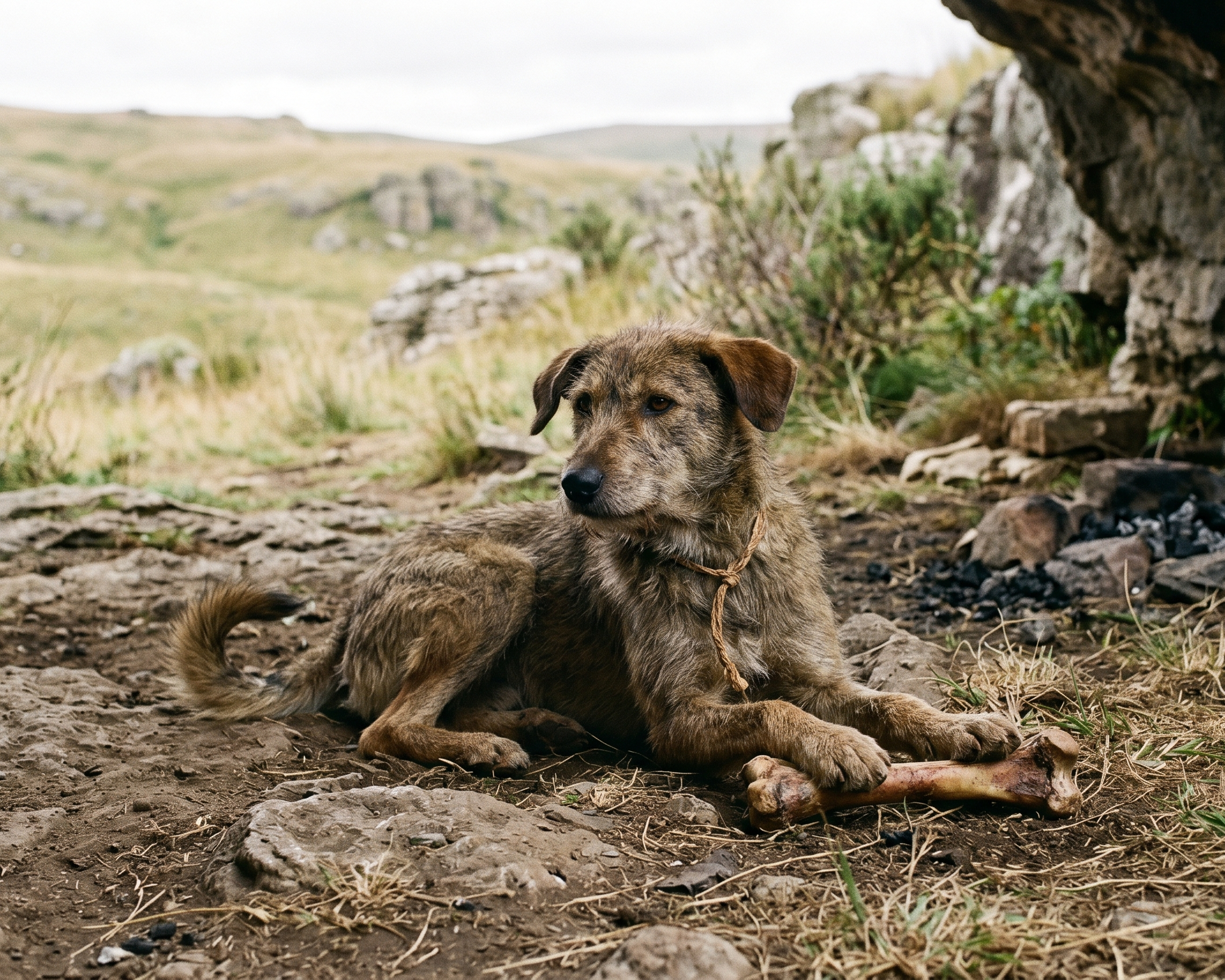
This mild stem cell deficit produced several completely unselected physical byproducts. Reduced cell migration left the body’s extremities without vital pigment cells. This biological process universally created the distinct white patches seen on many domestic animals today. Additionally, insufficient cellular growth in the skull led directly to shortened muzzles. The animals also developed significantly smaller teeth compared to their wild ancestors. Following this, deficits in specific precursor cells actively altered cartilage formation. The animals developed the classic floppy ears we recognise today. This anatomical change effectively trapped the adult animal in a permanent juvenile physical state.
Recent comparative anatomical analyses provide further proof for this hypothesis. Scientists studied the cricoid and thyroid cartilages in modern populations. These researchers discovered absolutely shorter vocal folds compared to wild wolves. The specific shape of the thyroid shields consistently indicates reduced cellular contributions during early embryonic development.
The Developmental Path of Tameness
👤
Behavioural Selection
Early humans select wolves exhibiting lower fear and reduced aggression.
🧬
Cellular Shift
Stem cell migration slows during development. This directly reduces adrenal gland size.
🐕
Physical Byproducts
The animal develops floppy ears alongside white patches. A shorter snout emerges simultaneously.
Analysing Canine Brain Evolution
Domestication permanently impacted the central nervous system of these animals. Moving into protected human settlements removed the need for intense predatory cognition. These animals no longer needed to navigate vast hunting territories. They also faced significantly fewer threats from larger terrestrial predators. Consequently, the highly metabolically expensive brain underwent a noticeable physical reduction. Brain volume reduction serves as another distinct marker of the canine domestication syndrome. The animals successfully redirected this saved metabolic energy toward rapid physical growth. Rapid reproduction proved highly advantageous in early human settlements.
Interestingly, modern urban environments have recently reversed this trend in several ways. Navigating complex human social structures demands high cognitive capacity today. Subsequently, modern breeds genetically distant from ancient wolves show a relative increase in brain size. Evolution remains a continuous, highly active process in these animals. It responds directly to the shifting challenges of human environments.
The canine diet has evolved alongside these, and other features. It is a diet that somwhat mirrors that of humans, as the modern diets of both species devolped in parallel.
Vocalisation and the Biology of Tame Dogs
The domestication process completely revolutionised how these animals naturally communicate. Wild wolves bark very infrequently in their natural habitats. They typically reserve these specific sounds for acute alerts. Territorial defence occasionally prompts a quick bark from a wild wolf. Many early scientists wrongly assumed dog barking served no real functional purpose. They mistakenly believed it represented a mere biological leftover.
However, modern acoustic analysis definitively proves otherwise today. Vocal ritualisation evolved entirely alongside the canine domestication syndrome. Barking developed into a highly complex, context-specific communicative tool. The animals predictably alter the specific acoustic structure of their barks constantly. They actively shift the frequency and tonality based on the exact situation. A bark used for play sounds completely different from an urgent guarding bark. They design these specific vocalisations expressly for direct human interaction. This represents a profound evolutionary leap directly across species boundaries. The animals effectively altered their primary acoustic communication pathway to interface clearly with humans.
Final Thoughts
The journey from wild predator to cooperative partner involved staggering biological transformations. The simple demand for tameness entirely reshaped the physical and neurological makeup of these animals. Modern science continually uncovers the deep biological ties linking human and canine history.
Frequently Asked Questions
Why do many domestic dogs have white spots on their chests?
Early humans selected calmer animals with altered stem cell development. This specific cellular change prevented pigment from reaching the extremities. As a result, the animals developed distinct white patches.
Did early humans intentionally breed dogs to have floppy ears?
They never specifically selected for this exact physical trait. Floppy ears emerged purely as an accidental byproduct of breeding for reduced aggression. The changes in ear cartilage stem directly from this initial behavioural selection.
Why do dogs bark so much more than wolves?
Dogs developed complex barking specifically to communicate clearly with humans. They use very different tones and frequencies to convey varying needs or emotions. Wolves rarely use this specific form of acoustic communication.