

Executive Summary
B vitamins for dogs work quietly behind the scenes, powering energy metabolism every single day. This article looks at thiamine and four related nutrients your dog needs from food. Each one comes from everyday ingredients like organ meat and muscle meat.
B vitamins for dogs behave very differently to the vitamins this series covered earlier. Unlike vitamin A, D, E and K, these nutrients do not store inside the body. Instead, your dog’s body flushes out any extra within a day or two. As a result, these nutrients need to arrive through food on a regular basis.
Thiamine And Riboflavin Power Everyday Energy
Thiamine helps the body turn carbohydrates into usable energy. These first two B vitamins for dogs work on the same energy pathway inside every cell. It also supports normal nerve and muscle function. Beyond that, heart function depends on it too. If thiamine levels drop, a dog can develop poor coordination or, in serious cases, heart problems. However, cooking destroys a large share of thiamine, sometimes more than three quarters of it. On the plus side, pork and pork heart are two of the better natural sources. Both B vitamins for dogs sit at the start of this list because deficiency shows up fastest here. Meanwhile, riboflavin works differently, acting as a helper molecule in energy production and normal cell function. Deficiency is rare in dogs that eat a balanced diet, though weakness can appear when levels run low. In particular, organ meat carries the richest riboflavin, with beef kidney and beef liver leading the way.
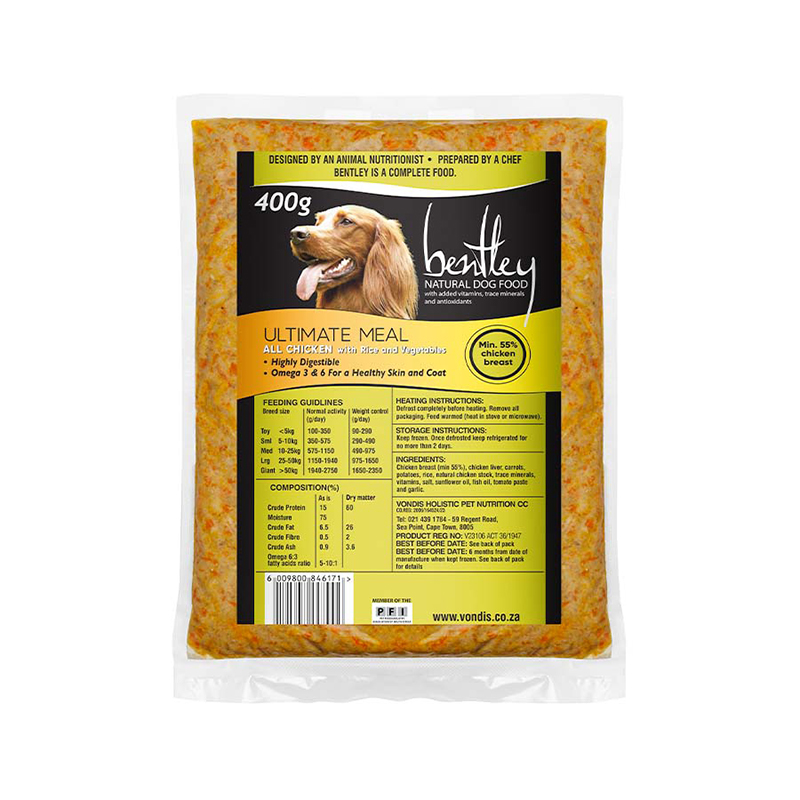
A Practical Option
BENTLEY Ultimate High Protein Dog Food
BENTLEY Ultimate High Protein Dog Food
This high protein recipe centres on lean chicken breast and liver. The liver naturally carries riboflavin and pantothenic acid, two of the B vitamins this article covers, and the meal offers them alongside its role in muscle maintenance.
Niacin, Pantothenic Acid And Vitamin B6
B vitamins for dogs share one more job here: helping the body use energy from every meal. Next, niacin helps release energy from food and supports normal DNA repair. Dogs can build niacin from an amino acid called tryptophan, unlike cats. This built in safety net makes true niacin deficiency rare on a balanced diet. Even so, beef liver and mackerel both supply strong amounts when extra support is useful. Alongside niacin, pantothenic acid works as part of coenzyme A, which helps the body turn food into energy. Once again, beef liver and beef kidney both carry it in useful amounts. Vitamin B6 is the final one of these B vitamins for dogs, supporting nerves and red blood cells. Notably, the amount a dog needs rises alongside how much protein sits in the diet. Fortunately, chicken and salmon both provide it through everyday meals.
Why These Nutrients Need Regular Refills
None of these five nutrients stay in the body for long. Rather, extra amounts pass out in urine within a day or two. That is exactly why B vitamins for dogs need a place in every meal, not just an occasional one. In practice, feeding a varied mix of meats each week is the simplest way to cover them all. Where there’s doubt, a vet can check whether a specific diet already meets these everyday needs.