
Executive Summary
Iron and zinc balance shapes two very different jobs in a dog’s body. Iron carries oxygen through the blood. Zinc keeps the skin and coat healthy, and it also supports the immune system. Both minerals cause real trouble in the wrong amount. This piece covers what each mineral does and where it goes wrong, then points to foods that supply both safely.
Iron and zinc balance rarely gets mentioned outside a vet’s office. Yet both minerals sit at the heart of two everyday problems: tiredness and skin trouble. Most complete diets supply enough of each without any extra thought. Home-prepared diets and well-meaning supplement habits are where the balance most often slips.
Why Iron And Zinc Balance Matters For Blood And Skin
Iron carries oxygen inside red blood cells and powers several energy-producing enzymes. This is the core of iron and zinc balance on the blood side. Low iron causes a pale, tired-looking dog with weak gums. This usually traces back to parasites or blood loss rather than diet. Overdose is the sharper danger, since dogs cannot get rid of extra iron once it is absorbed. Swallowed supplements or fertiliser are the usual cause, and a large enough dose can be fatal. AAFCO sets the adult minimum at 40 milligrams per kilogram, rising to 88 for growing puppies. Onions and garlic are sometimes wrongly seen as iron-boosting home remedies. In fact, they damage red blood cells and are never safe for dogs.
Zinc works differently, and it completes iron and zinc balance from the skin side. It holds the skin together and supports wound healing. Deficiency causes crusty, scaly patches around the eyes and footpads. Arctic breeds such as the Siberian Husky carry a hereditary form that needs lifelong management. Large breed puppies on diets heavy in calcium or plant phytates can develop it too. Zinc itself is fairly forgiving in excess, but swallowed coins or hardware release enough to cause hemolytic anemia. Too much zinc over time can also tip iron and zinc balance the other way by crowding out copper. AAFCO sets the adult minimum at 80 milligrams per kilogram, rising to 100 for growing puppies.
Whole Foods That Supply Both Minerals
Liver and other organ meats deliver iron and zinc levels far above ordinary muscle meat. This makes them the most efficient whole food for iron and zinc balance at once.
A Practical Option
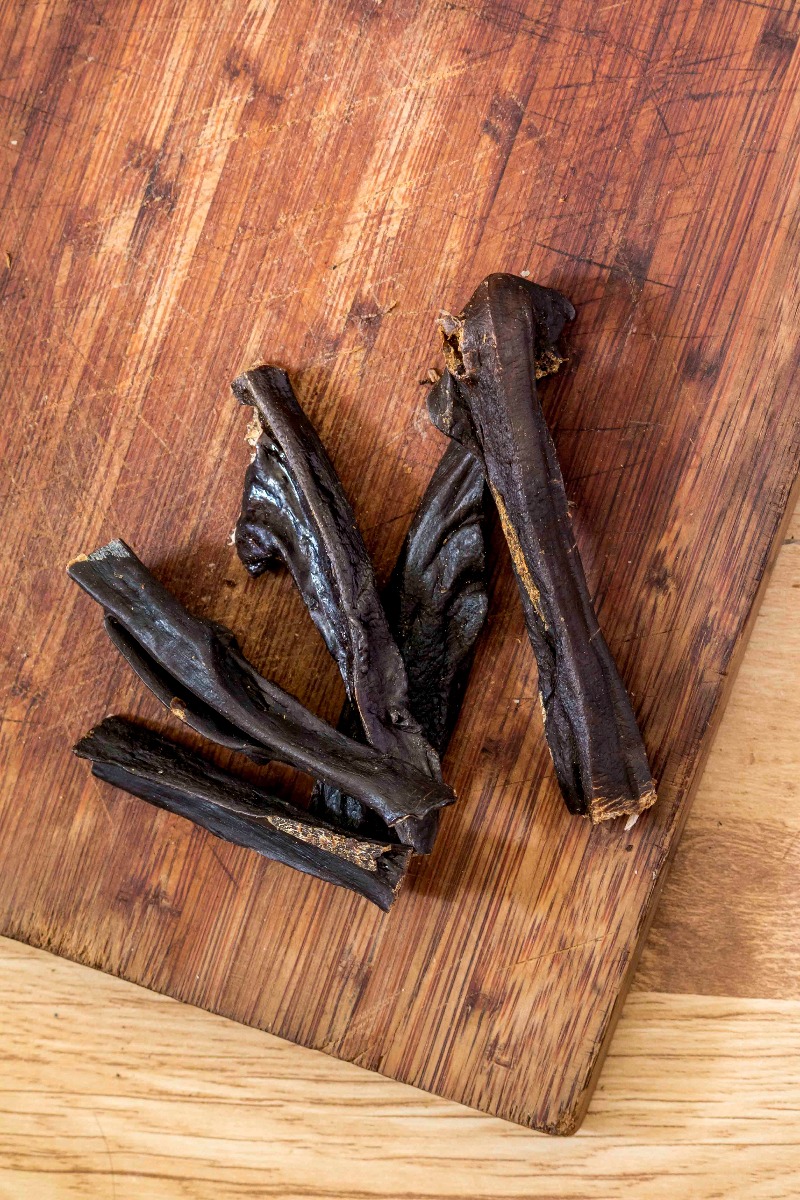
Vondis Beef Liver Biltong (Thicker Strips)
Vondis Beef Liver Biltong (Thicker Strips)
This raw, dried beef liver is a concentrated source of bioavailable iron and carries useful zinc alongside it, since liver naturally supplies both minerals together. It works well as a training treat or a simple topper, without any added salt or preservatives.
Oysters top the chart for zinc, and red meat adds a steady amount too. Eggs and pumpkin seeds contribute smaller amounts on top. Sardines and mussels offer iron in a form dogs absorb well, alongside the fish oils many diets already include. Fed this way, iron and zinc balance takes care of itself without needing separate supplements.
Iron and zinc balance is not something to fix with extra pills on a whim. Get advice from a vet before adding either mineral on top of a complete diet. Both cause more harm in excess than most owners expect.