

Executive Summary
The calcium to phosphorus ratio decides how well a dog’s skeleton forms. It matters more than either mineral counted alone. Too little calcium next to too much phosphorus pulls strength out of the bone. Too much calcium in a growing puppy can cause just as much harm. This piece sets out the AAFCO and NRC numbers behind it, and shows which whole foods keep the balance steady.
Most dog owners never think about the calcium to phosphorus ratio until a vet mentions it during a check-up. Yet this mineral pairing sits at the centre of feeding a dog well. Commercial food handles the balance automatically, so most owners only meet the issue when cooking or feeding raw at home.
Why The Calcium To Phosphorus Ratio Matters So Much
The calcium to phosphorus ratio works because the two minerals depend on each other, not on totals alone. Dogs need both minerals kept in a fairly narrow range next to each other. AAFCO sets the adult minimum at 0.5 percent calcium and 0.4 percent phosphorus, on a dry matter basis. Growing puppies need more, at least 1.2 percent calcium and 1.0 percent phosphorus, because their skeletons are forming fast. Both AAFCO and the NRC keep the ratio between 1:1 and 2:1. Even so, vets often aim closer to 1.2:1 or 1.4:1 for adult dogs.
Problems start when a diet leans too heavily on meat without a proper calcium source. Meat is naturally rich in phosphorus and light on calcium. An all-meat diet drags the calcium to phosphorus ratio out of a safe range quickly. When that happens, the body pulls calcium out of the bones to keep blood levels steady. Over time, this weakens the skeleton, especially around the pelvis and spine, and can lead to fractures.
Excess calcium causes different but equally serious trouble in large breed puppies. Young dogs cannot slow down how much calcium they absorb, so too much disrupts normal bone and joint development. It also blocks the body’s uptake of several other trace minerals, a subject the next article covers in full. AAFCO caps calcium at 2.5 percent for adult food, but only 1.8 percent for large breed puppy growth formulas.
Real Food Sources Dogs Can Eat Safely
Raw meaty bones remain the simplest route to natural calcium and phosphorus balance for dogs eating a home-prepared diet. Bone itself supplies both minerals together, close to the ratio a dog’s own skeleton needs.
A Practical Option
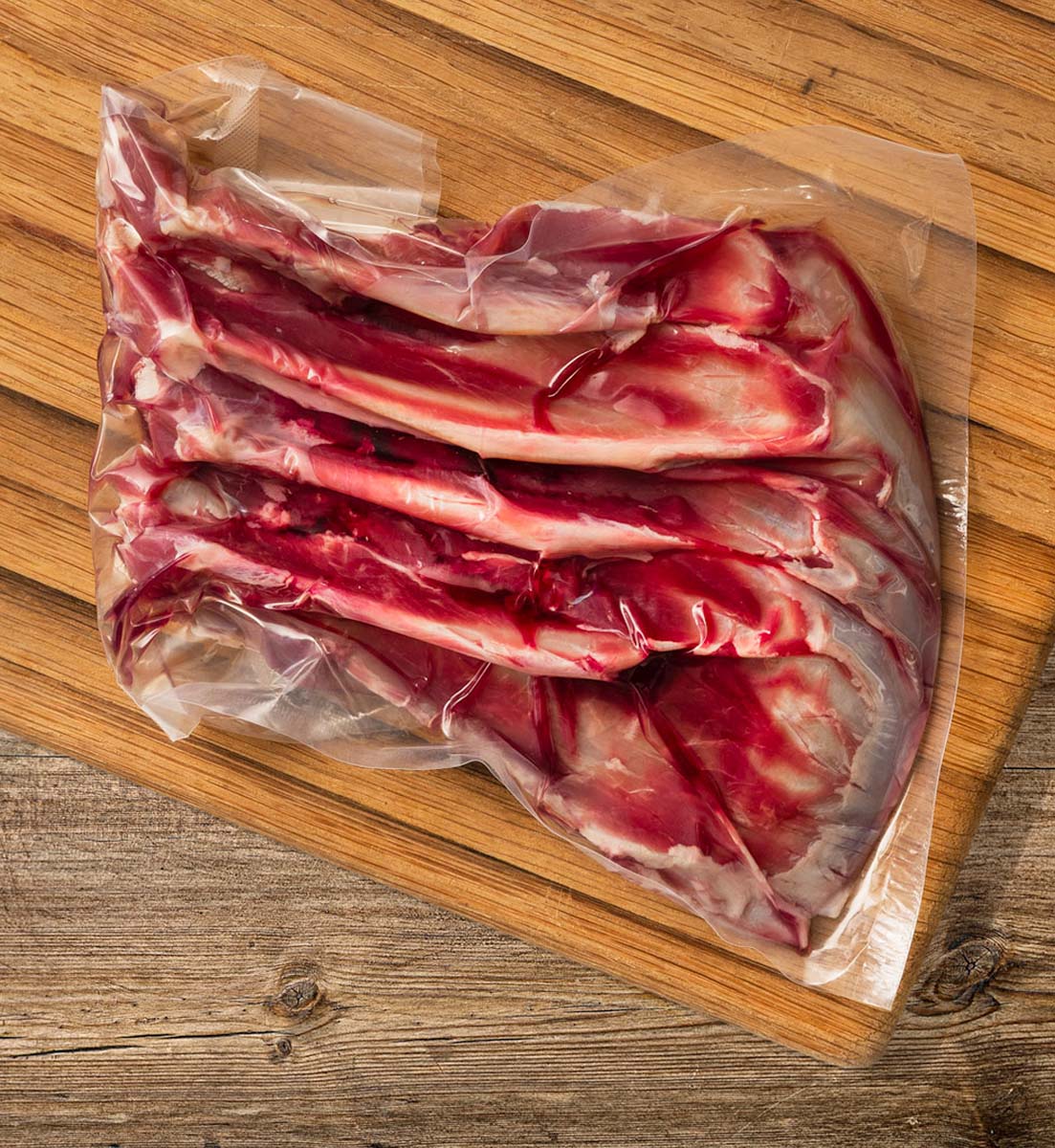
Vondis Springbok Shoulder Meaty Raw Frozen Bones
Vondis Springbok Shoulder Meaty Raw Frozen Bones
This raw springbok shoulder bone carries meat and bone together, giving your dog natural calcium and phosphorus in one chew. Springbok also works well as a novel protein for dogs sensitive to beef or chicken. Always supervise chewing and offer it raw, never cooked.
Tinned sardines packed in water, bones included, add a similar boost with no preparation needed. Ground eggshell works too, since roughly one gram of shell holds around 400 milligrams of usable calcium. Plain yogurt and cottage cheese help as well, though lactose-sensitive dogs need smaller portions. None of these replace a balanced diet, but each one nudges the calcium to phosphorus ratio in the right direction.
Getting the calcium to phosphorus ratio right does not call for complicated maths. It calls for one reliable calcium source served alongside the meat a dog already eats. Get that habit right, and the rest of the mineral balance tends to follow.