
Executive Summary
Reward-based dog training does more than produce a polite companion. The methods an owner chooses shape what kind of dog they live with for years afterwards. Research now reveals that the real costs of punishment are largely hidden from view. Those costs surface in stress hormones and emotional outlook. They also show up in the bond between dog and handler.
Understanding the Three Training Approaches
Reward-based dog training is one of three broad approaches to teaching dogs. Researchers organise these approaches around the operant quadrants each one uses. The differences between them carry real weight for the dog on the receiving end.
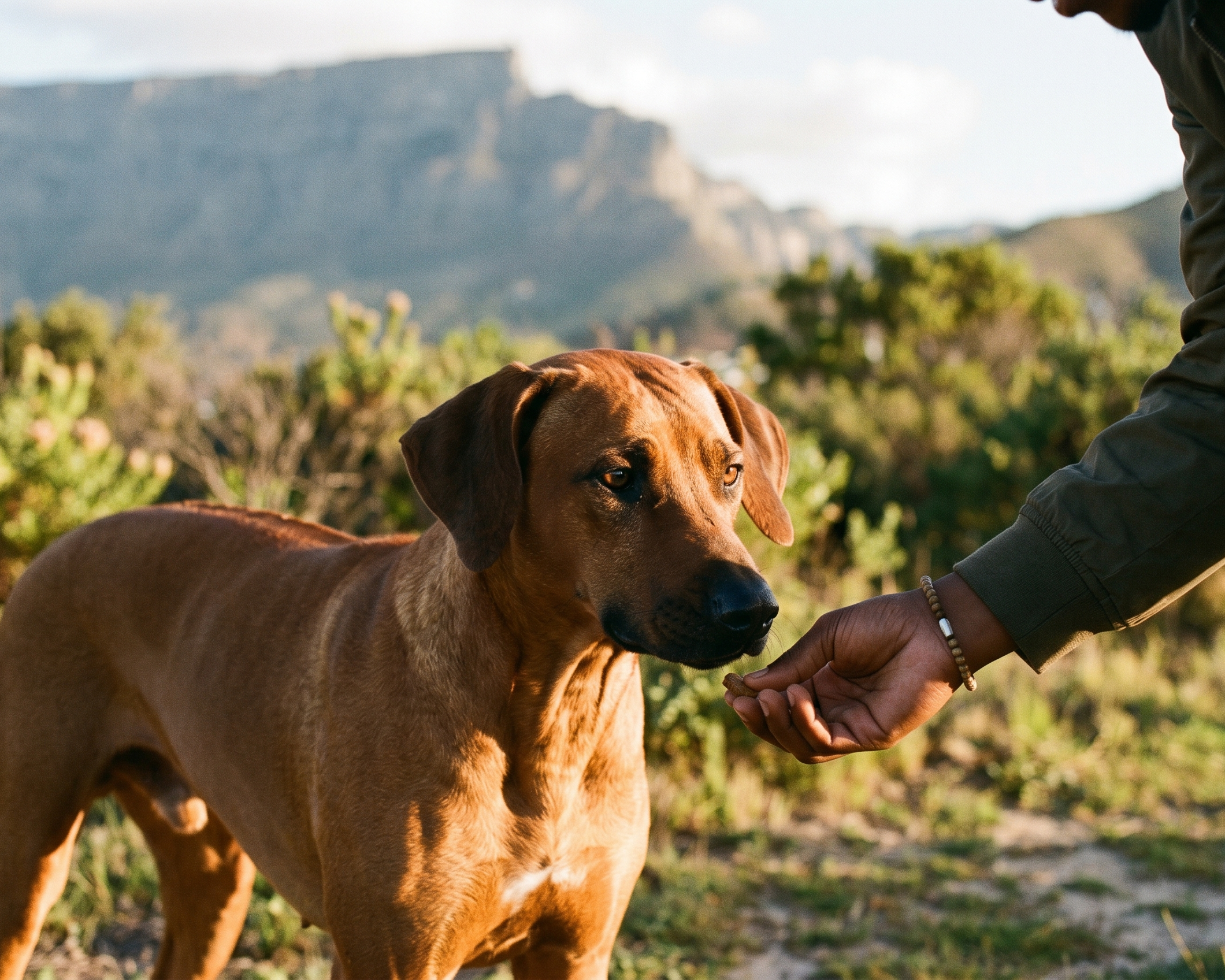
Reward-based systems rely on positive reinforcement. This simply means adding something the dog wants when the dog gets things right. These systems also use negative punishment, which withholds that reward when the dog gets it wrong. Treats and praise do most of the heavy lifting.
Aversive-based systems work the opposite way around. Positive punishment applies something unpleasant when the dog gets it wrong. Negative reinforcement removes that unpleasant stimulus once the dog complies. The toolkit ranges from neck-pressure equipment to physical corrections, with acoustic intimidation also featuring in some approaches.
Mixed methods combine elements from across all four operant quadrants. These are the hybrid approaches many owners pick up without quite realising what they are doing. The same household might offer a treat for a sit yet apply a sharp correction for a pull, blending the two without thinking through the underlying psychology.
The Stress That Reward-Based Dog Training Avoids
The most direct evidence for the cost of punishment comes from looking inside the dog. Researchers observing active training sessions have catalogued the differences in fine detail. Dogs trained with aversive methods show dramatically more stress signals than dogs trained with rewards. The signals include lip licking, yawning, body shaking and lowered postures.
The pattern grows even starker when training involves neck-pressure equipment or physical corrections. Under such conditions, stress signals multiply quickly. These behaviours are no accident. Each one reflects a dog operating under genuine internal pressure.
Biomarker analysis confirms what the body language already shows plainly. Salivary cortisol concentrations measured straight after training sessions tell a consistent story. Dogs trained with aversive or mixed methods show profound cortisol elevations. By contrast, dogs trained with reward-based methods show no such spike at all.
Cortisol is the body’s main stress hormone. Elevated levels after every training session mean the dog is under real physiological strain. Reward-based dog training produces no such cost. That single finding alone has shifted how much of the research community now thinks about the question.
The Pessimism That Lingers After Punishment
The acute stress of a single training session matters in its own right. Yet an even more troubling pattern emerges when researchers look beyond the moment. They use a tool called the Judgement Bias Test to track it. The task measures whether a dog generally expects good things to happen or bad ones.
The setup is elegant. First, researchers teach the dog that one spatial location holds a high-value reward. Another nearby location holds nothing of interest. Then they introduce ambiguous probe locations between the two. The time the dog takes to investigate these middle positions reveals what the dog actually expects. A quick approach suggests optimism. Hesitation suggests pessimism.
Matched-pair studies using this test produce consistent results. Dogs from homes that use aversive methods take significantly longer to approach the ambiguous locations. The hesitation reveals a pervasive pessimistic outlook. What is more, the effect scales with exposure. Dogs subjected to two or more aversive techniques show an even deeper pessimistic bias than those exposed to fewer.
This finding shifts the conversation about reward-based dog training in a meaningful way. Punishment-based training does not just create a single difficult moment. It rewires what the dog generally expects from life. The dog comes to anticipate bad outcomes, and that expectation follows it through every part of daily existence.
How Reward-Based Methods Shape the Bond
Beyond stress and outlook, training methods also reshape the relationship itself. To study this, researchers borrow a tool from human developmental psychology. The Ainsworth Strange Situation Test was originally designed to assess infant-parent attachment. Researchers later adapted it for dogs and their owners. The test reveals how the dog uses the human as a source of safety in unfamiliar situations.
Dogs trained through positive reinforcement display what researchers call a strong secure base effect. They treat their owners as a psychological anchor. From this base, the dog explores novel environments with confidence. It checks in regularly and returns for reassurance. The human becomes a reliable source of safety.
Aversive corrections damage this dynamic badly. In place of secure proximity-seeking, the dog develops insecure or avoidant patterns of behaviour. The relationship that should serve as a stable platform becomes a source of uncertainty itself. This is one of the more important findings about reward-based dog training. The bond between owner and dog is precisely what most owners value most about having a dog at all.
What Positive Reinforcement Training Does Better
Taken individually, each line of evidence is striking. Put them together and they tell a remarkably unified story. Dogs trained with positive reinforcement live differently from dogs trained with punishment. The differences appear at the physiological level and at the emotional level. They also extend straight into the relationship between dog and owner.
Reward-based methods produce engaged dogs that stay calm through training. Cortisol levels remain stable. The dogs’ expectations of the world tilt towards the positive, and their attachments to their people run secure. Behaviourally, they are easier to live with too.
The contrast goes deeper than personal preference between training styles. What separates the methods is the actual outcome each one produces in the dog. One approach creates a confident, optimistic animal. The other creates a stressed, hesitant one with a damaged relationship to its handler.
For owners deciding how to train, the implications are direct. Reward-based dog training has the clearest weight of scientific evidence behind it. Aversive techniques carry costs that show up in cortisol levels and in body language. The same costs appear in cognitive testing too. None of these costs are imaginary.
Putting Reward-Based Dog Training Into Practice
The practical message is simple enough. Choose methods that add something the dog wants when it gets things right. Withhold that reward when it does not. Steer clear of neck pressure and physical corrections. Choose trainers whose approach matches this framework, because the dog cannot tell the difference between aversive methods and the relationship in which they happen.
Good training produces a confident, engaged dog. Such a dog approaches new situations with curiosity rather than dread. It trusts its owner and recovers quickly from setbacks. Learning happens efficiently because the dog is not braced for trouble. None of this requires force, and the science is now clear on why force gets in the way of all of it.
Reward-based dog training stands as the option with the most rigorous evidence behind it. The science explains how dogs actually learn, and how they actually live afterwards. The hidden costs of punishment turn out, on close inspection, to be very real indeed.